The Dutch agricultural sector scores well when it comes to circularity. In fact, our agro has the lowest ecological footprint in the world. This is according to a new Insights publication by ABN AMRO.
The report 'Alles van waarde - circulariteit door sectoren' shows that stewardship and circularity are in the agricultural sector's genes. This is because farmers and market gardeners are frugal about their most precious asset: their land.
Smart Farming
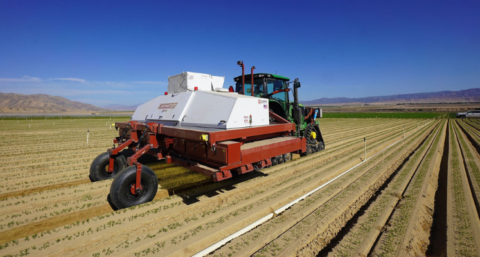
Agricultural production in the Netherlands has been using residual and waste streams for years and CO2 emissions are greatly reduced through the use of biomass. The Netherlands also scores high in terms of combating food waste. In this respect, the agricultural sector is leading the way with the deployment of the latest technology in Smart Farming, such as sensors, data analysis or the use of field maps via drones or satellite images.
"This sector is still largely circular. Waste products from the food industry are still the main ingredient in the animal feed industry, which as a result has a wealth of knowledge about hundreds of residual products. Plant residues are also used, for example as a raw material for building materials, textiles, cardboard, chemicals and plastics."
Sustainable energy
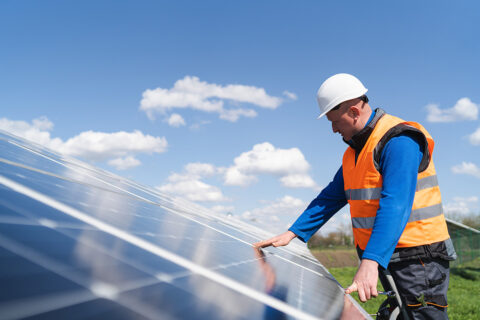
The most important issues for farmers and market gardeners are healthy and fertile land on the one hand, and clean and manageable water on the other. After all, the soil has to last for generations. With windmills, solar panels, manure fermentation or geothermal heat, agricultural entrepreneurs make an important contribution to the production of sustainable energy in our country. "Indeed," according to ABN AMRO, "farmers and horticulturists are involved in 42 per cent of our renewable energy, while using only 4.9 per cent of all energy themselves. And horticulture even uses waste CO2 as a growth medium for plants."
Lowest environmental impact worldwide
The Netherlands is doing very well globally. Our products appear to have the lowest environmental impact, both per kilo of product and per nutritional value. In the process, the use of plant protection products fell to less than half in 2015 compared to the level of the 1980s. At the same time, their impact on nature decreased sharply, while production per hectare increased.
"Farmers and gardeners are intrinsically motivated to produce efficiently and carefully. Few other countries produce as efficiently as we do. Dutch companies in agribusiness (genetics, production systems, animal nutrition and knowledge) are active all over the world. Many emerging countries therefore consider us a guiding country."
ABN AMRO states that there are a number of circular earning models in the agricultural sector. "By using residual products and reducing waste, entrepreneurs can reduce costs and increase yields - with less environmental impact. These cycles can be closed on individual farms. But when companies inside and outside the sector work together, it gives an extra boost." For example, the agricultural sector goes well with the textile and petrochemical industries.
Drones
Smart Farming, briefly touched upon earlier in this article and also referred to as precision agriculture, is gaining momentum. Among other things, drones are being used to map farmers' and gardeners' land more accurately. ESA, among others, recently launched new hyperspectral cameras on drones that can detect details as small as 4 to 5 centimetres in size. You will read more about this next week on Maakindustrie.nl.
By: Kelly Bakker
Source: ABN AMRO Insights