
Large container ships are a source of environmental pollution. So ideas to reduce their emissions regularly come along. For instance, a Dutch company deploys an innovative battery-switching container ship on inland shipping routes to reduce CO2 emissions.
With thousands of kilometres of navigable waterways and Rotterdam as Europe's largest container port, inland shipping plays a major role in the Netherlands. Its CO2 emissions account for five per cent of total emissions, according to Zero Emissions Services (ZES). The company now wants to make inland shipping more sustainable by offering an alternative to diesel-powered container ships. The name of this solution? The ZES energy system.
Battery packs in shipping containers
At the heart of this system are standard 6-metre shipping containers that are converted into energy packs. Each pack is equipped with 45 lithium-ion battery modules, each with a total capacity of 2 MWh. This is comparable to the power output of 36 electric cars. Zero Emissions Services is thus aiming – as the name suggests – to reduce the emissions from its ships to zero.
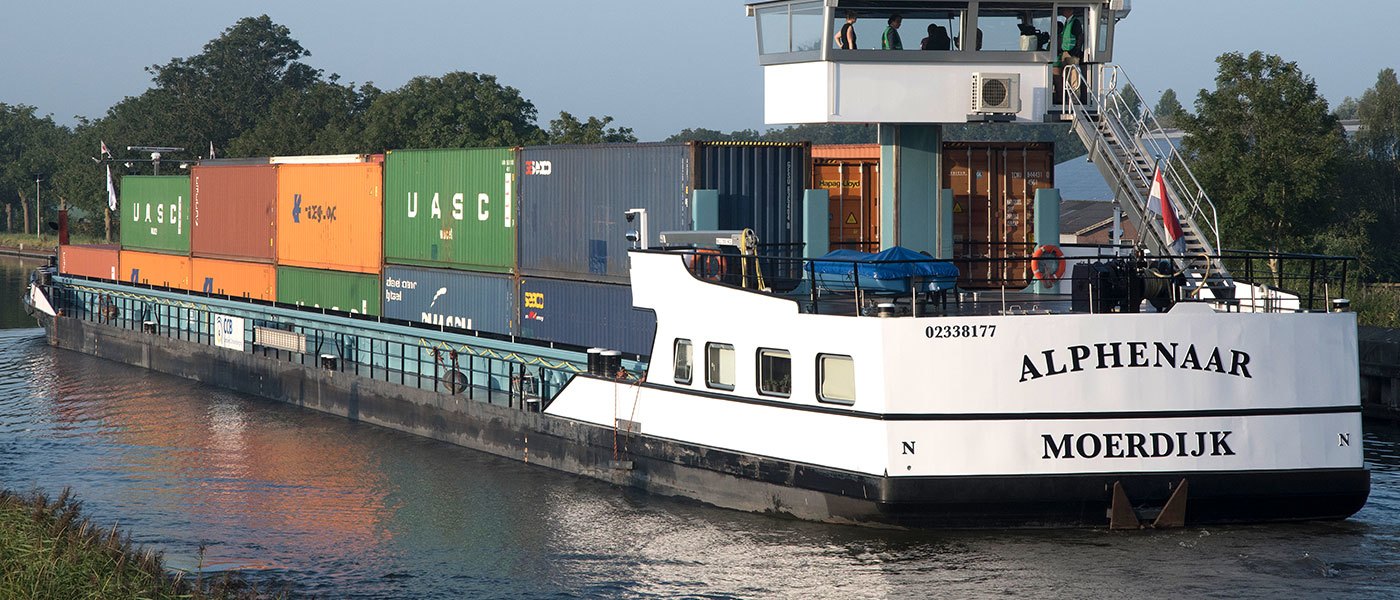
The so-called ZESpacks act as swappable batteries that can be fitted into container ships to power them during their journey. They can be swapped for fully charged batteries at a swap station in just 15 minutes. The first practical trial took place recently for the transport of Heineken beer in a custom-built ship called the Alphenaar.
Emission-free inland navigation
Alphenaar has been outfitted for the job over the past few months, adding standard plug-in connectors to connect the ZES packs and draw power. After trial runs, the Alphenaar set off from Alphen aan den Rijn to Moerdijk, 60 km away, with Heineken cargo on board.
Besides directly contributing to the realisation of emission-free inland navigation, ZES sets a standard that accelerates the transition to emission-free inland navigation. The basis for this is laid with the ZESpack and a standard connector.
Future-proof technology
ZES has signed a 10-year deal with Heineken to transport beer throughout the Netherlands and plans to expand its operations in the near future with eight ships, 14 ZESpacks and eight charging stations. The latter can charge two packs in 2.5 hours and also be used to stabilise the electricity grid. ZES says it has also future-proofed its technology so that the packs could one day work with other energy sources, such as hydrogen or even ammonia. The company further aims to serve 30 shipping routes by 2030, and 40 routes by 2050. By then, the company aims to have a fleet of 400 ships in operation, capable of exchanging up to 650 ZESpacks at 20 stations across the country.