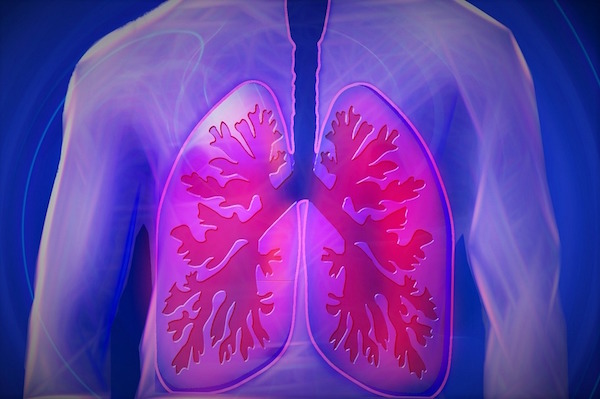

An electronic nose can smell people's exhalation air to see if they have lung cancer. The device can tell with 94% certainty whether someone does not have lung cancer. Sharina Kort, lung specialist in training at MST, recently obtained a PhD from the University of Twente (Technical Medical Centre) on her research in this field.
An eNose or electronic nose is a technical device that analyses the substances in exhaled air. The device contains sensors that detect changes in the composition of air.
Distinguishing between people with and without lung cancer
Kort has been researching the use of breath analysis for being able to diagnose lung cancer since 2015. She trained an electronic nose on distinguishing people with and without lung cancer.
"Lung cancer kills a lot of people. This is largely because it is only detected at a late stage, when metastases are often already present and no cure is possible," Kort says in a news release on the University of Twente's website. "That's why our research is very important, also because it focuses on non-invasive diagnostics for lung cancer. That is, an examination that does not involve a risk of complications and is also perceived as less unpleasant by a patient."
Trained in four hospitals
The nose was trained in four hospitals, with 376 people participating. Using a new group of 199 people, the results of this training were checked and verified. If the electronic nose indicates that someone does not have lung cancer, this makes 94% certain that this person actually does not have lung cancer.
Kort sees examination using an electronic nose as a faster, cheaper and less tedious alternative to using current tests to detect lung cancer. In current examinations, doctors take biopsies from the lungs. Among other things, the electronic nose can give much faster results and therefore clarity to the patient, who will spend less time in uncertainty as a result.
A follow-up study is planned. In it, Kort aims to determine where in the research pathway the electronic nose can best be deployed and provide the most benefits for patients.
Various applications
Incidentally, the electronic nose is not a new concept; various developments in this field are currently underway. For example, research is being carried out into the use of an electronic nose to detect other forms of cancer, such as bowel cancer, thyroid cancer and laryngeal cancer. An electronic nose has also been used to detect COVID-19.
However, the electronic nose can also be used outside healthcare. In the diving world, for instance, the nose is a tool for determining whether a diver is at risk of oxygen poisoning. In addition, consider the port area, where electronic noses are attached to lampposts. They help detect sources of odour complaints. Other applications can be found at livestock farmers, among others. For instance, Saxion University of Applied Sciences in Enschede and Utrecht University, together with partners, are investigating the use of an electronic nose at cattle farms. They are using the technology to detect parasites, bacteria and infectious diseases in poultry.
Author: Wouter Hoeffnagel
Source photo: Pixabay / bykst










