
Interesting new applications of electronic nasal e-nose have been discovered. Research by paediatricians Wieger Voskuijl and Tim de Meij from the Emma Children's Hospital of Amsterdam UMC shows that the e-nose can predict the risk of death in severely malnourished children quite accurately. Research at Isala Hospital also shows that the e-nose can contribute to the population screening for colon cancer and can smell metastasis in a patient's breath.
An e-nose is a device that basically mimics the olfactory system and can thus detect various diseases. The e-nose has long been used in other sectors, including for detecting explosives and leaks in space travel, for example. In healthcare, however, the e-nose still has few clinical applications.
Several companies are working on electronic nose for medical applications, including Breathomix and The e-nose Company. These electronic noses analyse exhaled air and detect various diseases in it. For instance, it was previously found that an e-nose can help detect oesophageal cancer and Barrett's oesophagus.
Probability of death in malnourished children
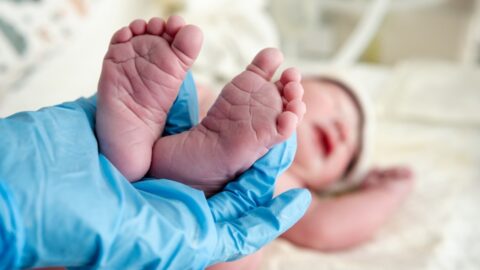
Other applications are also being researched. One example is research by paediatricians Wieger Voskuijl and Tim de Meij at the Emma Children's Hospital of Amsterdam UMC. This shows that the e-nose can predict the risk of death in severely malnourished children with relatively high accuracy. This could ensure better survival rates for this group of patients in the future, according to the doctors.
Paediatrician Tim de Meij: "For my PhD research in 2017, we converted the eNose so that it could be used to smell stools. This eNose turned out to be able to detect diseases in which the composition of the microbiome is disturbed, such as inflammatory bowel diseases and blood poisoning in incubator children. The microbiome is everyone's unique bacterial home that you can extract a lot of information from with research and analysis."
Fast, low-impact and relatively cheap
Since then, De Meij has been conducting intensive research with this e-nose on the detection of infectious and intestinal diseases in children. Previously, Voskuijl was involved in a long-term study on malnutrition in children in Malawi. De Meij and Voskuijl decided to bring their research fields together. Thus, e-nose can offer interesting opportunities for the provision of care to this target group. For instance, the sensor technology works quickly, is relatively gentle on the patient and the method is relatively cheap.
As part of a larger study, funded in part through the Bill & Melinda Gates Foundation, the stools of 57 children from Malawi and Kenya were examined by Amsterdam UMC. Voskuijl: "The results confirmed our idea. The smell of faeces from children with a poor prognosis - and therefore a high risk of mortality - is picked up early by the eNose, without all kinds of complicated and time-consuming microbiome analyses."
Of 57 malnourished children admitted to hospitals in Malawi and Kenya, 19 died; the other 38 were able to return home after some time. By measuring odour profiles with the e-nose, it was possible to measure fairly accurately who would die within days of admission and which children would actually survive. De Meij: "This is probably due to a different microbiome and metabolism."
De Meij highlights the great value of the e-nose in the care of malnourished children in developing countries. Voskuijl adds: "You can think of much more targeted treatment for children with a poor prognosis, but also less intensive and shorter treatment for lower-risk malnourished children. The findings may also lead to information on the underlying causes of death of these children.
Detecting metastatic colon cancer
Another potential application recently investigated is the use of the e-nose for detecting metastases after intestinal surgery. The results of a pilot conducted last year are very promising, reports the hospital. It is therefore now announcing a larger study.
"When you have a tumour in your body, your metabolism changes," explains MDL oncology nurse specialist Ivonne Schoenaker. "You can measure this change in the air you breathe out. We call this volatile organic compounds (VOCs). Basically the end product of metabolism. Patients have to breathe into the eNose for five minutes. The sensors in the eNose react to the patient's breath and so you get a breathprint. In other words, a print of your breath. We did a pilot on 62 patients. We knew who did (26 people) or did not (36 people) have metastases. We also gave that information to the eNose. In the outcomes, or breathprints, we indeed saw differences between patients who did and did not have metastases. That is why we are continuing with a larger study. This is possible thanks to a grant from Isala's I&W (Innovation and Science) fund."
Collaboration with other centres
A total of 733 patients are to participate in the second phase of the study. The Isala hospital is looking for cooperation with other centres in this regard. "We would therefore like to collaborate with other centres, so that we can get the required data together more quickly. The eNose works on the basis of an algorithm and we have to make that algorithm as perfect as possible. You do that by putting as much patient data into the device as possible. You tell the device whether the breath comes from a patient with metastases or without metastases. So the device learns to recognise all the different pictures of breath better and better. Compare it to a computer that wants you to recognise pictures of a dog. A shepherd or labrador goes well immediately, but eventually the computer should also be able to recognise pictures of a poodle or pekinese as dog pictures. Eventually we will have a stable formula and then the final phase of the research will follow."
The final stage is validation of the method. Schoenaker: "Then we no longer tell the eNose whether someone has metastases or not. Of course, we check whether the eNOse gives the right diagnosis. We do that with the regular examinations such as scans and blood tests. If the eNose soon has the perfect algorithm and is sensitive enough, we hope that the eNose will be able to tell at least as well or even better whether a patient has metastases than the regular tests currently do. There are now quite often false-positive results among those. Moreover, the tests are more tedious and patients often have to wait a long time for a result, which causes a lot of stress. I even think that eventually this device will end up on a GP's desk. A good algorithm, for these examinations or others, are very valuable."
Author: Wouter Hoeffnagel