
A so-called digital twin of the human heart should help better tailor the treatment of heart disease to the clinical profile of individual patients. The digital twin should also lead to less invasive surgeries, thus reducing patient recovery time, while reducing the use of laboratory animals for research purposes.
'The digital twin heart' is a computer model that simulates the functioning of the human heart. The model is in use by researchers at Maastricht's CARIM research institute, which focuses on cardiovascular diseases. CARIM is part of Maastricht University. Postdoctoral researcher Aurore Lyon discusses the digital twin and its impact on research in an article on the university's website.
Computer model of the heart
"A digital twin heart is a computer model of the heart based on real human data. We simulate the human heart with this. By working with data from real people, we can make the virtual models increasingly accurate and personalised. They help us better understand heart disease. For example, they can show which patients are more at risk of sudden cardiac death. Crucial information when it comes to prevention, because if we know which patients are more at risk, we can detect it more early and possibly prevent it," Lyon says.
Among other things, a digital twin can provide insight into the effects specific treatments will have on a patient. In this case, researchers first apply the treatment on the digital twin to map the effects. Only after the treatment on the digital model proves successful will it be applied to the patient itself. Lyon: "It will take some time before we get there. After all, every person is different and therefore we also have to take into account characteristics such as gender, underlying diseases and patient history, as well as biological variables. However, we are making significant progress."
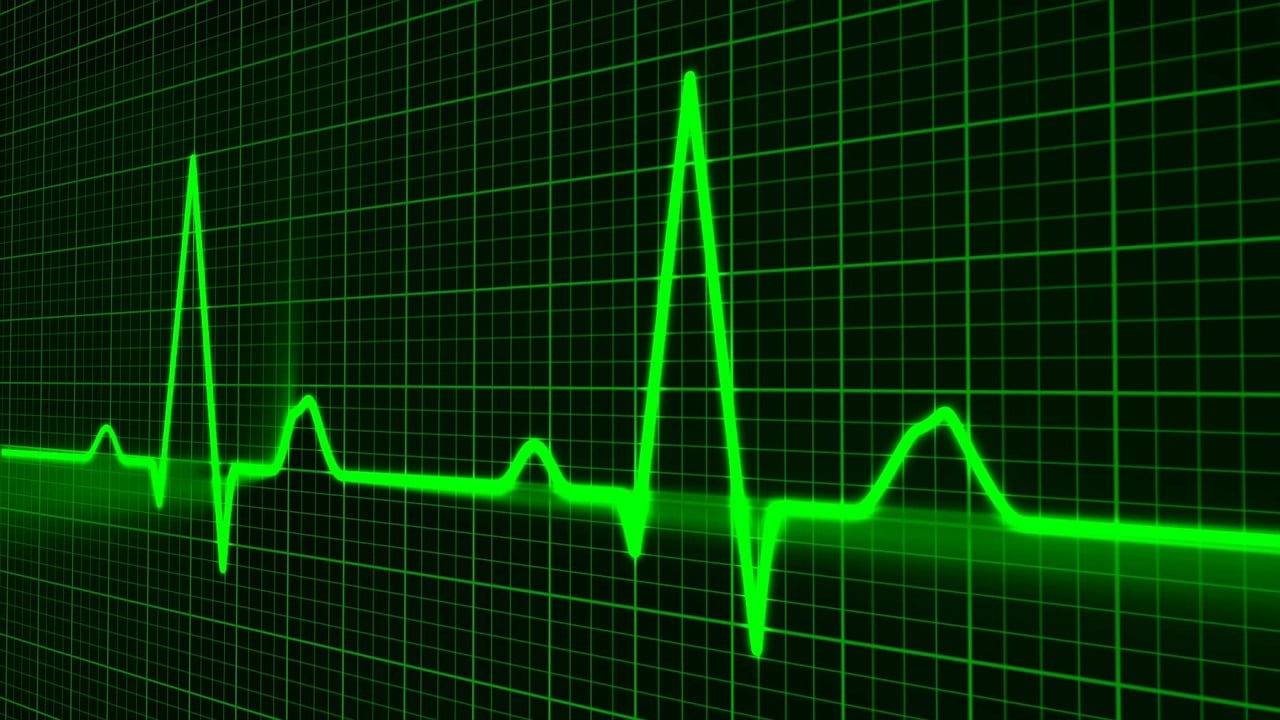
Lyon mapped differences in ECGs of a group of patients as part of her research. Based on this, she distinguished between three subgroups, and investigated whether there were differences in the risk of sudden cardiac death. This was indeed found to be the case in one of the three groups. Further investigation using virtual models led to several explanations for this.
Major impact on patients
Lyon says the impact of the digital twin heart is significant. On the one hand, she points to impact on patients and the course of their disease. For instance, using the virtual model, doctors can give patients faster, more personalised and accurate information based on facts and data. This also means that treatment can start faster and is better tailored to the individual patient.
On the other hand, the digital twin heart makes it possible to collaborate with pharmaceutical companies on the development of medication, therapies and devices tailored to a specific group of patients, and eventually even an individual patient. Thus, testing a hypothesis on a real patient is not ethically possible, something where a virtual model offers a solution.
Digital twin can support research
The digital twin could support research at the same time. "Imagine that a disease affects a specific molecule in the heart; something on a small scale. We then don't know very well how that translates to the patient. In practice, something like that is then studied at the cellular level (under the microscope) or in the patient. Until now, these were separate worlds. With the digital twin heart, we can translate the effects at the cellular level to the patient and back again. This is how we bring those worlds together," explains Lyon.
For more information about the digital twin, read the article on the Maastricht University website.
Author: Wouter Hoeffnagel
Photo: PublicDomainPictures via Pixabay