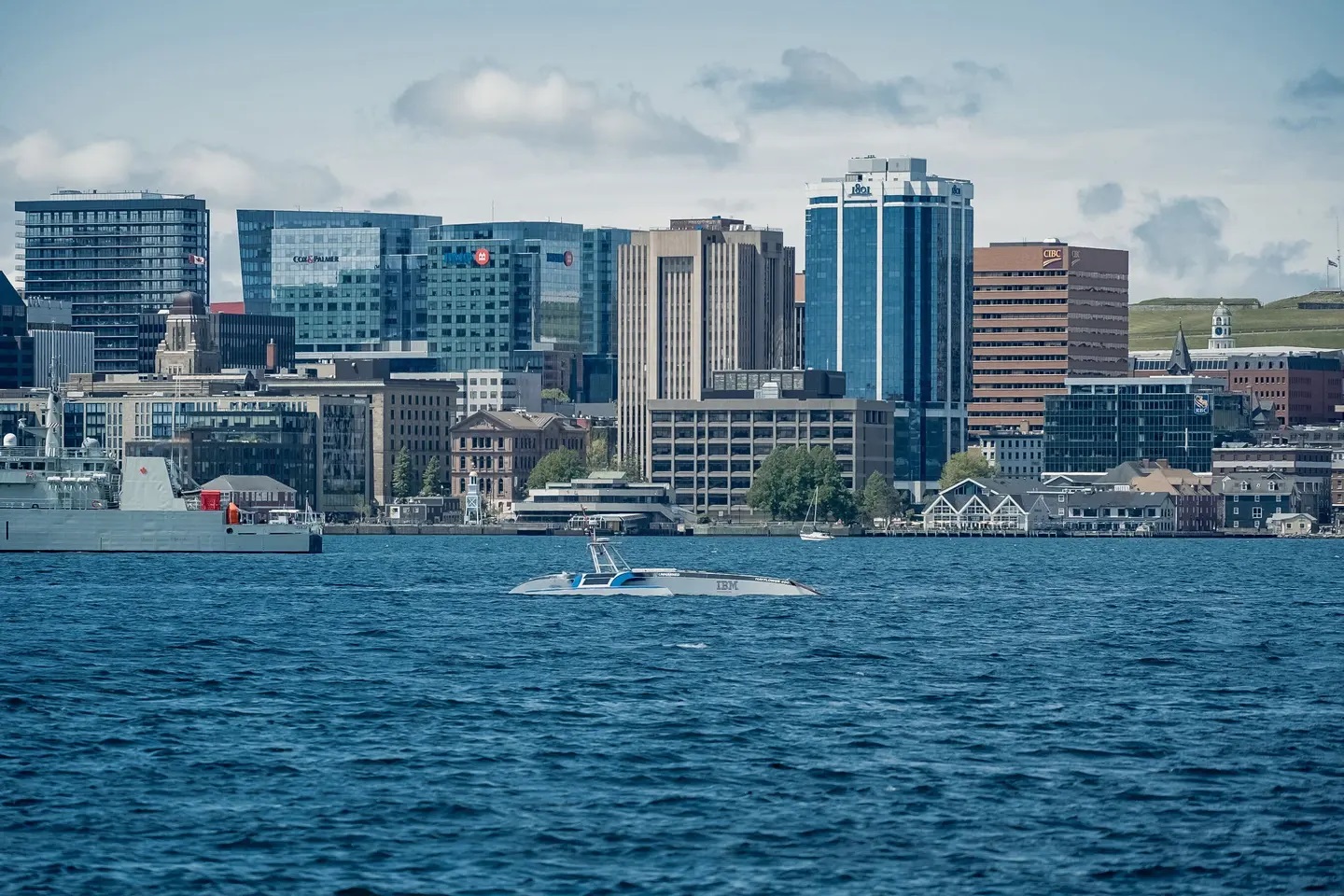

After a number of technical setbacks, the autonomous research ship Mayflower has successfully crossed the Atlantic. It thus covered a distance of 5,600 km and arrived in Halifax, Nova Scotia (Canada).
Pilgrimage
In 2015, researchers at Plymouth University (England) announced plans to launch an autonomous research vessel that would leave where the famous Mayflower once set sail from England to Plymouth (USA). It is now 400 years since this 'pilgrimage' took place.
Multiple partners
The project involves several partners, including such resounding names as Nvidia, ProMare and IBM. The ship takes the form of a 15-metre-long trimaran where an AI captain 'gives the orders', along with six AI-powered cameras, 15 advanced computer systems, more than 30 sensors, navigation technology and a weather station. By the end of 2020, the Mayflower looked set for launch and extensive sea trials.
Setback
After several repairs, tests were carried out again in September and a date for the crossing was scheduled. In the early morning of 27 April, the Mayflower left Turnchapel Wharf in Plymouth for a three-week journey to the United States. Not to Plymouth, Massachusetts, as originally planned, but this time first to Virginia and then to Washington.
Unfortunately, the generator experienced a mechanical problem last month and it was decided to send the ship to Horta in the Azores for examination and repair. After passing two "major low-pressure systems", the command centre in Plymouth performed a remote restart a few weeks later and the crossing attempt resumed.
The remaining journey of more than 2,000 miles seemed to go off without a hitch, until a problem with the charging circuit for the generator starter batteries was discovered in late May and the Mayflower was diverted to Halifax in Nova Scotia, Canada. The ship arrived there on 5 June last.