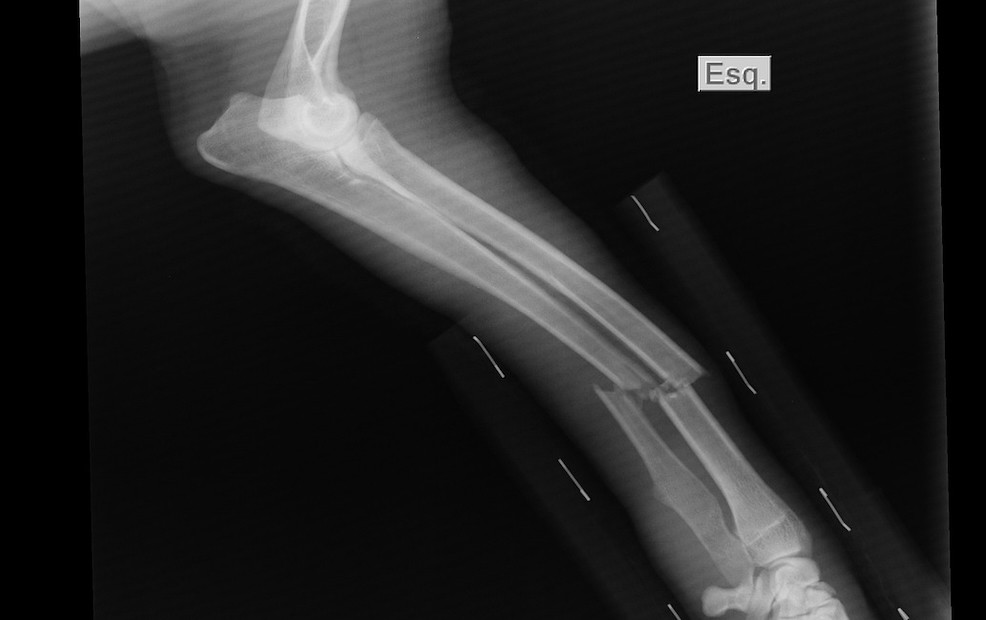

A new technology makes it possible to better estimate the risk of bone fractures. In doing so, the technology uses artificial intelligence (AI) to create super-resolution images that show the inner structures of bones in great detail.
The technology has been developed by SwRI. Research on the technology shows that in almost all cases, the super-resolution (SR)-enhanced images were more accurate than X-rays or CT scans in quantifying bone characteristics that indicate strength and fracture risks.
Reduce osteoporotic fractures
Among other things, the technology can help reduce osteoporotic fractures in the elderly, which are common. For instance, half of women over 55 will experience a bone fracture at some point. The consequences can be dire; SwRI points out that half of those who break a hip can never walk again and 20% die within a year.
"Engineers and orthopaedic clinicians are trying to identify people at risk because there are interventions that can make bones stronger, but it's all about finding those at risk," reports Dr Lance Frazer of SwRI, principal investigator of the study. "Currently, the most common method to diagnose fracture risk is an X-ray or a CT scan, but the resolution of both imaging techniques is too low to really determine the structural strength of the bone."
Making images sharper and more detailed
Super-resolution technology uses a range of techniques that make low-quality images sharper and more detailed. In doing so, SwRI uses a deeplearning approachl that trains AI to map complex patterns and textures by learning to observe details in multiple examples.The AI system thus learns to use low-resolution images of bones to predict what a much higher-resolution image looks like.
"Once we have that high-resolution imaging data, we have a lot of tools to predict exactly how strong the bone really is," says Frazer. "We can see if bones are prone to fracture and if intervention is needed to prevent that. After all, bones are adaptable. Once an increased fracture risk is identified, a doctor can recommend medication or exercises to strengthen fragile bones and prevent injury."
Making better medical decisions
Frazer sees opportunities for applying super-resolution technology to medical imaging equipment. Doctors will thereby get to see both raw medical images such as X-rays and images enhanced by AI. Combined with additional diagnostic information, this could help doctors make better medical decisions.
"Everyone falls. Everyone over 55, and especially those over 65, will fall at some point. Therefore, it is important to understand the bone strength of this group," Frazer said. "A lot can be done on fall prevention. But the most important question remains: if you fall, are you at risk of fracture? Knowing this is crucial."
Further information can be found in the article‘Super-resolution of clinical CT: Revealing microarchitecture in whole bone clinical CT image data’in the journal *Bone* and on ScienceDirect.
Author: Wouter Hoeffnagel










