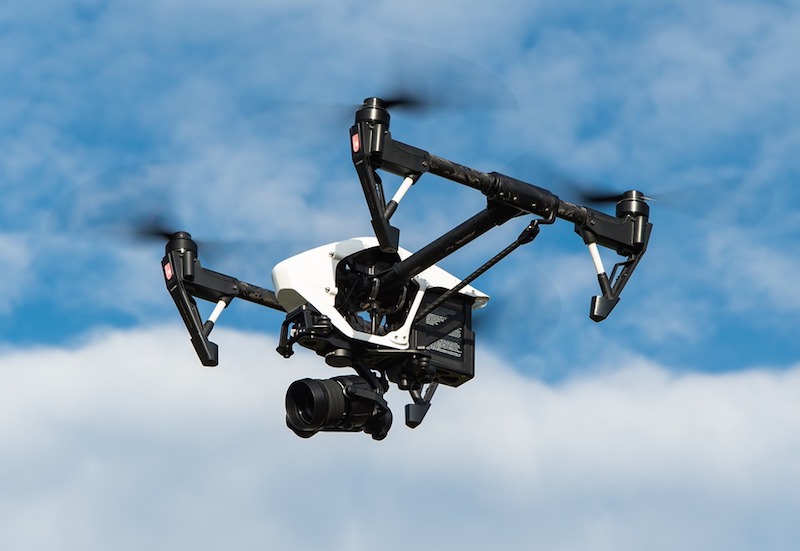

Rules for flying drones are being tightened in the European Union (EU). The same rules will apply to all drone pilots across the EU from 31 December 2020. Anyone flying a drone heavier than 250g or a lighter drone equipped with a camera will be required to register with the RDW and obtain a licence to fly from 31 December.
The obligation applies to both business users and consumers. Minister Van Nieuwenhuizen (Infrastructure and Water Management): "More and more Dutch people have a drone. They get one as a gift or buy a drone online. Drones are also increasingly used to support operations. A nice development. It is good that the same rules for the safe use of drones will now apply across Europe. For professionals but certainly also for individuals, you need to be well informed about what is needed to be able to fly safely in the new year too."
Keeping flying drones safe
The rules are designed to keep flying drones safe in the future. This is necessary, according to the government, in view of increasing crowding in the sky. It has long been necessary to apply for a licence for business use of drones. In addition, the person piloting the drone has long required a pilot's licence. The new regulations largely align the rules for consumers and business users of drones.
For example, people who recreationally use a drone weighing more than 250g or want to fly a drone with a camera will now have to register themselves with the RDW. They must also take a knowledge test on the rules and obtain a licence to fly from a flight school.
High impact on consumers in particular
Such a flying licence can be obtained from organisations designated by the Ministry of Infrastructure and the Environment. Drone Flight Academy, a party offering drone pilot training, expects the new regulations to have a lot of impact on consumers in particular. An estimated 70% of commonly sold models are covered by the new legislation. That means it is estimated that some 100,000 drone owners will be affected by the regulations retroactively.
Flying a drone weighing less than 250g and without a camera does not require registration and a licence to fly. However, rules have been drawn up for this target group. For example, they are not allowed to fly near crowds of people, residential areas and around aircraft. Flying above people and buildings is only allowed under conditions if the drone owner is trained and has the right papers.
More room for professional use
With the new regulations, the government also wants to provide more space for professional use of drones. As examples, the government mentions inspections using drones in hard-to-reach places such as roofs and bridges. Other examples include surveillance of abandoned business parks, incident management in traffic, measurements of sulphur emissions and search and rescue operations. The new legislation creates more space for testing and experimenting with new applications. Such as a trial of medicine delivery between hospitals in Meppel and Zwolle.
Those who fail to comply with the new rules could be fined. Think of a fine, which can reach up to €7,800. The drone can also be confiscated by the police. Those who repeatedly break the legislation could face a prison sentence. The Ministry of Infrastructure and Water Management will launch a new online campaign on 1 January to alert and explain the new regulations to drone owners.
Author: Wouter Hoeffnagel
Source photo: Pixabay / Thomas Ehrhardt











