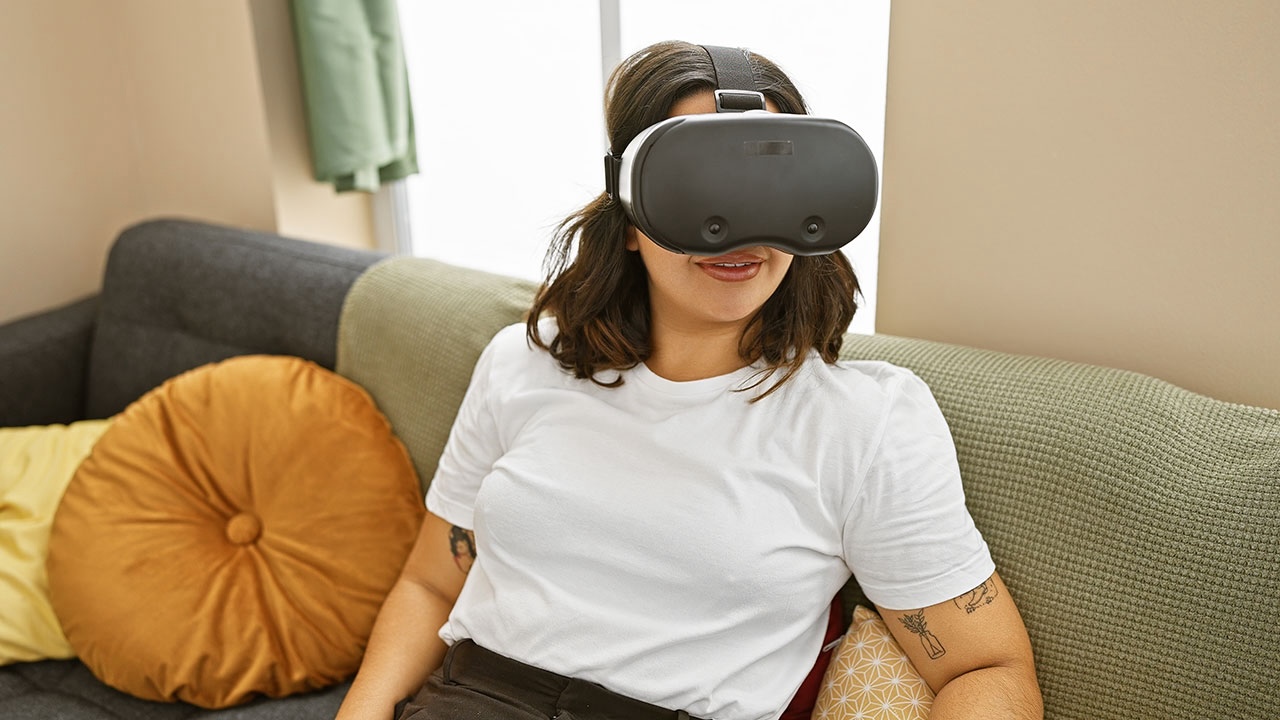

The ENT department of the HagaZiekenhuis The Hague is conducting a pilot this year. Patients with tinnitus thereby play a game with VR glasses, with the aim of reducing the annoyance they experience due to tinnitus.
Tinnitus is the perception of a continuous sound, with no identifiable source for this sound. It is therefore also called phantom sound or tinnitus. Tinnitus can come in various forms, with patients hearing squeaks, hisses, whistles, hums or murmurs is one or both ears.
A lot of annoyance
Patients can experience a lot of annoyance due to tinnitus. It is estimated that around 4 million Dutch people suffer from tinnitus. A quarter of this group suffers regularly or always, but can nevertheless function (with difficulty).
The pilot was set up by clinical neuropsychologist Olav Wagenaar. He works at Rijndam Rehabilitation and has been assigned to the HagaZiekenhuis as a physician-researcher for a few hours a week especially for this study. "People with tinnitus often experience a great sense of powerlessness. They learn that there is nothing they can do about their ailment," Wagenaar explains. "They fear that the tinnitus will get worse or that it will paralyse them completely. This is reinforced by the fact that in the media we mostly hear the stories of people who have psychiatric symptoms due to tinnitus. The core of our game is therefore powerlessness prevention."
Cause not clear
Wagenaar explains that the cause of tinnitus is not clear. "In every person, hearing wears off and you could say that every person has hearing loss. But not in everyone does this show up as tinnitus. We start from a neuropsychological explanatory model and that assumes that tinnitus is a result of mental overload. This can have a lot of different reasons, combined with hearing loss as a predetermining factor. It is non-medically treatable: cognitive behavioural therapy (CBT) has therefore been the treatment standard for years," the physician-researcher said.
CBT is a behavioural therapy in which patients learn to look at and deal with difficult situations differently. Wagenaar: "The GP referred these patients to the psychologist. They sit there reluctantly, because they don't want to learn to live with tinnitus at all. That was also very unsatisfactory for me as a neuropsychologist. I thought about how to help my patients better. Together with ENT doctor Henk Blom and an expert in Virtual Reality YUCONVR, I developed a game where you use VR glasses: TinniVRee. In that game, patients train their own control over tinnitus. We are going to test the willingness to train yourself in the pilot study, and we are also already looking at some efficacy. We hope to achieve a 'proof of concept' with this."
Sense of control and competence
During the training, patients learn about tinnitus. "Patients can then learn to influence their tinnitus in different ways. Through training, they learn to gain from tinnitus. Thus, patients train their sense of control and competence," explains the physician-researcher.
Patients participating in the treatment play the VR game in their home environment. They also keep track of their symptoms. Wagenaar: "We track how their mood is doing, perception of tinnitus in daily life and their sleep. Is there any improvement to be seen? We also study whether patients start to understand their ailment better. For the pilot, however, the most important thing is to see if patients continue to like the game enough at home."