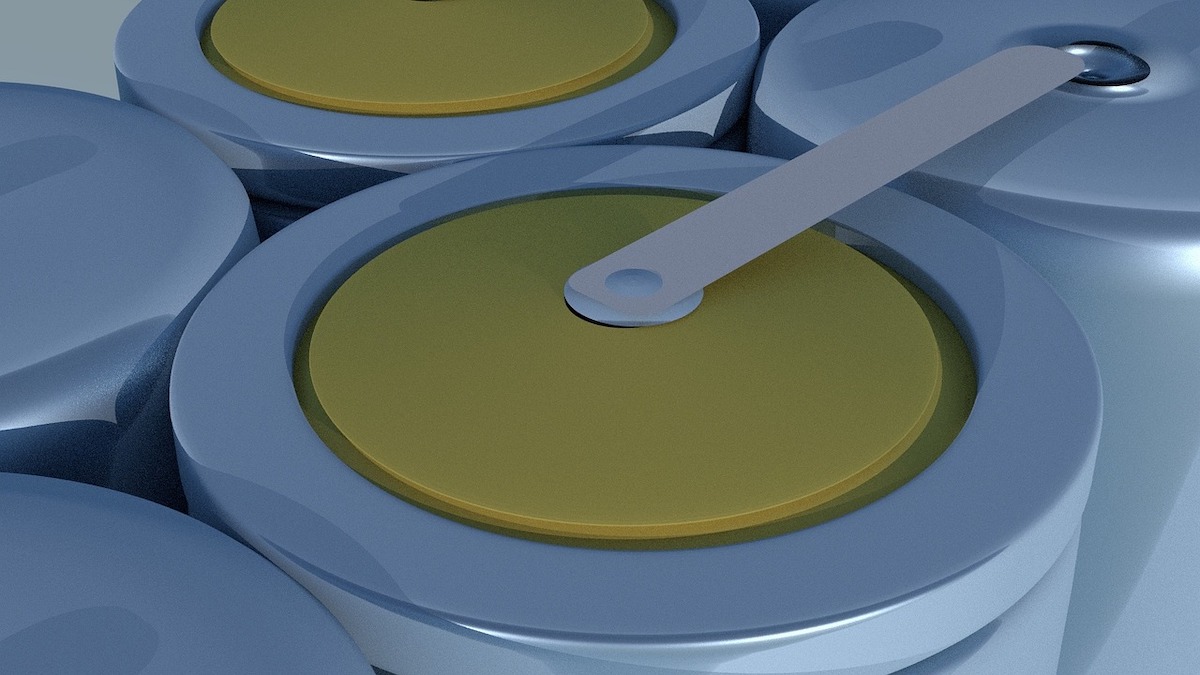

Holland High Tech is giving a grant to Kalpana Systems and TU Delft for the development of innovative batteries. The project is specifically aimed at developing stable batteries using spatial Atomic Layer Deposition (ALD) technology.
The project in question is the First Robust Industrial System for Battery Improvement (FRISBI). The project is one of 13 projects selected in Holland High Tech SME Call. This call focuses on the development and application of key technologies. The initiative aims to strengthen the knowledge base and R&D capability of small and medium-sized enterprises (SMEs). This will allow innovations to reach the market faster and more effectively. The total budget for the High Tech SME Call is five million euros.
Accelerating energy transition
Accelerating the energy transition requires affordable battery systems that combine high capacity with long life. These batteries require a high-capacity bulk electrode material such as silicon, which enable double-sided electrodes.
In addition, stable interfaces play a crucial role. For instance, internal interfaces such as the solid electrolyte-electrode interface (SEI) have a strong influence on battery performance and, in particular, degradation. Kalpana Systems responds to this and is committed to producing stable, artificial SEIs using spatial ALD technology.
Stable interfaces for batteries
Within the FRISBI project, Kalpana Systems is working on an industrial, scalable processing method for double-sided lithium-ion battery electrodes. Although silicon is a promising electrode material for LIBs, cycle life is often limited by interface instability.
The new processing method ensures that after silicon is deposited on both sides of the power collector, it is coated via a roll-to-roll spatial ALD process. The use of an artificial SEI improves both cycle life and energy efficiency of battery production. Kalpana Systems is working on a dedicated double-sided electrode processing system for this purpose.
PECVD and spatial ALD
The project combines the widely used coating method Plasma-Enhanced Chemical Vapor Deposition (PECVD) with spatial ALD. PECVD is used for silicon deposition, while spatial ALD is applied for applying the artificial SEI. The PECVD process is optimised to ensure uniform silicon deposition on both sides. A gas-carrying transport system is implemented and tuned for the spatial ALD process.
The process leads to a roll-to-roll spatial ALD system that can coat silicon anode material and is capable of coating double-sided electrodes. Materials for SEI such as aluminium oxynitride are designed to be contact-resistant and flexible enough to accommodate electrode volume changes during charging and discharging.
Expertise brought together
FRISBI project brings together knowledge from Kalpana Systems and TU Delft. Kalpana Systems is contributing its knowledge on web transport for roll-to-roll spatial ALD systems from Kalpana Systems. TU Delft in turn contributes its knowledge in the field of development and electrochemical analysis of silicon anodes, as well as their degradation due to charge/discharge processes and susceptibility to microscopic damage. Together, the parties hope to achieve commercial production of solvent-free lithium-ion battery anodes with high energy density and longer life.
The FRISBI project is one of 13 projects selected in Holland High Tech's Holland High Tech SME Call. Holland High Tech is the top sector organisation for high-tech systems and materials. It coordinates public-private partnerships between companies, knowledge institutions and the government. Holland High Tech's High Tech SME Call programme is specifically aimed at small and medium-sized enterprises. Among other things, it provides funding to bridge the gap between innovative research and commercial market application. In this way, Holland High Tech aims to promote technological progress throughout the Netherlands.
Photo: Dean Simone via Pixabay











