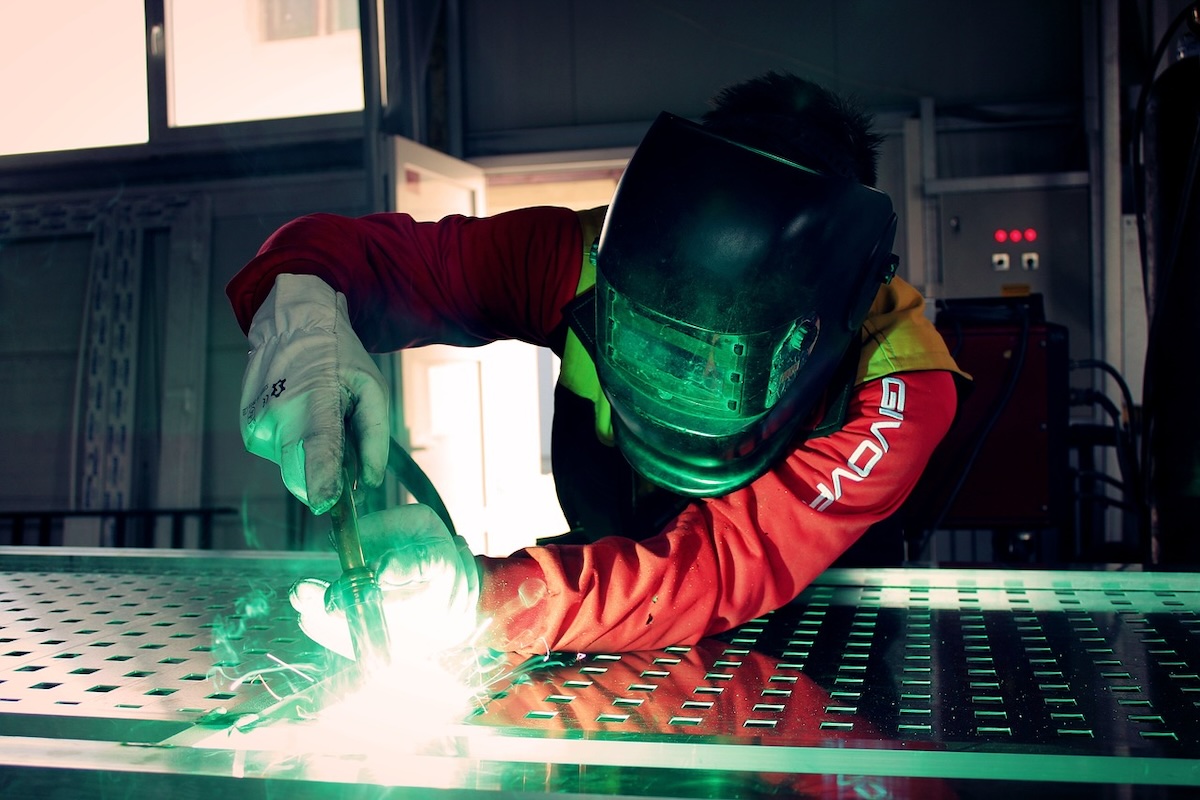

The Dutch economy and prosperity will be jeopardised by planned cuts to the National Growth Fund as well as education and research, warn a wide range of industry parties. They call on the new cabinet to invest in beta-technical education.
The letter was signed by 22 people, representing several large companies and all top sectors. "Our economy and prosperity are at risk now that the planned cuts to the National Growth Fund as well as education and research are clamping down on the STEM sciences from two sides. This affects the future of our country," they write in the letter.
'Simultaneous investment and cuts'
"We understand that simultaneous investment and cuts involve difficult choices. But in the words of Milton Friedman, "There is no such thing as a free lunch." That is why we, the manufacturing industry, the high-tech industry and the top sectors of the Netherlands, are asking for a different choice."
The signatories point out that the Netherlands is at a tipping point. New products and industries are being developed at a rapid pace. At the same time, our country faces several major societal challenges that require solutions in the coming decade.
'Staying on the ball and scoring'
"If we want to maintain our broad prosperity and remain economically relevant, there is only one way forward: stay on the ball and score. And that cannot be done without a strong manufacturing industry," the parties say in the fire letter. They point out that the manufacturing industry is responsible for 12% of the Dutch gross national product, as well as growing faster than other sectors.
They also point to the huge potential of the manufacturing industry for the future. "This sector with its strong R&D position is essential for the Dutch competitive position and of increasing importance to make us less dependent on non-European superpowers," the letter says.
Major societal transitions
Representatives point to the vital importance of cooperation between the manufacturing industry and knowledge institutions for the major societal transitions we find ourselves in. Think of energy, raw materials, sustainability, digitalisation and climate.
"The electric car, solar panels, new battery technology and the further development of new energy carriers such as hydrogen: all of these have been made possible by intensive interaction between industry and scientists," they write in the letter.
Healthcare and agriculture
STEM also make major contributions to improving healthcare and keeping it affordable. These include the use of artificial intelligence (AI) and the development of new forms of diagnostics, prevention and treatment.
The same applies to agriculture and animal husbandry. Here, innovation can play an important role in adapting to the changing climate, robotisation and reducing emissions. "Not only our economy, but our entire society depends on educating our future talents in STEM," the signatories argue.
The Netherlands cannot do without a strong manufacturing industry'.
The Netherlands cannot do without a strong manufacturing industry and a strong manufacturing industry cannot do without strong sciences and engineering, the parties conclude in the letter. "We depend on well-trained scientists and technicians. There is a crying shortage of workers with a STEM education. This shortage is increasing more strongly in the Netherlands than in neighbouring countries and jeopardises the Dutch competitive position. To turn the tide and strengthen the establishment and business climate, it is crucial to invest in STEM education, from primary school to university."
The signatories acknowledge that the new cabinet faces difficult choices. On the one hand, there is the need to cut spending, while at the same time we must continue to invest in what will keep our country strong and resilient in the future. "We call for investments in the STEM domain, for the future prosperity of our country and its inhabitants, and for investments in STEM education and research in cooperation between knowledge institutions and industry. The Netherlands is a leader in this public-private partnership. Every extra government euro in STEM leads to several extra euros in technology and innovation on the business side."
In conversation
The parties invite the new cabinet to enter into discussions on the implementation of the outline agreement in the field of STEM education and investments in the STEM domain.
The letter was signed on behalf of the manufacturing industry, high-tech industry and top sectors of the Netherlands by:
- Airbus NL, Sytze Kampen
- ASM, Ivo Raaijmakers
- ASML, Jos Benschop
- Canon Production Printing, Ernst Ullersmadsm-firmenich, Joris de Beer
- Friesland Campina, Marchel Gorselink
- Johnson&Johnson, Michel van Agthoven
- Nobian, Marco Waas
- Danone-Nutricia, Katrien van LaereShell, Frans Everts
- Tata Steel, Vincent RitmanThales, Lucas Roffel
- Unilever, Manfred Aben
- VDL ETG, Geert Jakobs
- FME, Eveliene Langedijk
- ChemistryNL, Top Sector Chemicals, Jacqueline Vaessen
- Health~Holland, Top Sector Life Sciences & Health, Nico L.U. van Meeteren
- Holland High Tech, Top Sector High Tech Systems and Materials, Marc Hendrikse
- Top Sector Agri & Food, Dirk Duijzer
- Top Sector Creative Industry, Jann de Waal
- Top Sector Energy, Peter Molengraaf
- Top Sector ICT, Jeannine Peek-Vissers
- Top Sector Logistics, Iris Vis
- Top Sector Horticulture & Starting Materials, Jaap Bond
- Top Sector Water & Maritime, Thecla Bodewes
The letter can be found here, amongst other places.
Author: Wouter Hoeffnagel
Photo: Emir Krasnić via Pixabay











