

Formula 1 cars are super-fast and super-safe. This is possible because the F1 teams select the parts on mechanical properties and density. After all, the lighter these are, the faster the car is. Carbon fibre is the preferred material. But which metals do you find in these cars?
Formula 1 fascinates. It is the Champions League of motorsport. The unique combination of technology, speed, precision and competition. Formula 1 brings together the best drivers with the best engineering teams, with the most complex cars and, of course, with the most money. In total, a single F1 car costs three to four million euros.
More than 1,000 hp
A Formula 1 car produces more than 1,000 hp. F1 cars deliver significantly more power than a standard passenger car, but at only half the weight. In 2022, the minimum weight was 798 kg, including driver. A large part of this concerns the engine unit, as it must weigh at least 150 kg according to the regulations. In all other parts, teams save as much weight as possible. This is possible through smart material selection and efficient design. Apart from weight reduction, however, safety is always paramount.
Carbon fibre
Apart from the transmission, engine and suspension, an F1 car is largely made of carbon fibre material. High stiffness and strength at a very low weight are characteristics of carbon fibre. It is therefore a perfect material for Formula 1. But the extreme mechanical and thermodynamic requirements require metals.
The power unit
Power is provided by an advanced 1.6-litre V6 hybrid engine. These high-powered engines may only be manufactured by manufacturers approved by the FIA. Currently, Mercedes, Ferrari, Renault and Honda are active in Formula 1. From 2026, there will be six manufacturers: Audi and RB Powertrains/Ford have registered alongside the four existing manufacturers. Each F1 team may only source engines from one of these manufacturers and is then tasked with building the entire car around that engine.
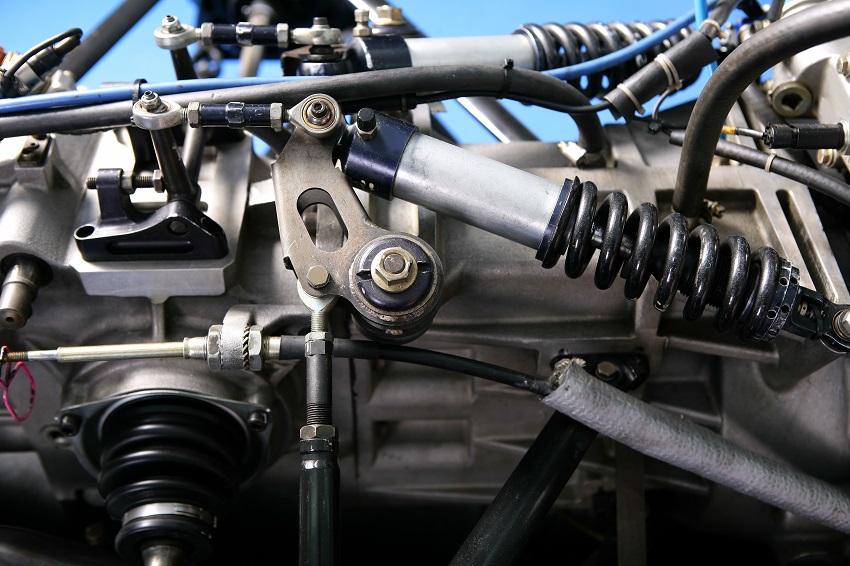
Mercedes W12
Power unit of the 2021 world champion car, the Mercedes W12, consisted of 10,000 separate parts. The FIA regulations detail for each part what material it should be made of. And how it must be manufactured. The Power unit consists mainly of metals. Titanium or titanium alloys are used for many engine parts and for the suspension. This is because titanium possesses high toughness, strength, ductility and corrosion resistance. To save weight, less heavily loaded parts, such as the cylinder head, are made of aluminium. The crankshaft and camshafts consist of a single piece of steel.
When the gears glow
After the engine, the eight-speed transmission is the second toughest component. During the 300 km-plus race at Silverstone, a driver shifts more than 2,000 times. That is a huge load on the gears. They are therefore made of high-strength steel. After each race, they need to be replaced. This is in contrast to the transmission housing. It lasts the whole season. It must therefore be as stiff as possible, because the rear axle is attached to the housing. This is why it is made of titanium and carbon fibre. The drive shafts are made of steel. For parts not manufactured with Additive Manufacturing, any steel alloy is allowed. Teams often choose aluminium for the less stressed transmission parts, but sosm also plastic.
CNC lathes in Formula 1
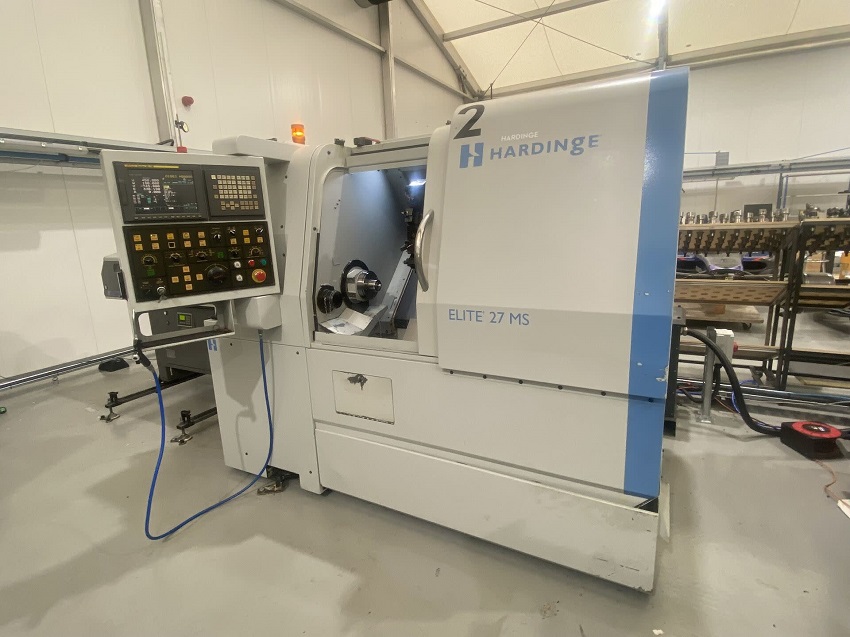
Producing the parts of a Formula 1 car must be done precisely and safely, from prototype to small series. The rapid research and development phase, as well as the FIA's annual rule changes, create additional challenges in this respect. The utmost flexibility is therefore required. Commercial, yet high-quality CNC machines can meet these requirements. However spectacular the parts, the machines are simple.
Replace
Teams use CNC lathes to manufacture rotationally symmetrical components, such as pistons, crankshafts, transmission shafts and drive shafts, as well as wheel hubs. Thanks to the use of a wide range of tools, it is possible to machine many different materials. The F1 teams maintain the machines to a very high standard. As a result, they can continue to provide reliable service for many years to come. When teams decide to replace the machines and purchase newer models, the used CNC lathes often end up on the second-hand machinery market. After all, in such cases, an F1 racing team also functions as a standard metalworking company. CNC lathes and machine tools from a Formula 1 racing team are currently available at the industrial auction house Surplex. The auction runs until 23 March.
Read also: A second chance for batteries, gearboxes and gears
Openingsfoto: Avigator Fortuner/Shutterstock.com











