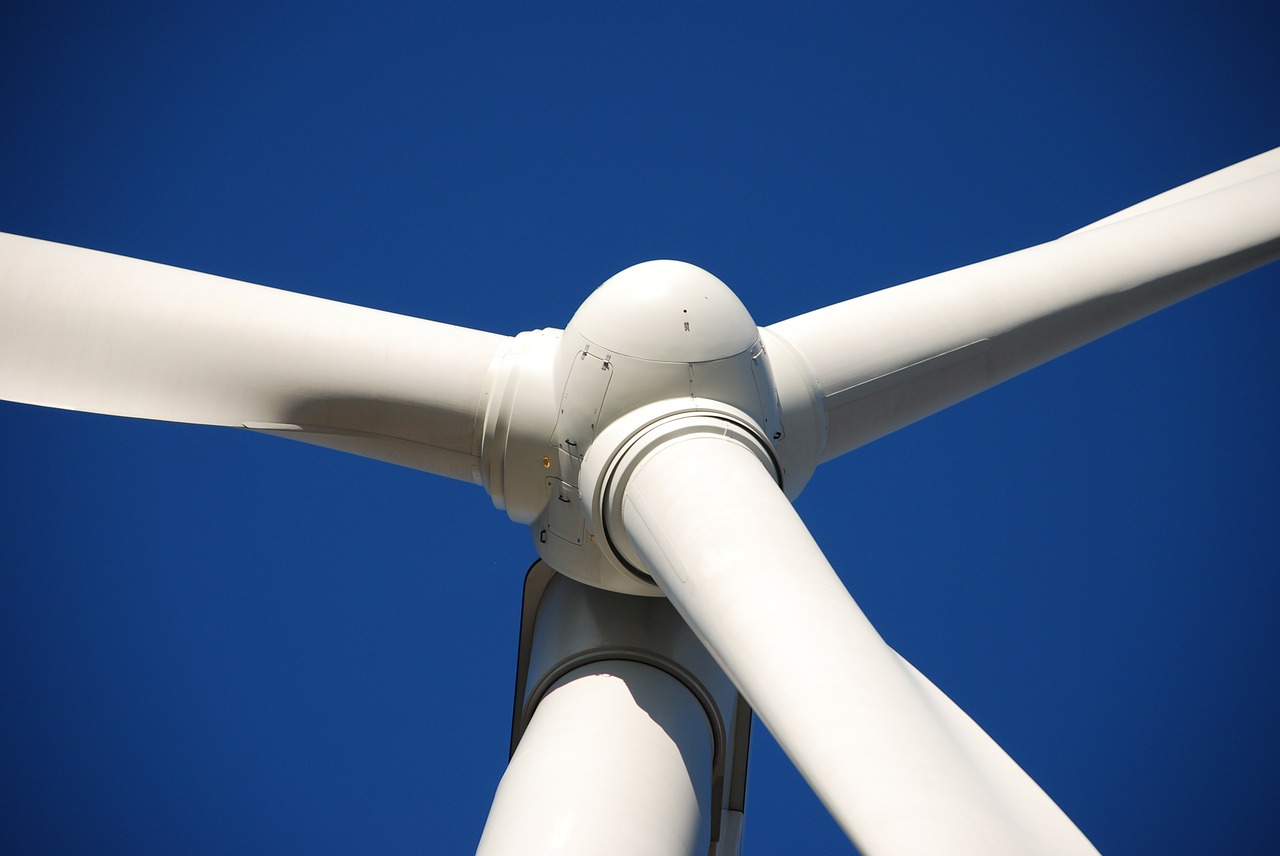

The second phase of construction of Hollandse Kust Zuid wind farm has resumed after last winter's construction freeze. The project's first turbine was recently installed. It is an 11MW wind turbine from Siemens.
The Dutch government wants to reduce greenhouse gas emissions. These targets are laid down in several agreements: the Energy Agreement (2013), the Paris Climate Agreement (2015) and the national Climate Agreement (draft: 2018). One of the agreements made here is that 16 per cent of the energy used in the Netherlands must be generated sustainably by 2023. CBS figures show that this share was still at 6.6 per cent in 2017.
Energy transition
Achieving this objective requires an energy transition. Here, the government sees a key role for wind energy on both land and sea. Offshore wind farms can produce relatively large amounts of renewable energy. For instance, the wind at sea blows hard and wind turbines have the largest capacity here. By 2023, offshore wind farms should provide around 4,500 megawatts (MW) of power. Currently, that is about 1,000 MW, reports Vattenfall.
A number of sites have been selected by the government for the realisation of more wind turbines at sea. One of these is Hollandse Kust Zuid, a wind farm that will be located about 18 kilometres off the coast between The Hague and Zandvoort. This location was chosen because of its suitable soil, ideal wind conditions, limited depth and proximity to the ports of IJmuiden and Rotterdam.
Four lots
Hollandse Kust Zuid is divided into four lots. Vattenfall won a tender for the first two lots of about 115 km2 in March 2018. A tender for the remaining two lots followed in July 2019. With this, the park will be built entirely by Vattenfall, while being owned by Vattenfall, BASF and Allianz.
The wind farm is being built completely subsidy-free. This is possible because the cost of offshore wind energy has fallen rapidly in recent years thanks to rapid developments in the market. In the tender, the government guarantees the grid connection and permit. This greatly reduces the risks and therefore costs of the project.
First turbine placed
Hollandse Kust Zuid will have a total of 140 wind turbines. These are 11MW turbines from Siemens. The first of these wind turbines was installed over the Easter weekend. The turbine installation began with the loading of turbine parts from the quay at Maasvlakte. Parts for four turbines were loaded on board Cadeler's Wind Osprey. These included four masts, four turbine nacelles and 12 blades.
Søren Andersen, Senior Turbine Installation Package Manager at Vattenfall: "With the arrival of the Wind Osprey in the week of 12 April and the loading of the turbine components, the first installation could begin on 16 April. The vessel will take four wind turbines on board each trip, with the aim of having all turbines installed by early 2023. It is great to see all the plans coming together and how we are shaping the energy transition with the installation of these giant turbines. It is an absolute honour to play a role in the transition to a fossil-free future!"
Piling of foundations resumed
Besides the installation of the first wind turbine, the piling of the remaining 104 foundations resumed after the construction halt. Seaway's vessel Strashnov transports and installs three foundations at a time. After installing a foundation, Jumbo's ship Fairplayer will place the platform on the foundation. All foundations should be placed in the bottom of the North Sea this summer.
A third component of the installation is the cabling that carries power from the turbines to the substations. The first cables have now been installed, reports Vattenfall. The second batch of cables will be loaded from storage in Velsen-Noord into the installation vessel in the coming weeks.
Limiting impact on nature
Vattenfall is allowed by the Dutch government to install a maximum of 252 wind turbines at Hollandse Kust Zuid with a maximum tip height of 251 metres above sea level. The wind turbines must have a minimum capacity of 6MW. Vattenfall reports deliberately choosing larger turbines so that fewer need to be installed. According to the company, this increases the efficiency of the wind farm and limits both the costs and the effects on nature.
Author: Wouter Hoeffnagel
Photo: Pixabay / Steppinstars











