
Alliander laid almost 2,300 kilometres of electricity cables and gas pipelines last year. Meanwhile, the company sees the demand for electricity growing exponentially. In some sectors, expected demand in 2030 is growing much faster than previously anticipated. This puts even more pressure on the expansion of the electricity grid.
With the Netherlands' faster pace of increasing sustainability, the growing economy, digitalisation and large-scale residential construction, the demand for electricity is growing explosively. Alliander's most recent forecasts show that residential construction, industry and data centres, in particular, are already demanding much more from the electricity grid in the short term than initially projected for 2030.
Residential construction
The ambitions for the rising housing task are becoming more and more concrete. Governments are now steadily stepping up housing production. New-build homes are predominantly gasless and equipped with all-electric heat pumps. As a result, they consume on average four times more electricity than houses with a gas connection. With this, the expected electricity demand of heat pumps in (new-build) houses comes eight years earlier than predicted.
Industry
Industry is also fully committed to both electrification and the use of green gases. The current gas price and rising CO₂ prices give electrification with e-boilers, for instance, an extra boost.
Data centres
Finally, data centres are getting bigger and bigger. Locations are also spreading more across the country compared to previous forecasts. For the combined data centres, the amount of electricity they consume is expected to be needed six years earlier than projected for 2030.
Energy demand rising faster than expected
Maarten Otto, CEO of Alliander: "We work extremely hard on our electricity and gas networks every day. Last year we did more work than ever. At the same time, we find that energy demand is rising much faster each year than previously forecast for 2030. The ever-increasing demand for energy, due to, among other things, more stringent climate ambitions and sturdier housing construction assignments, is the dynamic we have to deal with continuously. Our social mission is clear. By accelerating the energy transition, our production should increase even further in the coming years."
Different approach
"To further accelerate our production, we are adapting our organisation and organising work in different ways. For instance, we are now making more use of our contractors' capacity by outsourcing more work. More work can also be done by using modular construction. This allows us to expand the electricity grid faster. In addition, we are working on the digitalisation of our current grid which will enable us to make better use of the grid. However, we cannot achieve the overall task alone. Realising the energy grid of the future requires cooperation between all parties involved, the government should take more control and new regulations are needed quickly to shorten lead times," Otto said.
Further acceleration needed
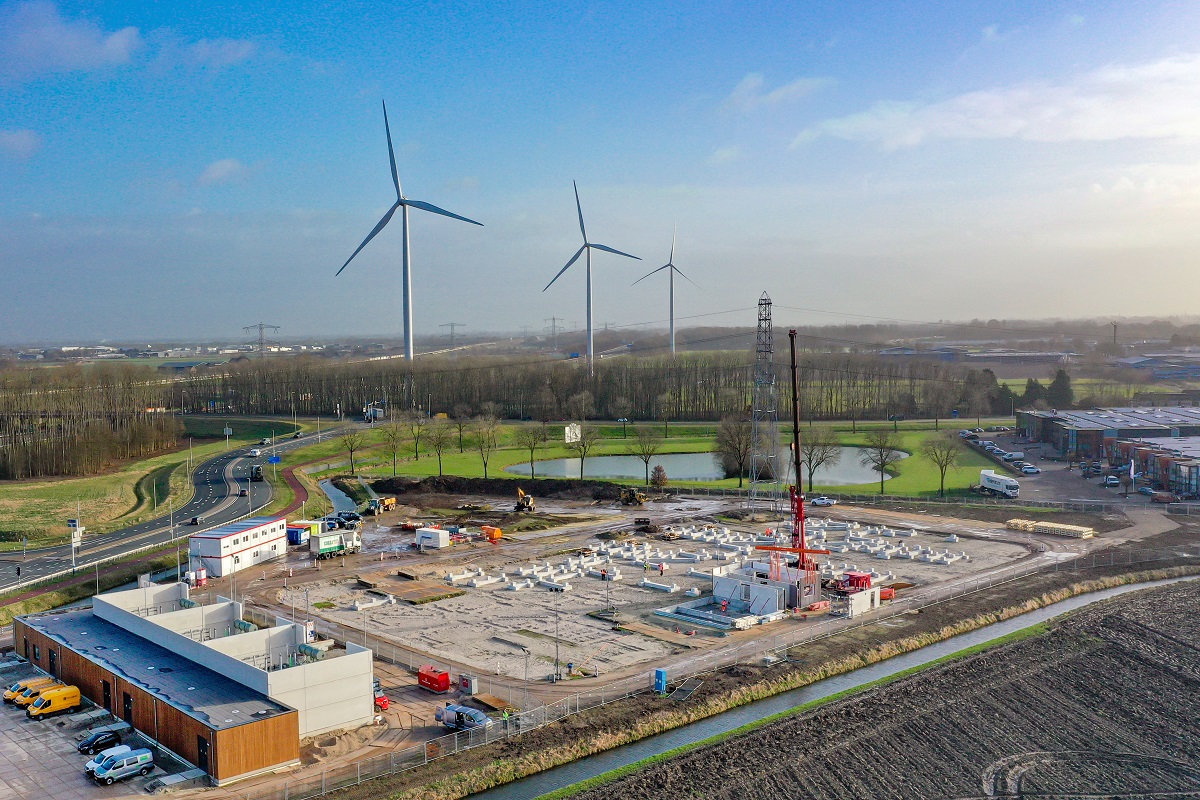
To meet the increasing and accelerated demand for electricity, the electricity grid needs further expansion. Alliander expects to need almost 30 new electricity distribution stations up to and including 2030. In addition, the strengthening of more than 60 existing stations is required. The number of transformer substations needs to increase by 23,000 until then. This is double the current number of cottages. In addition, 43,000 kilometres of new power cable will be needed over the next nine years. A length as large as the circumference of the earth. But the work does not only consist of expanding the power grid. Over 1,200 kilometres of the gas grid will also have to be replaced over the next ten years. The work now before us does not yet include the new government's recently tightened climate ambitions because their impact is still unclear.
Photo: Alliander











