
Gasunie and Perpetual Next, which specialises in torrefaction technology, have entered into a 50/50 joint venture agreement. Together, they intend to further develop and realise the Torrgas Delfzijl project.
The joint intention is to build a new plant. This will sustainably produce and distribute green gas from syngas in the future. This will eliminate dependence on fossil resources.
Construction to start in autumn
Construction of the plant is expected to start in autumn 2022. The first phase of this project involves an investment of around EUR 60 million. This investment decision will follow later this year. The plant will initially provide direct employment for 15 jobs.
Delfzijl
For this project, both companies together intend to build the plant in the Delfzijl chemical cluster. Perpetual Next will then take responsibility for managing and operating the plant. Gasunie will handle the distribution of the gases. Its delivery to the built environment and industry will be underground via the national network.
Rapid upscaling possible
The plant is expected to be ready in 2024. Green gas production is likely to start at 12 millionm3 per year. Rapid scale-up to 40 or 120 millionm3 of green gas per year may be possible.
Torrefaction
The plant will use a renewable feedstock. Perpetual Next possesses the technology to convert organic waste streams, green waste and scrap wood into high-quality renewable raw material via torrefaction. This is brought to the plant by barge. By then gasifying this raw material in two heating steps, a development by technology partner Torrgas, syngas is created.
Syngas
Syngas forms a basis for many chemical applications that replaces fossil as a raw material. From syngas, green gas, methanol and hydrogen can be made, among other things. The production of syngas is also cost-effective due to the by-product bio-char. This is a pure form of carbon. Think of applications as a soil improver, in water treatment and for cleaning factory chimney gases. Phase 1 of this project focuses mainly on making green gas for further distribution through Gasunie's existing natural gas network. The production of syngas contributes to achieving the ambitions set out in the Climate Agreement.
Strategic importance
Martijn van Rheenen, co-founder of Perpetual Next: 'The cooperation with Gasunie and the Chemport Europe site is of strategic importance to us. It's great to see that this region will supply gas again in this way. But a future-proof variant. The availability of raw materials, the space to create production facilities with new clean technologies and the knowledge and expertise present make this the perfect environment.'
Ambition
Ulco Vermeulen, member of the Executive Board of Gasunie: 'The ambition of the Climate Agreement is to produce 2 billion m3 of green gas by 2030. Together with other parties, we are committed to getting green gas onto the market affordably and on a large scale. This project fits into this ambition; we have great confidence in jointly realising a sustainable, successful, technologically advanced project.'
Source: Gasunie
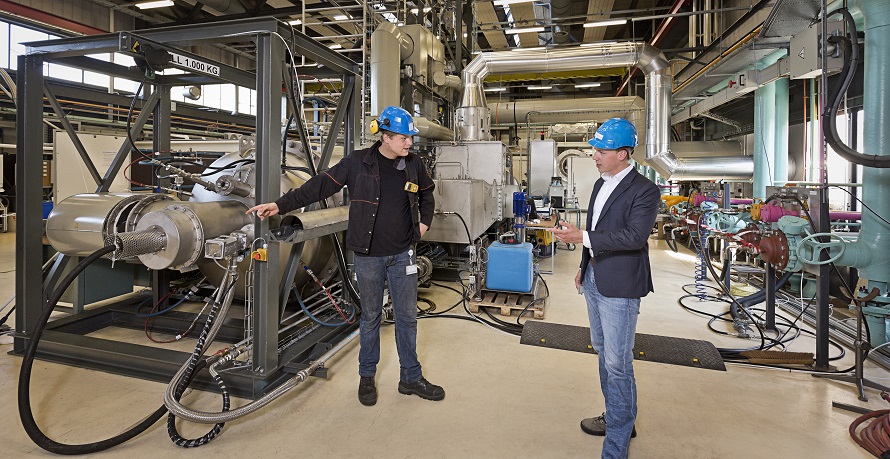
Image: A technical plant needed in the process to produce green gas. (Photo: Gasunie)











