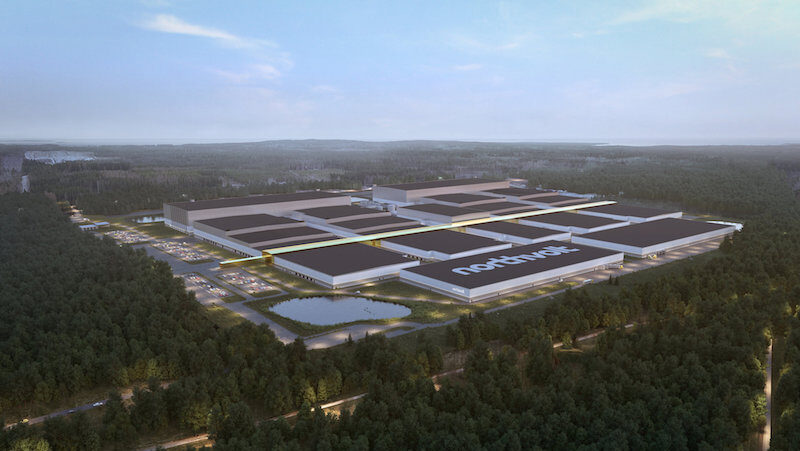

Northvolt and Portuguese energy company Galp are setting up a joint venture. Together, the parties aim to build Portugal's most sustainable lithium plant and strengthen Europe's position in the value chain around batteries.
Northvolt is a Swedish company focused on the development and production of batteries. These are specifically lithium-ion batteries intended for use in electric vehicles. This includes recycling and the use of green energy. The company sets itself a mission to supply batteries with an 80% lower carbon footprint compared to batteries produced using fossil fuels. Northvolt was founded in 2016 for Peter Mikael Carlsson and Paolo Cerruti. It is headquartered in Stockholm, Sweden.
Galp Energy is a privatised Portuguese oil and gas company. The company was formed in 1999 from a combination of oil company Petrogal and gas company Gás de Portugal. Galp is headquartered in Lisbon and the company is led by CEO Andy Brown.
Aurora
The parties are jointly establishing a joint venture called Aurora. The joining of forces should be an important step in the development of an integrated value chain around lithium-ion batteries in line with Portuguese and European ambition. Aurora ultimately wants to realise the largest and most sustainable lithium conversion plant. Production capacity should eventually reach some 35,000 tonnes of battery-grade lithium hydroxide. This material is a requirement for the production of lithium-ion batteries. This market is predicted to grow by a factor of 10 before the end of this decade.
The new plant will use a proven conversion process optimised for improved sustainability and efficiency. Green energy will also be used during the conversion process to minimise dependence on natural gas.
Commercial operations to start in 2016
A final decision on the plant's arrival has yet to be taken. Northvolt and Galp are currently carrying out technical and economic feasibility studies on the project. Several potential sites for the plant are also being investigated. The plant should open its doors by the end of 2025, after which commercial operations could start in 2016. The plant should be able to supply enough lithium hydroxide to produce 50 GWh of batteries per year. This is good for about 700,000 electric vehicles, according to the parties.
Based on similar projects, Northvolt expects the project to require an investment of around €700 million. Some 1,500 direct and indirect jobs are expected to be created by the project.
Northvolt Ett
As part of the agreement, Northvolt will take 50% of the plant's production capacity for its own battery production. To this end, the company is building a mega battery plant in Sweden called Northvolt Ett, for which it raised USD 1 billion from investors in 2019. The company also received a $350 million loan from the European Investment Bank (EIB). With the plant, Northvolt aims to transform lithium-ion battery production. To do so, the company is betting on a combination of scale, vertical integration and automated production. Among other things, this should push the boundaries in terms of battery performance, quality and cost.
Author: Wouter Hoeffnagel











