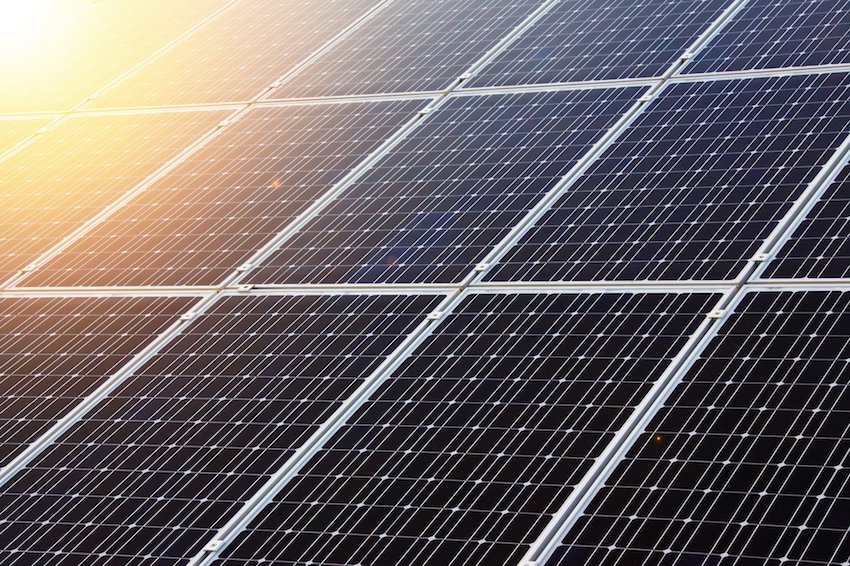

A number of companies are building a hybrid energy park off the Belgian coast. Oceans of Energy is building a 3MW solar park, while CorPower Ocean is constructing a 1.2MW 'wave energy park'.
Globally, energy consumption is on the rise. Whereas consumption currently stands at 21,000 TWh per year, demand is expected to double by 2050. At the same time, governments face the challenge of reducing greenhouse gas emissions.
EU bets on offshore energy
Offshore energy generation is a key focus area for the European Union (EU). For instance, the EU wants to achieve net zero greenhouse gas emissions by 2050. To this end, the EU wants to generate 230 to 440GW of wind energy and 40GW of wave energy offshore, respectively, by 2050.
The hybrid energy park includes both a solar park and wave energy park. Both in combination with a wind farm. Oceans of Energy's solar farm involves a fixed wind farm, where wind turbines are placed on the seabed. CorPower Ocean's wave energy farm involves a floating wind farm.
The project is called European SCalable Offshore Renewable Energy Sources (EU-SCORES). It should pave the way for the deployment of commercially relevant hybrid offshore energy farms in Europe from 2025. The project is led by the Dutch Marine Energy Centre.
Countering imbalance
In traditional solar and wind farms, the yield is solely dependent on weather conditions. As a result, the park does not always produce the same amount of energy, which can lead to imbalances in the energy network. Combining different renewable energy sources counteracts this. And enables a continuous release of renewable energy.
The hybrid park should provide a "more resilient and stable energy system, higher capacity factors and lower overall cost per MWh". The project should demonstrate how higher energy yields and higher installed capacity per square kilometre reduce the space required in the sea. This reduces the impact of hybrid energy farms. And leaves more space for nature, fisheries, shipping and protected environmental zones, for example.
The lower cost per MWh is possible partly because parties are jointly using critical electrical infrastructure. To this end, the parties involved are also investigating the use of innovative autonomous systems for both control and maintenance.
Wide range of parties involved
The project involves a wide range of parties. The project is led by Dutch Marine Energy Centre (DMEC). Other parties involved include Oceans of Energy, TU Delft, SBM Offshore, POM West Flanders (POM), RWE Renewables (RWE), CorPower Ocean, Uppsala University, Lappeenranta-Lahti University of Technology (LUT), Enel Green Power, RINA offshore consultants, INNOSEA - a AqualisBraemar LOC Group company, EDP Labelec, WavEC Offshore Renewables, INESC TEC, Exceedence and Western Star Wave - a Simply Blue Group company.
The project receives support from trade association for Dutch suppliers in the offshore energy industry IRO, ENECO Group, Portuguese utility company Redes Enérgeticas Nacionais, Parkwind, Ocean Winds and German energy company Energie Baden-Württemberg.
Hybrid energy park by Vattenfall
Vattenfall has been building a hybrid energy park near Haringvliet on Goeree-Overflakkee for some time. Here, the company combines solar panels, wind turbines and batteries. The park consists of six wind turbines, located in the north of the island of Goeree-Overflakkee between Middelharnis and Stad aan het Haringvliet. They are expected to generate around 22 MW of energy.
The solar farm consists of 124,000 solar panels providing a total of 38 MW of capacity. Vattenfall is combining the solar panels with batteries from BMW with a capacity of 12MW.
Author: Wouter Hoeffnagel