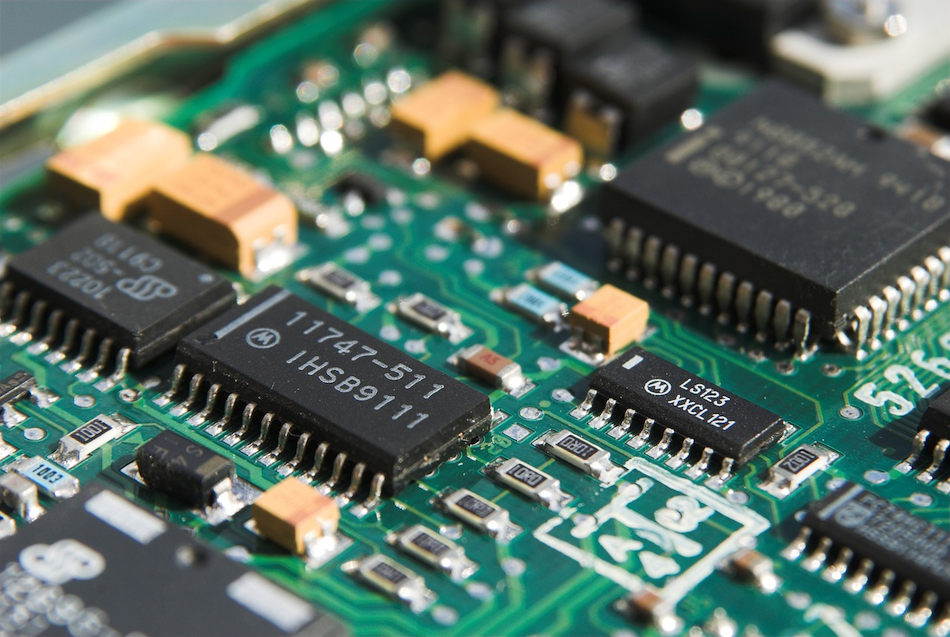

European economy ministers have agreed to the European Chips Act. This new European legislation aims to boost chip production on European soil. In doing so, the European Commission aims to reduce the EU's dependence on foreign countries.
Chips play a crucial role in a very wide range of devices. These include high-tech equipment such as industrial robots and manufacturing systems, as well as household appliances such as refrigerators and dishwashers, cars, computers and mobile phones. A shortage of chips therefore disrupted the production of a large number of goods last year.
Automotive sector hit hard
One of the sectors hardest hit is the automotive sector. Figures from Allianz Trade in September showed that 18 billion fewer vehicles were produced worldwide due to the chip shortage. European car manufacturers in particular have been hit hard by the shortages. Allianz Trade estimates that the cost of the chip shortage to European manufacturers in 2021 and 2022 will be around 100 billion euros.
Preventing repetition
The European Chips Act is intended to prevent a repeat of this situation. Through this legislation, the European Commission aims to make subsidies and tax incentives available to chip companies wishing to establish or expand chip production on European soil. In this way, the EU should not only become less dependent on other countries for chip production. In the medium term, the European Commission wants the EU to be a leader in the production of semiconductors.
As part of the European Chips Act, a budget of over €43 billion should become available. This budget should consist of both private and public investments. A quarter of the budget must come from public funds. The European Commission wants the private sector to contribute the remaining three-quarters.
Grant for more chips than originally envisaged
The European Chips Act was announced by the European Commission in February. The version that the European Economy Ministers now agree to is an amended version of this proposal. Among other things, the modified version allows for subsidies for more types of chips. This includes all chips that can trigger innovation in the areas of computing power, energy efficiency, environment and artificial intelligence (AI).
Various investments announced
Several companies already announced an expansion of their chip production in the EU. These include Bosch, which is investing some €3 billion to expand its chip production through 2026. This will enable the company to supply more chips to the automotive industry, among other things.
Bosch invests 170 million euros in two new R&D centres in Germany. 250 million euros is aimed at expanding a wafer fab in Dresden. Bosch also announces research into the production of gallium nitride-based chips.
Intel invests 17 billion euros
Another example is Intel, which in March announced a €17 billion investment in two chip factories in Magdeburg, also in Germany. The US company speaks of a "mega-location" for chip production. The Netherlands was also considered as a location, but lost the battle to Germany.
Intel expects construction of production facilities to start in the first half of 2023. Production could then start in 2027. In time, Intel is considering expanding the site to six to eight chip factories.
At the same time, Intel is also investing in France. In Plateau de Saclay, just south of Paris, the company is building an R&D site. Intel aims to make France its European headquarters for R&D in chips focused on high-performance computing and artificial intelligence. Intel is also investing in R&D centres in Poland and Spain.
US Chips and Science Act
Alongside the EU, the United States (US) is also committed to increasing domestic chip production. To this end, the Americans presented the US Chips and Science Act. This bill was signed by US President Joe Biden in August. In total, the US is allocating 52 billion dollars to stimulate the production of and research into semiconductors on American soil. Like the EU, the US aims to reduce its dependence on foreign countries through this measure.
Author: Wouter Hoeffnagel
Photo: axonite via Pixabay











