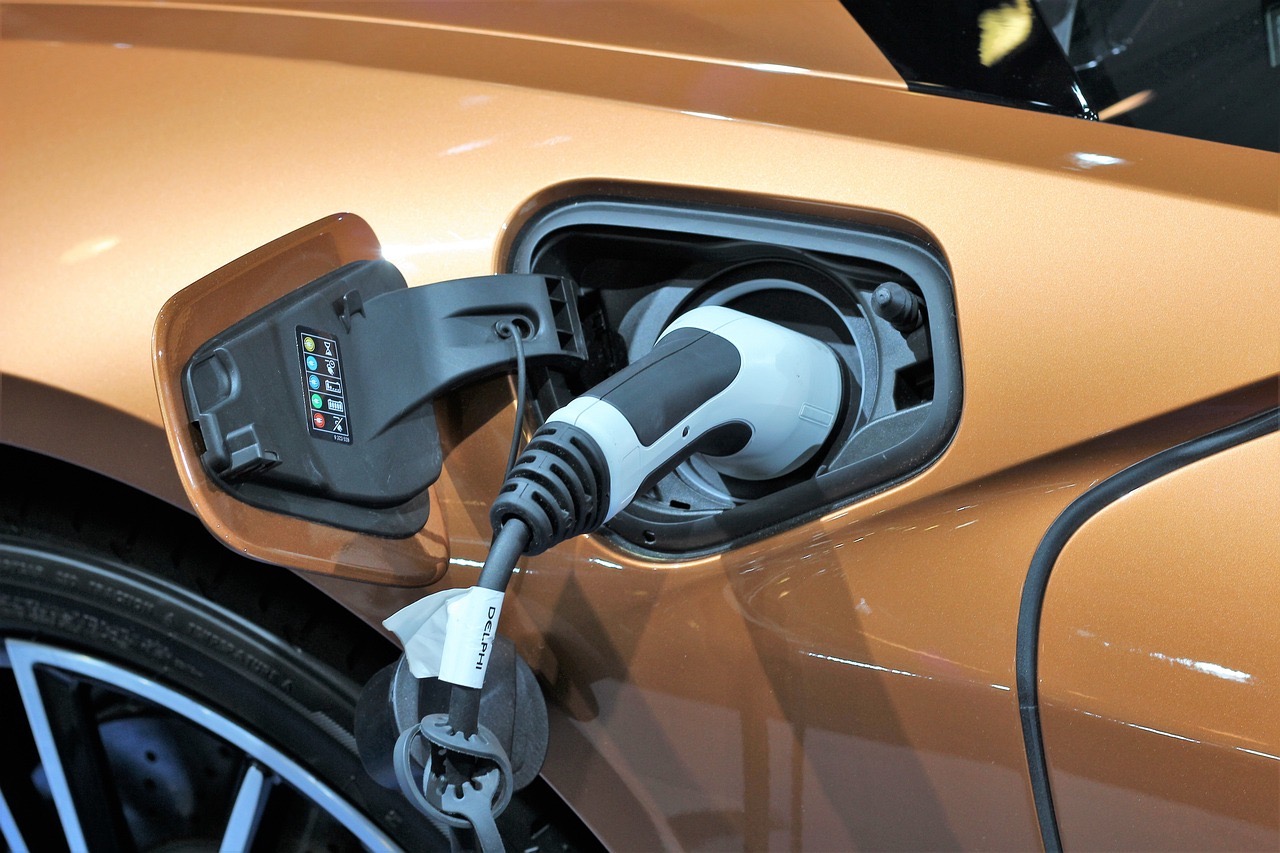

For a long time, demand that far exceeded production, long delivery times and shortages of chips, among others, characterised the automotive sector. At Volkswagen, however, a very different tune is now sounding. Due to disappointing demand for the ID4 and ID7, the German car manufacturer is forced to scale back its production.
Volkswagen's warning is striking, as many signals from the automotive sector are actually positive. For instance, new car sales have been picking up for some time. This is partly because all kinds of restrictions on car production have disappeared. For a long time, the sector was struggling with a shortage of chips, which hampered the production and delivery of vehicles. Production backlogs that arose as a result have also been largely cleared by now.
Volkswagen, however, now seems to see the tide turning. Several German media report that the carmaker is facing overcapacity. For example, Manfred Wulff, chairman of Volkswagen's local works council, reports to Nordwest Zeitung that the Volkswagen plant in Emden, in particular, is seeing demand lag behind production. In particular, demand for Volkswagen's electric vehicles (EVs) ID4 and the new ID7 are said to be disappointing.
Services scrapped and longer holiday period
As a result, the German carmaker is forced to take measures. For instance, the company is cancelling the late shift at its Emden plant for the next two weeks. In addition, the company is extending the holiday period - during which the factory is closed - from three to four weeks.
There are also redundancies. These are specifically temporary workers. Of the 1,500 temporary workers currently working for Volkswagen in Emden, 300 are no longer employed at the plant as of August.
Thirty per cent less demand than expected
The chair of Volkswagen’s local works council has confirmed to NDR that demand is lagging behind production. Demand is said to have been 30 per cent lower than expected. He attributes this to customer reluctance when it comes to EVs.
Olaf Lies, the local economy minister, also warns to NDR that the problems may not be limited to Volkswagen. Lies argues that the car industry as a whole must be mindful of falling demand for EVs in particular.
Transition fund for sustainable mobility
Recently, the Mobility Alliance in the Netherlands called for a transition fund for sustainable mobility, designed to support the shift towards sustainable transport. According to the alliance, the investment is necessary to make sustainable mobility affordable for all citizens and businesses. The parties involved warn that if the cost is borne almost entirely by citizens and businesses, public support will quickly wane. Twenty-six mobility organisations are united within the Mobility Alliance, including the ANWB, various transport companies, the Fietsersbond, the Vereniging Zakelijk Rijders and Schiphol.
The Mobility Alliance also argues that current government policies are making sustainable transport less attractive. Consider the weight of EVs, which is often relatively high due to the presence of batteries. The Mobility Alliance advocates a weight correction for EVs. This should prevent the monthly motor vehicle tax for EVs from being significantly higher than for a petrol car of similar size.
Author: Wouter Hoeffnagel
Photo: Goran Horvat via Pixabay








