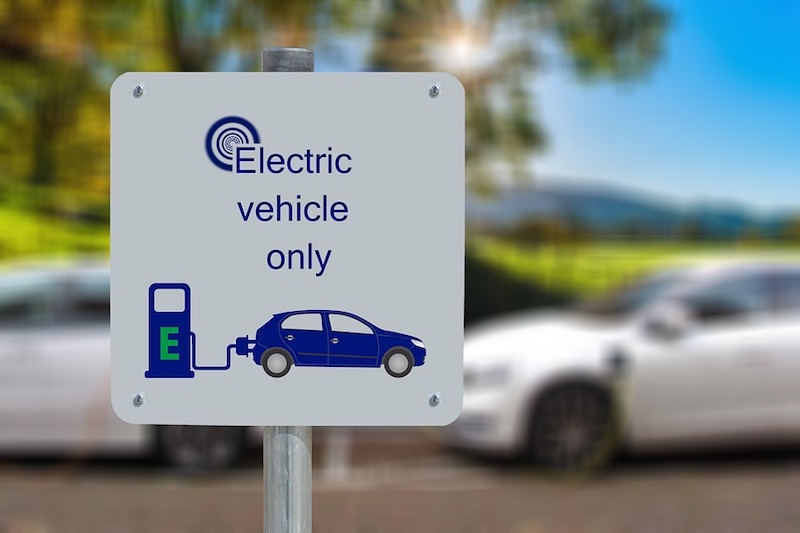

Electric vehicles (EVs) are not for everyone, argues Stellantis chief Carlos Tavares. While EVs are a godsend in some regions, the current generation of EVs are far from being relevant to all users worldwide. Among other things, the large amount of resources needed and the instability of electricity grids in many countries is a major obstacle.
Tavares makes his statements in an interview with Automotive News. The Stellantis CEO is one of five experts speaking at the annual Freedom of Mobility Forum. He sees several obstacles to the global embrace of EVs. For instance, Tavares points to the large amount of raw materials needed to produce battery cells. For example, a battery pack for an EV quickly requires 500 kg of raw materials.
Environmental impact questioned
Tavares questions the environmental impact of this, pointing out that EVs are precisely meant to ease the burden on the environment. The Stellantis top executive also thinks the amount of raw materials is disproportionate to the range the battery pack subsequently provides.
Roberto Schaeffer, professor of 'energy economics' at the University of Rio de Janeiro in Brazil, is also critical. Schaeffer is one of the other experts to speak at the event. Among other things, the professor points to the instability of electricity networks in many countries worldwide. Schaeffer also points to the costs associated with electric driving. The professor expects EVs to be financially unattainable for many people for decades to come.
Embracing goes slower than hoped
It has long been clear that the uptake of EVs in many countries is not progressing as quickly as hoped. For example, around 5.18 per cent of the Dutch vehicle fleet is electric. In absolute terms, this amounts to 490,820 EVs in the Netherlands, out of a total of 9,473,035 vehicles. The increase is mainly due to the business market, says Bert de Kroon, chairman of BOVAG Autodealers. “Large companies are less reliant on tax incentives. But when we look at the share of the private market, we see that the number of consumers buying a new EV lags far behind the business market,” says De Kroon.
The number of EVs sold rose 20 per cent in the first quarter. A total of 13,051 new EVs were registered. Only hybrid vehicles were registered more often in the first quarter (15,406 units). The Crown calls this a hopeful sign and a clear signal to the government. "The supply is growing and broadening. Move with extra incentives and accelerate the greening, precisely without leaving consumers behind," says De Kroon.
'Also important for second-hand market'
Huub Dubbelman, section chairman passenger cars and light commercial vehicles at RAI Association, added: "The rising ingrowth of electric cars is not only important for new sales, but in the long run also for the development of the used market. The start of the first quarter was promising and, with a forecast of 360,000 new cars for 2024, registrations are on track."
However, EVs are less popular on the Dutch second-hand market. Figures from Gaspedaal.nl and Autotrack, compiled by Automotive Mediaventions, show that in March 2024, second-hand diesel cars were still more popular than second-hand EVs. For instance, 7.4 per cent of searches on the platforms were for used electric vehicles, whilst 8 per cent were for used diesel cars. Diesel-hybrid vehicles accounted for 1.3% of searches. At 54.5%, the vast majority of searches were for a second-hand petrol car. In 26.3% of cases, users were searching for a petrol-hybrid vehicle.
Netherlands lags behind Norway
Although the uptake of EVs is growing, the Netherlands, for example, lags far behind Norway. Whilst over five per cent of the vehicle fleet in the Netherlands is now electric, figures from Reuters show that this percentage in Norway has now reached 24 per cent. EVs are therefore well on course to overtake the number of petrol-powered vehicles on Norwegian roads; currently, 27 per cent of Norwegian cars run on petrol. Diesel, at 37 per cent, remains the most popular choice among Norwegians.
Author: Wouter Hoeffnagel
Image: Pixabay / Gerd Altmann








