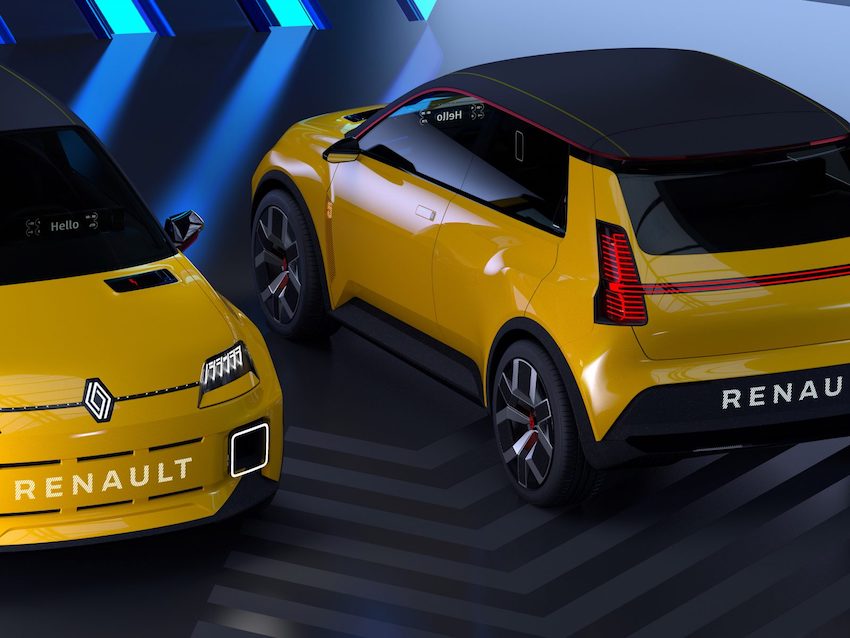

Renault is to double its range of electrified models. With this, the French carmaker wants to strengthen its position in the C- and B-segment. By 2025, the brand will introduce 14 new models, including seven electric ones.
Groupe Renault announces this when presenting its 'Renaulution' strategic plan for the next five years and beyond. With the new plan, Renault aims to embrace the changes in the car market. The company wants to maintain its position in the energy transition by betting on electric and hydrogen solutions. By doing so, the French company aims to have the greenest product range in Europe on the market by 2025.
Nouvelle Vague
Renault aims to create its own‘Nouvelle Vague’, a term describing a film style that emerged around 1959. “At Renault, we are embracing the waves of disruption and creating our own ‘Nouvelle Vague’. The aim is to bring modernity to the automotive industry. We are transforming into an energy brand, strengthening our leadership in electric vehicles through the Electro Pole project and investing in hydrogen, with the aim of achieving Europe’s greenest product mix by 2025. Renault will also be a technology brand, through in-house innovation and through the Software République, an open ecosystem dedicated to developing European expertise in key areas such as data and cyber security. This gives us a competitive advantage as a service brand, with high-tech connectivity services both inside and outside the car. We are anchoring this vision of modernity in France, because as a brand we know that our soul and our strength lie here. “The new R5 is the ‘Nouvelle Vague’: it is deeply rooted in its history, yet it represents the future, making electric cars popular,” says Luca de Meo, CEO of Groupe Renault.
Connected services
Renault is also betting on connected services. Renault announces it will use 'Software République', an open ecosystem focused on software, data, cybersecurity and microelectronics. This will give the full range of product access to connected services.
The ecosystem should enable Renault, member brands and future partners to develop joint expertise, build European know-how and defend its "sovereignty" in key technologies, from big data to electronics. Through the ecosystem, Renault also aims to equip its models with artificial intelligence and cyber security, among other things.
'Breaking cycle of consumerism'
Renault also wants to position itself more as a service brand. Part of this is an attempt to 'break the cycle of consumerism and generate value until the end of the car's life'. The 'Re-Factory' plant in Flins, France, will overhaul more than 100,000 used cars on an annual basis. Light commercial vehicles with diesel engines will also be converted to biogas or fully electric models at the factory. By gaining more control over parts of the value chain such as product reuse or used batteries, Renault aims to generate new business cases and value.
Part of the plans also includes doubling the brand's range of electrified models. By 2025, Renault will introduce 14 models, including seven electric and seven C/D segment vehicles. With an ambition to achieve 45% of sales with these by then.
The models are based on two modular electric platforms: CMF-EV and CMF-B EV. The brand also offers market-ready, end-to-end hydrogen solutions for light commercial vehicles. With this, Groupe Renault aims to achieve the greenest product mix on the European market.
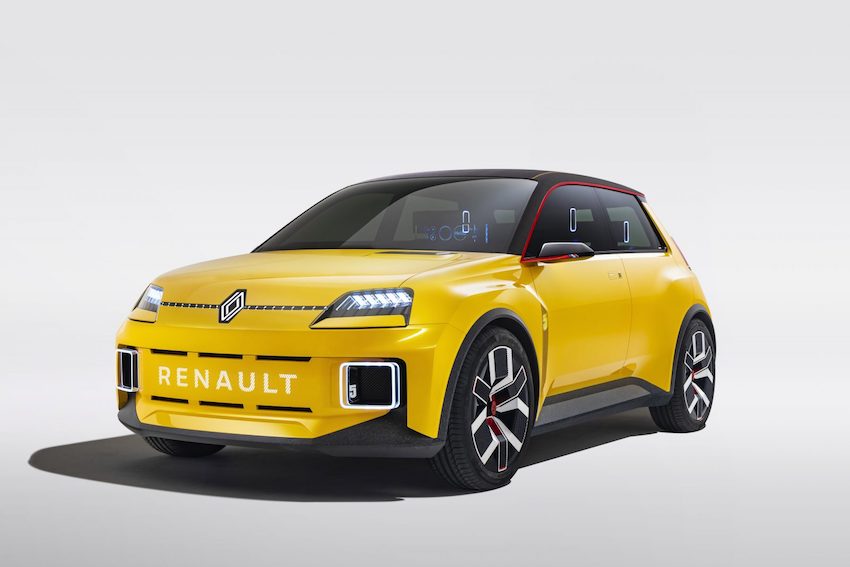
Prototype Renault 5
Finally, the company is presenting a prototype of a revamped Renault 5. This is a compact city car that is 100 per cent electric. The model is based on the Renault 5, which was produced from 1972 to 1996.
"The soul of a brand is in its roots. The past provides a source of inspiration that can be used to revive times past. That is exactly the role of the Renault 5 Prototype, to show that Renault will democratise the electric car in Europe with a modern approach to the popular and essential car," Renault writes.
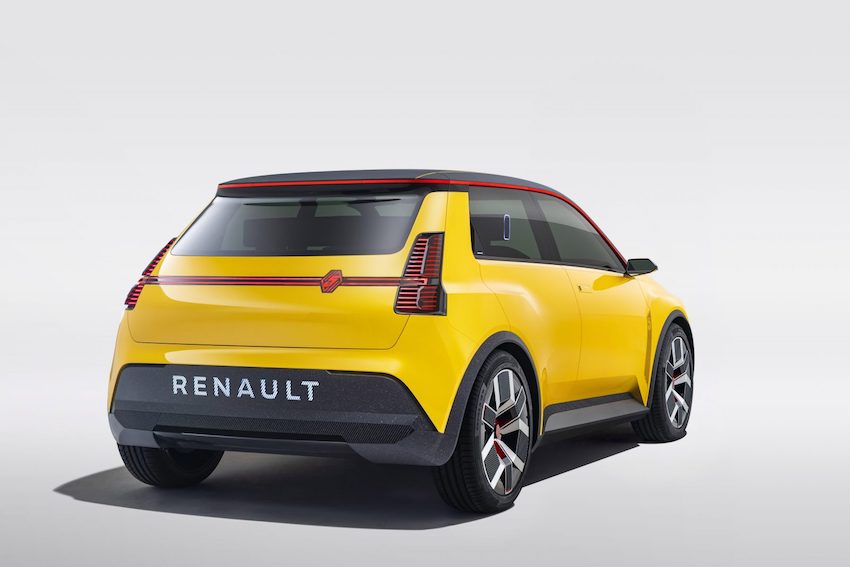
"The design of the Renault 5 Prototype is based on the R5, the cult model of our heritage. This prototype simply embodies modernity, a vehicle relevant to its time: urban, electric, attractive," said Gilles Vidal, Renault Design Director, in a comment.
Author: Wouter Hoeffnagel








