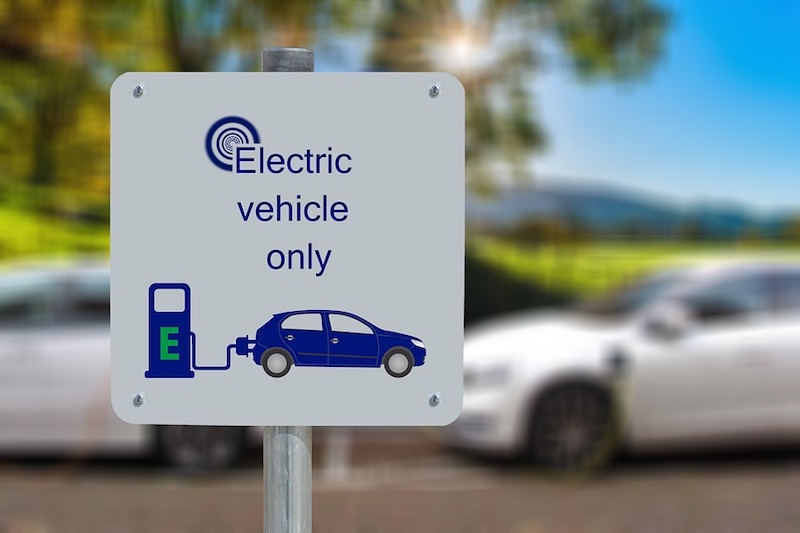

Car dealers see demand for electric cars falling. Potential customers are particularly uncertain about the cost of electric driving in the near future, with changing rules around motor vehicle tax (MRB) playing an important role, among others. However, also consider the falling prices of electric vehicles (EVs), leading customers to postpone purchases.
Those who currently have an EV do not have to pay MRB on it. However, that will change from 2025. EV drivers will then have to pay a quarter of the regular MRB, after which they will have to pay the full rate in 2026. In practice, however, many EVs are relatively heavy due to the presence of battery packs; the weight difference with a fuel car is easily 300 to 600 kilograms. This may therefore lead to additional costs for EV owners.
'Weight correction for MRB needed'
Dealers are seeing this reflected in buyer interest. “Buyers are uncertain. As far as we’re concerned, this tax measure isn’t a done deal. There needs to be a weight adjustment for the motor vehicle tax, otherwise buyers will lose interest and we won’t meet our climate targets,” Paul de Waal of Bovag told the AD.
The falling demand is not yet directly reflected in figures. Maarten van Biezen of the Vereniging Elektrische Rijders tells the newspaper that orders were already placed last year. On the contrary, new orders are doing worse. Van Biezen also points to the subsidy pot for buying an EV, which is unlikely to run out by the end of the year for the first time.
The declining sales figures also affect the Netherlands' position in terms of EV sales. Van Biezen reports that the share of EVs in car sales in Denmark, Finland, Norway as well as Sweden is now higher than in the Netherlands.
Price war
At the same time, there is also a price war going on in the automotive sector. US-based Tesla in particular played a major role in this; the company decried the price war with hefty price cuts that Tesla continues to this day.
KPMG recently reported that other car manufacturers, including Volkswagen, BMW and Ford, now appear to be following Tesla’s lead. At the same time, manufacturers are increasingly focusing on cheaper EVs, with a price tag of less than $30,000. This price war is causing consumers to adopt a wait-and-see approach and postpone their purchases.
Ford cancels battery plant in Turkey
Car manufacturer Ford is also seeing demand for EVs decline. The company had planned to open a new EV battery factory in Turkey in partnership with LG and the Turkish firm Koc Holding. However, Koc Holding is withdrawing from the agreement signed for this purpose, reports Reuters. The industrial conglomerate cites current conditions in the EV market and therefore does not wish to proceed with the investment.
Volkswagen Group is also putting off the arrival of new battery plants for now as it sees growth in EV sales levelling off, top executive Oliver Blume told Reuters. For now, the German car brand is betting on two European so-called gigafactories: in Salzgitter, Germany, and Valencia, Spain. New battery plants are not on the cards for the time being.
Author: Wouter Hoeffnagel
Photo: geralt via Pixabay








