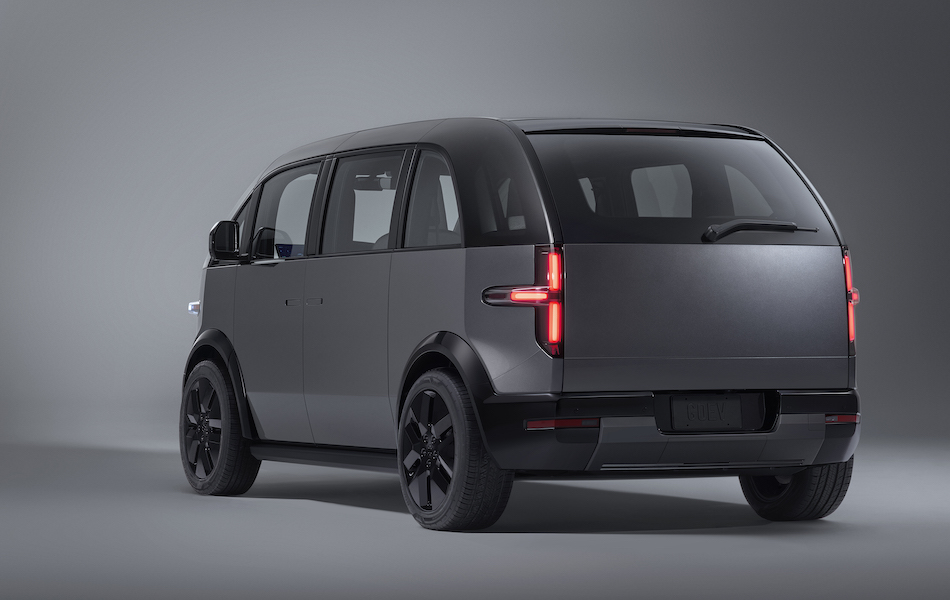

NASA is to deploy electric vehicles from the company Canoo to transport astronauts for the Artemis manned lunar missions. Multiple customised variants of Canoo's EV model LV will be deployed from June 2023. What kind of car is this and why is NASA choosing this?
They will be so-called Crew Transportation Vehicles (CTVs). The vehicles will transport astronauts in their spacesuits, support personnel and equipment to the launch site. The focus here is on comfort, safety and function for the astronauts and support crew.
Artemis moon missions
Through the Artemis moon missions, NASA aims to bring the first woman and person of colour to the moon. The US space agency is working with commercial international partners to do so. Through the missions, NASA aims to create a long-term presence on the moon for the first time. The knowledge that NASA gains during the Artemis missions the organisation wants to use for manned missions to Mars.
For the Artemis missions, NASA has been looking for new CTVs. It has chosen Canoo, a US start-up focused on manufacturing electric vehicles. The company plans to launch a minibus this year: the LV. LV stands for 'LifestyleVehicle'. The launch is scheduled for the end of 2022.
LV
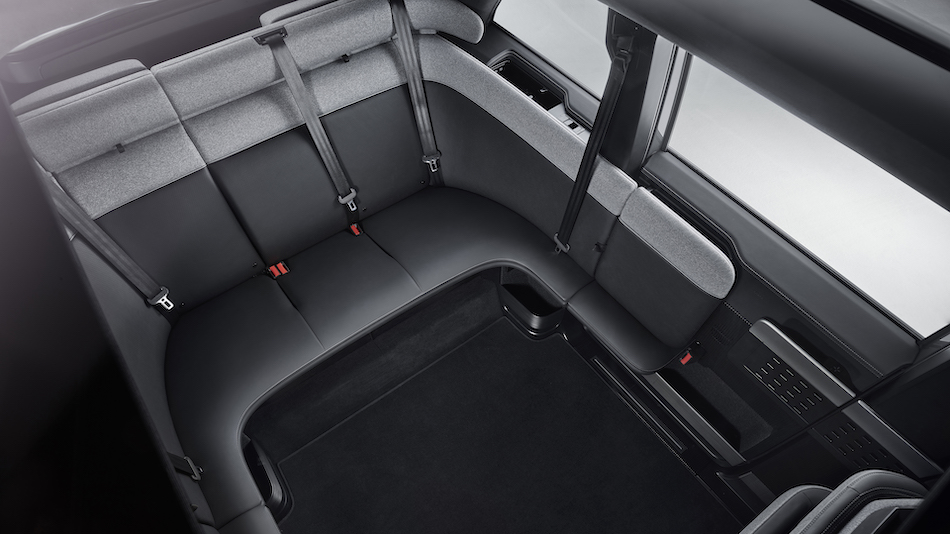
The LV is an all-electric bus with a range of about 250 miles, which translates to about 400 kilometres. The vehicle offers up to 350 HP of engine power. The vehicle is designed to offer as much interior space as possible. The interior has a volume of 5.3 m3. With this, Canoo claims to offer the interior space of an SUV, on a considerably smaller platform.
The EV is available in several versions: Delivery, Base, Premium and Adventure. The Delivery version is a two-seat electric delivery vehicle with a payload of over 660 kg. Thanks to its 80 kWh battery, the vehicle offers a range of around 400 km.
Charged to 80% in 28 minutes
The Base model is - as the name suggests - the basic LV model. The vehicle offers up to 350HP of power, has five seats for carrying passengers and is available in three different colours. Canoo reports that the Base model can charge its battery to 80% in 28 minutes.
The Premium model is a luxury-trimmed version of the Base model. Among other features, the vehicle has a panoramic roof and so-called 'street-view' window. This is a transparent window at the front of the vehicle. The window gives the driver a better view of the pavement. Ambient lighting is also present, as is a 17-speaker audio system. In addition, an air purification system is on board.
Finally, the LV is available in the Adventure model. This model is recognisable by its unique dark green colour, among other things. The Adventure model is equipped with a tow bar, which allows the vehicle to tow 900 kg. Canoo supplies the model including a light bar and roof rack. As well as accessories that users need during their adventures with the vehicle.
CTVs based on Canoo's LV
The CTVs that NASA will deploy are based on Canoo's LV model. The vehicles will be tailored to NASA's needs. Among other things, the space agency points to influences from the aerospace industry on the LV design. For instance, the vehicles are fully redundant, come with over-the-air updates and use secure software. Maintainability is also central to the design. For instance, the vehicles are deliberately built from as few components as possible. The model is modular, which increases upgradeability during their life cycle.
Canoo will manufacture the vehicles for NASA in the United States (US). Production will specifically take place in the 'heartland', a term often describing the central US or states that are not on the Pacific Ocean or Atlantic Ocean. The company has a headquarters and advanced manufacturing site in Bentonville, Arkansas. In addition, Canoo has a sizeable factory in Pryor, Oklahoma.
Author: Wouter Hoeffnagel








