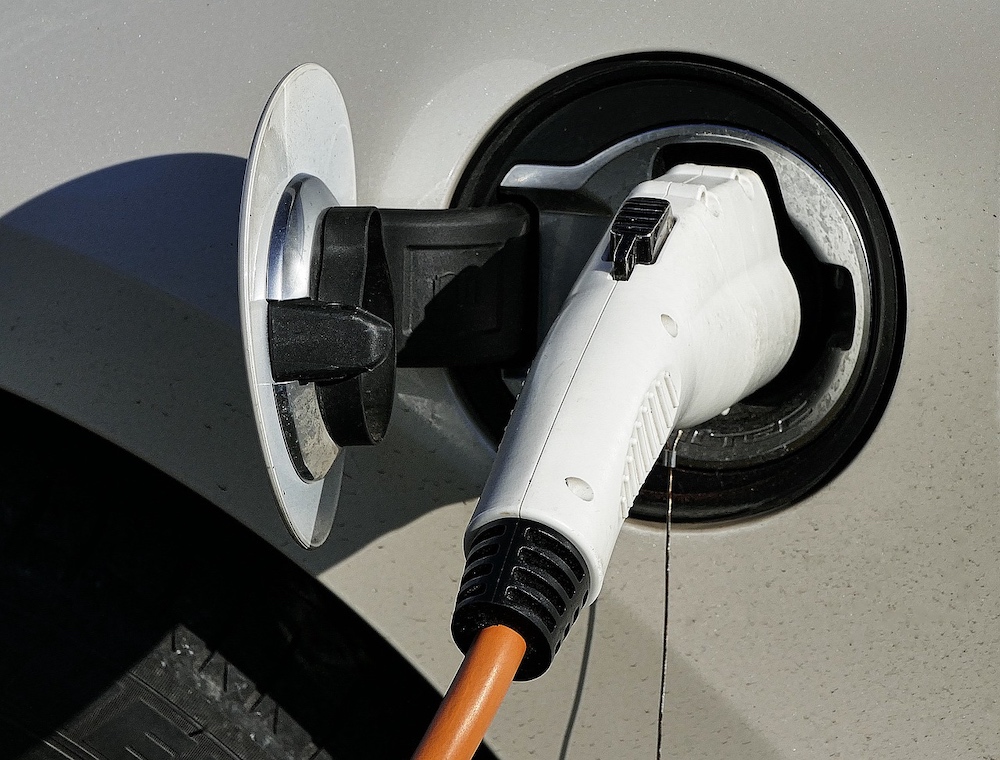

The production costs of a battery electric vehicle (BEV) will be lower, on average, than those of a comparable internal combustion engine (ICE) car by 2027. At the same time, bodywork and battery repairs in serious accidents involving BEVs entail 30% higher repair costs in the same year. BEVs are therefore more likely to be totaled than ICEs.
This predicts Gartner. The market researcher expects carmakers to continue to struggle this year with shifts emerging in the market due to the growing role of both software and electrification in cars. This leads to a new phase for the EV market, where the market is consolidating. For instance, Gartner predicts that 15% of EV companies founded in the past decade will be acquired or fail by 2027.
'Redefining status quo'
"New OEMs want to thoroughly redefine the status quo in the automotive sector," explains Pedro Pacheco, Vice President of Research at Gartner. "They brought new innovations that simplify production costs, such as centralised vehicle architectures or the introduction of gigacastings that help reduce production costs and assembly time, something established automakers could not embrace to survive."
Gartner predicts that the next generation of BEVs will be cheaper to produce on average than comparable ICEs by 2027. In doing so, BEV production costs will fall significantly faster than battery costs in the coming years. This means BEVs will reach ICE cost levels much faster than initially expected, Gartner reports.
EVs are more likely to be totaled
At the same time, there is also less good news. For instance, Gartner simultaneously expects some BEV repairs to become significantly more expensive. The market researcher predicts that by 2027, the average cost of repairing an EV's body and battery after a serious accident will increase by 30%.
These higher repair costs could lead to vehicles being totaled faster in the event of an accident, as a repair cost is more likely to exceed the residual value. Gartner also warns that more expensive crash repairs could lead to higher insurance premiums or even insurance companies refusing to insure certain car models.
Gartner is critical of this development, arguing that the rapid reduction in BEV production costs should not lead to higher repair costs. It warns that this may have a negative impact on customer demand in the long run. It therefore recommends reducing BEV production costs only in combination with processes that guarantee low repair costs.
Market becomes more challenging
"With the perceived promise of easy profits, many startups have rallied in the EV space - from car manufacturers to EV Charging - and some still rely heavily on external funding, making them particularly vulnerable to market challenges," Pacheco said. "Moreover, EV-related incentives are being phased out in several countries, making the market more challenging for incumbents."
Gartner predicts that 15% of EV companies founded since the past decade will be acquired or fail by 2027. "This does not mean that the EV sector is crumbling. It is simply entering a new phase where companies with the best products and services will win the remaining ones," Pacheco said.
Market penetration continues to grow
EVs continue to increase market penetration by 2024. Gartner estimates that EV deliveries will reach 18.4 million units in 2024, while some 20.6 million EVs are estimated to be delivered in 2025. However, we are moving from 'gold rush' to 'survival of the fittest', according to Gartner. In practice, this means that the success of companies in this field currently depends heavily on their ability to respond to the needs of early mainstream EV users.
Gartner shares further information with clients in‘Top Automotive Trends for 2024’.
Author: Wouter Hoeffnagel
Image: Wolfgang Eckert via Pixabay








