FPT, NEVAT and Vosteq present a roadmap for greater productivity and improved scalability in the machining industry.
’s-Hertogenbosch, 18 November 2026 – Machines, robots, software and artificial intelligence offer plenty of opportunities to produce more intelligently and efficiently. However, the move towards an autonomous factory requires more than just new technology. That is why FPT, NEVAT and Vosteq are presenting the report *The Roadmap to an Autonomous Factory* at the Precisiebeurs. It is a practical roadmap enabling machining companies to work step by step towards higher productivity, digitalisation and automation.
From sector research to a concrete approach
The roadmap follows on from the earlier sector study by FPT, NEVAT, ABN-AMRO and MCB into the Dutch machining industry. This study revealed that improving productivity and scalability is essential to remaining competitive, partly due to increasing complexity, international competition and a structural shortage of skilled workers.
To help entrepreneurs turn these challenges into tangible improvements, FPT and NEVAT, together with Vosteq, have developed a practical approach. The focus is not on the technology itself, but on how companies can organise, digitise and automate their processes and organisation more intelligently.
The autonomous factory is not for sale
The technology is largely available. The challenge lies in the smart organisation and integration of processes, people, data and systems. The transition to an autonomous factory is therefore not a standalone IT or automation project, but a business transformation.
What does this mean in practical terms for an entrepreneur?
Take a machining company where quotations, work planning and scheduling are still largely carried out manually. By linking costing, ERP, work planning and production data, duplicate data entry is avoided, the risk of errors is reduced and lead times can be shortened.
This creates a digital foundation on which companies can build further, for example with automated planning, robotic loading or AI-supported CAM programming. The starting point is not the technology, but the improvement of business processes.
Seven steps towards greater autonomy
The report outlines seven steps that companies can use to shape their own development path:
- Recognise the need and discover the opportunities.
- Take another look at your process.
- Choose what you want to automate.
- Prove that it works.
- Ensure that systems understand each other.
- Connect systems and implement processes.
- Scale up and keep improving.
The approach is based on discussions with entrepreneurs, experts and companies from the machining industry and is in line with the day-to-day practices of Dutch manufacturing companies.
Launch at the Precision Fair
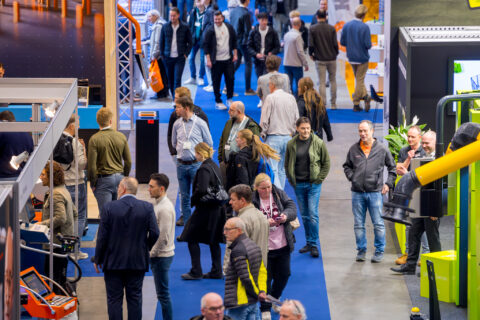
FPT, NEVAT and Vosteq presented the roadmap on Wednesday 18 November 2026 at 11.00 am, during the Precisiebeurs at the Brabanthallen in ’s-Hertogenbosch, central hall 2, stand H2-100.
The report will be available at the stand from the launch onwards. With this publication, the organisers aim to help entrepreneurs take concrete steps towards a more productive, smarter and future-proof manufacturing industry.