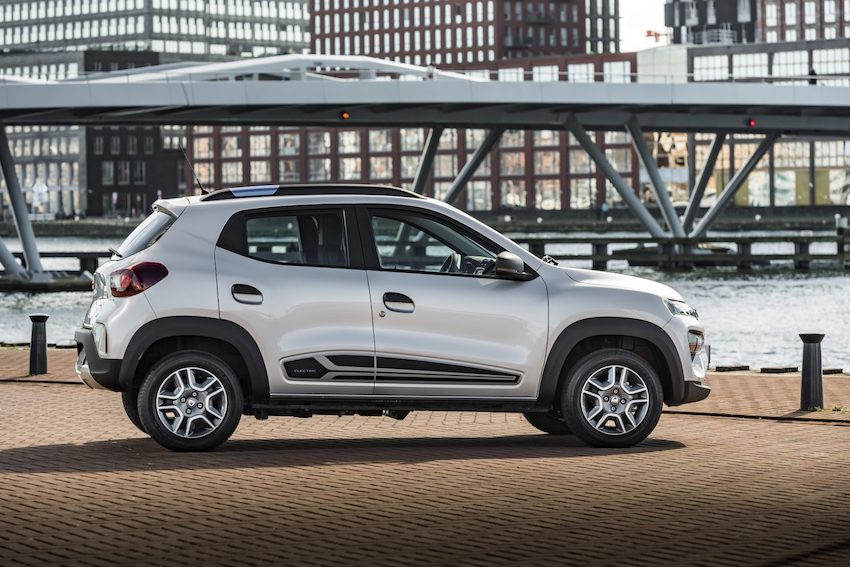

Dacia is introducing by far the cheapest electric car on the Dutch market with the Spring. What exactly is this car and what can we expect from it?
Those who previously wanted to drive electric for the lowest price could turn to Renault for the Twingo Electric. So this will now change. Whereas the Twingo costs €20,690, the Dacia Spring is available from €17,890. Dacia says it wants to usher in an era of electric mobility for all with the Spring.
Up to 230 km range
The model is fitted with a 26.8 kWh battery. This gives the Spring a range of up to 230 km based on the WLTP cycle. Based on the WLTP City cycle, the range is 305 km.
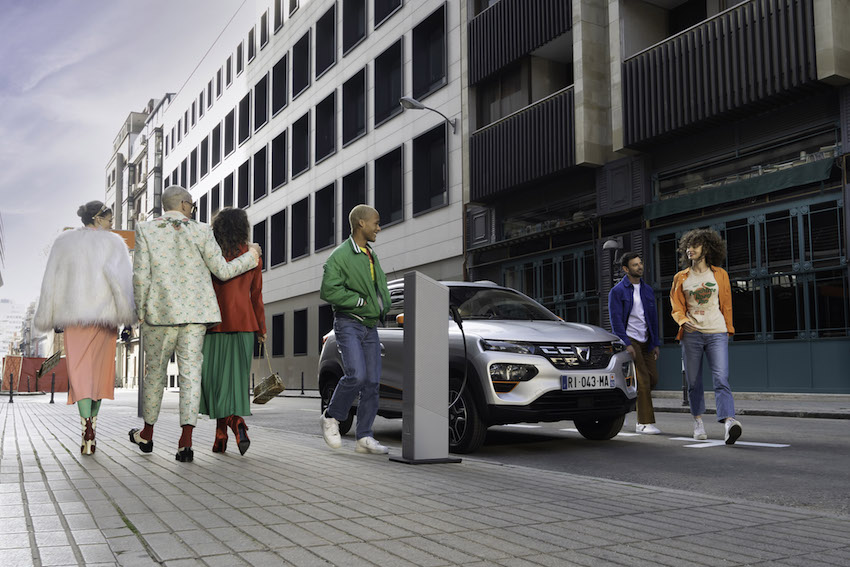
Fully charging the battery of the Dacia at home with an output of 7KW takes about 4 hours and 27 minutes. Using an optional DC charger, users can additionally connect their Spring to a fast charger. This will charge the built-in battery to 80% capacity in 50 minutes.
Connected to app
The Spring is connected to the MY Dacia app. This offers all sorts of features familiar from other modern cars. For instance, users can use the app to bring their vehicle up to temperature, read the battery status or start or stop the charging process. Both Android Auto and Apple CarPlay can be used in the car. Also available are features such as parking sensors, a 3.5-inch colour screen and a reversing camera.
Among other things, the Spring seems to be aimed at an audience looking for a practical car. Thus, the vehicle is available with roof racks and the Spring has four full-sized seats. The Spring offers 290 litres of luggage space, which Dacia says is the largest in its class. The model also features a fold-down rear seat for increasing the boot space.
Three variants
The Spring is available in three variants:
- The Dacia Spring (consumer version): An all-electric model with which Dacia aims to make electric mobility accessible to everyone. The model will be orderable from 1 April 2021, with the first deliveries to follow in autumn.
- Dacia Spring Business: An electric vehicle aimed at professionals and share car services. The Dacia Spring Business will be available to order from the second half of 2021.
- Dacia Spring Cargo: a light commercial vehicle version of the Spring without a back seat. The Spring Cargo offers a loading space of 1,100 litres and a payload of 325 kilograms. With this, Dacia aims to market an alternative to an electric commercial vehicle, targeting, among others, delivery services. The Spring Cargo will be available from early 2022. Dacia reports that options for the Dutch market are still being explored.
Comfort and Comfort Plus
The consumer version of the Dacia Spring is available in two trims: Comfort and Comfort Plus. The Comfort version includes access to a manual air conditioning, Bluetooth radio, USB connectivity, LED daytime running lights and 14-inch wheels.
The Comfort Plus version includes the same options as Comfort, with the addition of the Techno Pack with 7-inch screen with Apple CarPlay and Android Auto, rear camera and parking sensors. A spare wheel is also included.
Eight years or 120,000 km battery warranty
The Dacia Spring comes with an eight-year or 120,000 km battery warranty. The all-electric model can be reserved via Dacia's website from 1 April 2011. Those who do so will get priority ordering and test drive. Ordering at the dealer will be possible from mid-June.
The Dacia Spring Comfort is available from €17,890 or €159 financing per month. In Comfort Plus trim, the consumer version of the electric car cost 18,890 euros. The consumer price includes battery.
Author: Wouter Hoeffnagel
Source photos: Dacia








