Dutch manufacturing industry shows growing economic impact
The manufacturing sector faces major challenges in the areas of innovation, digitalisation and talent recruitment. This was stated by ASML’s CEO, Peter Wennink, this morning at the opening of the TechniShow and ESEF Maakindustrie, which together form the largest platform for the manufacturing sector in the Benelux. The manufacturing sector contributes 18 per cent to the Dutch economy annually and has shown double-digit growth in recent years. In terms of economic importance, the sector is now comparable to the chemical and food industries. TechniShow and ESEF Maakindustrie are taking place this week at the Jaarbeurs in Utrecht.[/column_text][column_text]Wennink stated that accelerating innovation must be the sector’s top priority. Due to increasing system integration – whereby machines form part of a larger, complex system – collaboration within the supply chain is of great importance when it comes to innovation. Innovation concerns not only the machines themselves, but also service and maintenance. At ASML, engineers use holographic lenses to work alongside a customer on the other side of the world to resolve faults. A collaborative, international knowledge network is the foundation for remaining relevant to customers. At the opening, Wennink also pointed out that innovation cannot happen without risk and that the government should share in that risk. The sector could certainly do with that support.[/column_text][/vc_column][/vc_row][vc_row][vc_column][column_text]War on Talent
A second major challenge for the sector is recruiting and retaining talent. Wennink called on the sector not to rely solely on the government for this, but to join forces in training the next generation of talent. In Veldhoven alone, people from 110 different nationalities work there – a clear indication that the pool of new talent in the Netherlands is too small. Internationalising training programmes and investing in lifelong learning are therefore crucial to securing and retaining sufficient talent. ASML, for example, expects to be able to double its capacity in the coming years, which means its suppliers will also have to step up their efforts, and more staff will be needed. Of ASML’s annual procurement, worth around 10 billion euros, 80 per cent takes place within Europe each year, half of which is in the Netherlands.[/column_text][column_text]Digitalisation
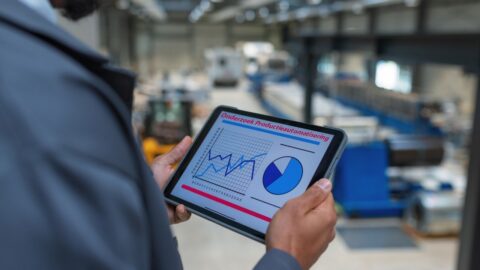
Another key theme taking centre stage in Utrecht these days is the digitalisation of the manufacturing industry. Theo Henrar, chairman of FME, noted at the opening that the manufacturing industry is the backbone of the Dutch economy, which is increasingly receiving the recognition it deserves. Digitalisation concerns not only the machines themselves, but also the integration of all related processes, such as sales, logistics and stock management. Henrar also emphasised the great importance of collaboration within the supply chain in the field of digitalisation and warned of the risks associated with cyber security.[/column_text][column_text]Manufacturing automation must
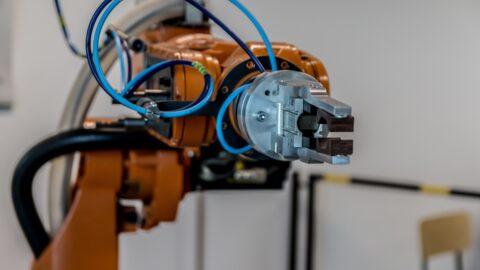
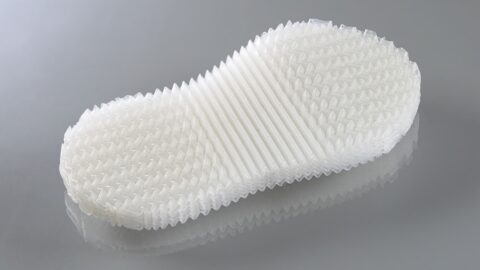
André Gaalman, chairman of FPT-VIMAG, the Federation for Production Technology, and owner of TechniShow, emphasised at the opening that the sector cannot avoid further production automation, due to labour market shortages and the relentless need for greater efficiency. At the Jaarbeurs, several hundred exhibitors are currently showcasing their innovations, for example in the field of 3D printing.
TechniShow and ESEF Maakindustrie will take place from Tuesday 30 August to Friday 2 September at the Royal Jaarbeurs in Utrecht. Entry to the events is free.[/column_text][/vc_column][/vc_row][vc_row][vc_column][column_text]
[/column_text][/vc_column][/vc_row]