
Scarcity of adequate protective equipment for healthcare workers leads to problems in corona crisis. For instance, some supplied face masks turned out not to meet the required safety requirements in practice. A 3D-printed bracket by Belgian company Materialise makes these rejected mouthguards safe in some cases after all.
Netherlands also went wrong; in late March, hundreds of thousands of mouth masks imported from China were found to be faulty and non-compliant. For instance, some of the masks did not fit the face properly. Another part of the mouth masks had malfunctioning membranes. The mouth masks had already been distributed to hospitals and were recalled through a recall.
'Virus particles can just pass through'
The error came to light after some hospitals proceeded to test the supplied mouth masks on their own initiative. "When they were delivered to our hospital, I immediately rejected those masks," an involved person from one hospital told NIS. "If those masks don't seal properly then virus particles can just pass through. We don't use them. That is unsafe for our people."
Such incidents are not limited to the Netherlands; similar situations also took place in Belgium. In Belgium, for instance, some of the mouth masks supplied were also found to be substandard. The mouth masks were not safe and were therefore rejected.
Suitable filters, but insufficient fit
In some cases, these are KN95 masks whose filter provides adequate protection, but which do not fit sufficiently at the bridge of the nose. For these masks, a 3D printed bracket from Belgian company Materialise offers a solution. The bracket - called Mask Fitter - ensures that the masks fit the face better.
The Mask Fitter fits over the mask and is secured in place using elastic straps. In a video and instructions, the company explains how users choose the right size and how to wear a KN95 mouthpiece with the Mask Fitter.
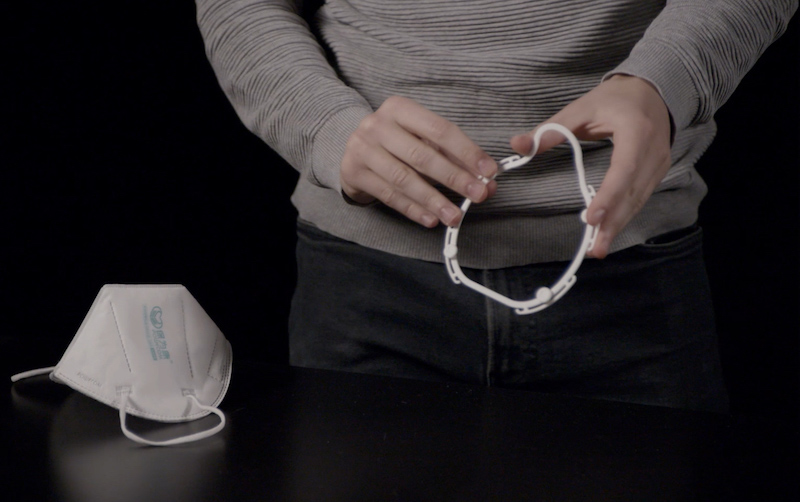
The prototype braces are based on a concept by architect Mark Fuller. The braces were tested in close cooperation with the Belgian government's Shortage Taskforce and prevention advisers from a dozen Belgian hospitals, led by Herman Devriese of UZ Leuven.
Reusable
Users can attach the 3D-printed bracket to an existing KN95 mask, after which the mask follows the contours of the face. This ensures that the mask fits tightly. The customised masks have been tested by prevention service IDEWE. This shows that, thanks to their adaptation, the masks "more than meet" the safety standards of the ATP protocol of the Belgian Federal Agency for Medicines and Health Products (FAGG). The retainers are reusable after disinfection, attaching to a new mouth mask each time.
"Thanks to close cooperation between the government, Materialise and UZ Leuven, we managed to create a safe solution for the rejected mouth masks in a short period of time," said Herman Devriese, head of the Prevention and Environment Department at UZ Leuven. "Thanks to the brackets, the masks are safe to use and a number of additional adjustments also meet the demand for greater ease of use and comfort. For healthcare providers who have to wear the masks for hours on end, this is a necessity."
Already in use
The first 3D-printed clips are already in use; a number of Belgian hospitals, including UZ Leuven, are the first to adopt them. Hospitals, care centres and members of the public who have face masks that do not fit properly can order the clips online. The clips are available in four different sizes and can be ordered via the Materialise website.
Author: Wouter Hoeffnagel










