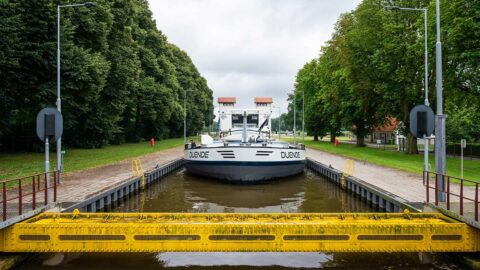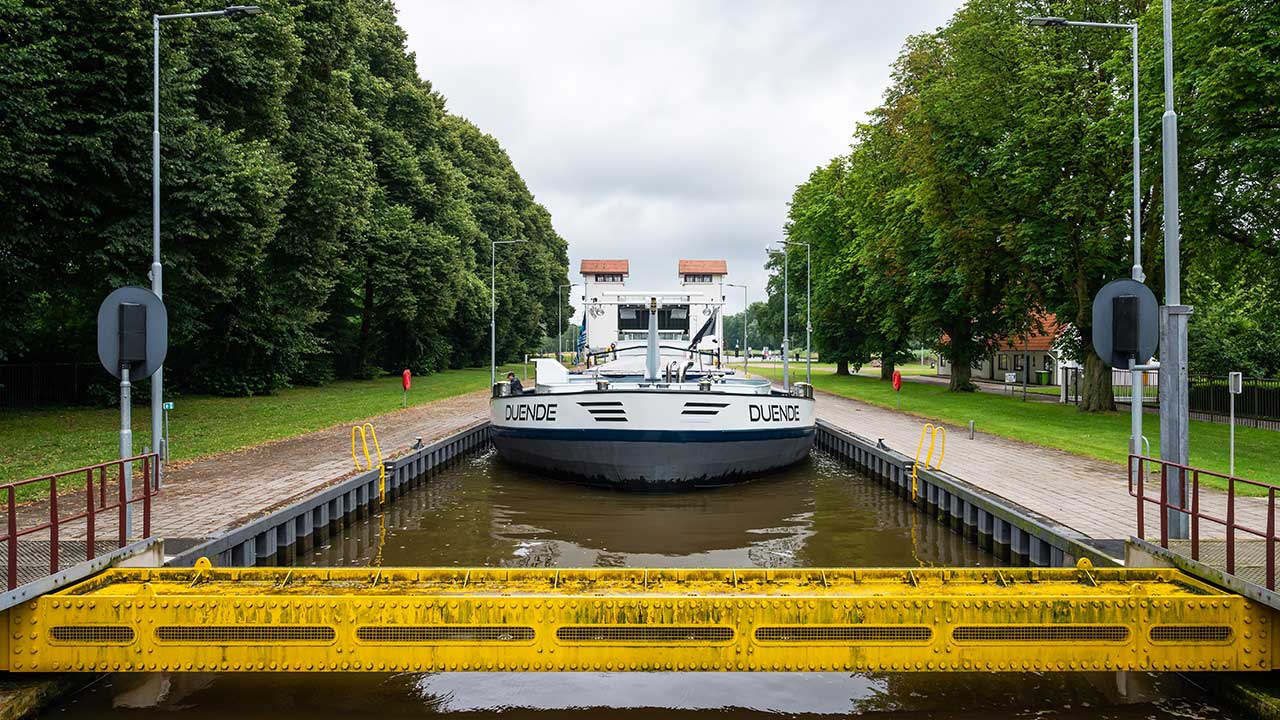

Thousands of bridges, locks, tunnels and civil engineering structures in the Netherlands are in need of renovation. However, information on the current state and maintenance of these objects is often scattered, incomplete and difficult to retrieve, making it difficult to substantiate renovation choices. The new tool InfraScan that TNO and Rijkswaterstaat are developing will help asset managers do just that.
InfraScan is aimed at Rijkswaterstaat, municipalities and provinces. The tool provides insight into the condition, risks and performance of the Dutch water infrastructure. To do so, InfraScan gathers information from various sources and arranges it. In addition, the tool links possible risks to this data.
Faster and better choices
The tool helps asset managers to justify renovation and replacement choices both faster and better. Martijn de Jong, senior consultant at Rijkswaterstaat, explains: "You save an awful lot of searching and immediately see the 'red flags' in your area."
Senior scientist specialist Esra Bektaş of TNO is working with De Jong, which had its origins in the Wet Works Knowledge Programme (KPNK). This programme focuses on planning the lifetime of locks and dams, among others. De Jong explains: "We had so much data and wanted to explore how to make it work for us." Esra adds: "And especially to support decisions for replacement. This idea eventually led to InfraScan. With an initial focus on bridges and locks to expand the concept to other objects after this."
Prioritising measures
Bektaş and De Jong therefore first mapped the reasons for renewing bridges and locks. An important objective here was to map the prioritisation of measures, and provide insight into what needs attention and for what reason. Both technical and functional aspects played a role, such as whether a lock is wide enough for the ships that need to pass through it.
The data collected presented challenges. Bektaş: "The abundance of data was incomplete, not linked and stored over the years in different systems or as physical drawings in archives."
Semantic knowledge model and analytical calculation model
Within the cooperation, Bektaş contributed its expertise in making fragmented data usable using computer models and semantic technology. De Jong provided all available digital data from Rijkswaterstaat, including inspection reports and other relevant information on projects. Bektaş and her team then developed two models: a semantic knowledge model and an analytical computational model.
The semantic knowledge model ensures that all available data on objects are made uniform and machine-readable, regardless of the source from which the data originate. This model acts as the 'brain' of InfraScan, providing structure, links and overview.
The analytical calculation model performs calculations on the available data. For example, to visualise degradation patterns, loss of function and end-of-life signalling.
Bridge function
Bektaş: "Adding logic to the data makes the information directly usable for decision-makers. This makes the tool a great example of TNO's bridging function between scientific knowledge and applicable technology."
"For Rijkswaterstaat, InfraScan is much more than a clear dashboard with data. It shows directly where the points of attention and risks are in our network. As a result, we can better substantiate important decisions about maintenance and renewal," says De Jong. "In addition, InfraScan contributes to a new, data-driven asset management system we are currently working on."
Proof of concept
A proof of concept of InfraScan has been developed aimed at bridges and locks. Bektaş and De Jong call this proof of concept promising. The aim is to develop a scalable solution that can be applied to other built objects, such as flood defences and tunnels. They also want to extend the tool to other asset management processes, including scheduling inspections. InfraScan should be directly connected to current systems so that data does not have to be supplied manually. There is also a role for AI, including for translating physical reports and drawings into data.
InfraScan is developed on the basis of an open source framework. The tool is modular and can be adapted to a variety of portfolios.