
Researchers from TU/e, Máxima MC and The Gate set up AquaWomb. The startup focuses on the development of a water incubator, which should give preterm infants a better start. The incubator allows them to continue growing underwater until they are ready to breathe air.
AquaWomb was founded by researchers Myrthe van der Ven and Guid Oei together with business developer Marcel Quist. In collaboration with TU/e, the trio aims to bring a working water incubator to clinical practice. In doing so, the startup focuses specifically on the clinical environment in which very premature children are cared for and nursed. In the Netherlands, this is usually done in a neonatal intensive care unit (NICU).
Lungs still not working optimally
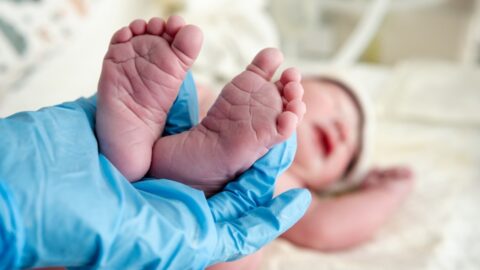
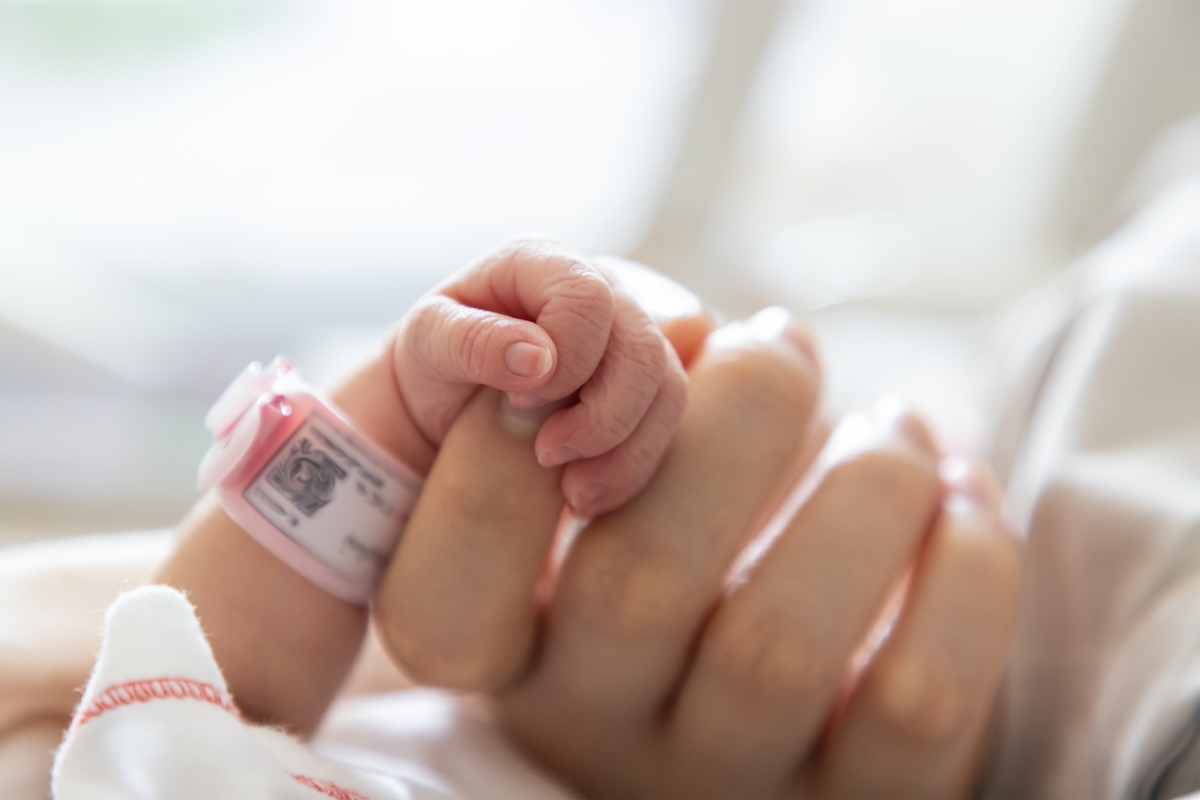
Many premature infants are not yet ready to function outside the womb and thus in the air. For instance, children may experience oxygen deprivation because their lungs are not yet working optimally. In recent years, a Horizon 2020 research project was conducted by TU/e with several partners, such as Máxima MC, Medsim, and Uniklinik RWTH Aachen. The focus was on improving care for these children. Not only to improve survival rates, but also to reduce the number of complications after birth and long-term consequences.
Van der Van and Oei worked on a special kind of incubator where a premature baby can be placed under water directly from the abdomen. This is done via caesarean section, where the baby is transferred to the water incubator via a special transfer bag filled with artificial amniotic fluid.
The water incubator has to meet special requirements. For instance, it is not only important that the baby can continue to develop in the incubator, but also that caregivers can keep a close eye on how the baby is doing. In addition, parents should be able to have contact with the child right from birth for bonding purposes.
Special manikin developed
AquaWomb will initially focus on further developing the special manikin designed in the Horizon 2020 research by Juliette van Haren and her colleagues from the Faculty of Industrial Design during her PhD research. Van der Ven explains: "The manikin is not only realistic in size and weight, it also contains sensors. This allows us to measure exactly how the baby is doing, such as oxygen and heart rate, but also brain blood flow and temperature."
"Linked to that are digital twin models, so we can realistically assess readings to see if the baby is doing well during procedures and treatments. This makes the manikin suitable not only for further research, but also precisely for training everyone who has to deal with extreme preterm birth, from expectant parents to nurses and gynaecologists."
"Parents expecting a premature birth have very likely never seen a much premature baby in real life, let alone held it in their hands," explains Van der Ven. "That is why we think there is a market for the manikin. That is a market study we are going to start immediately."
Increase brand awareness
AquaWomb also wants to increase its brand awareness in the market in the near future. "I expect that we will visit many hospitals to consult with their obstetrics and paediatrics teams about their requirements for the water incubator," says Van der Ven. "Talks with parents of premature infants are also on our programme."
"In addition, we know our competition pretty well," Van der Ven explains. "For example, there are teams in the United States, Australia and Barcelona that are already working on a water incubator. They do differ from us in one important respect, and that is that they are mainly set up from foetal surgery rather than obstetrics."