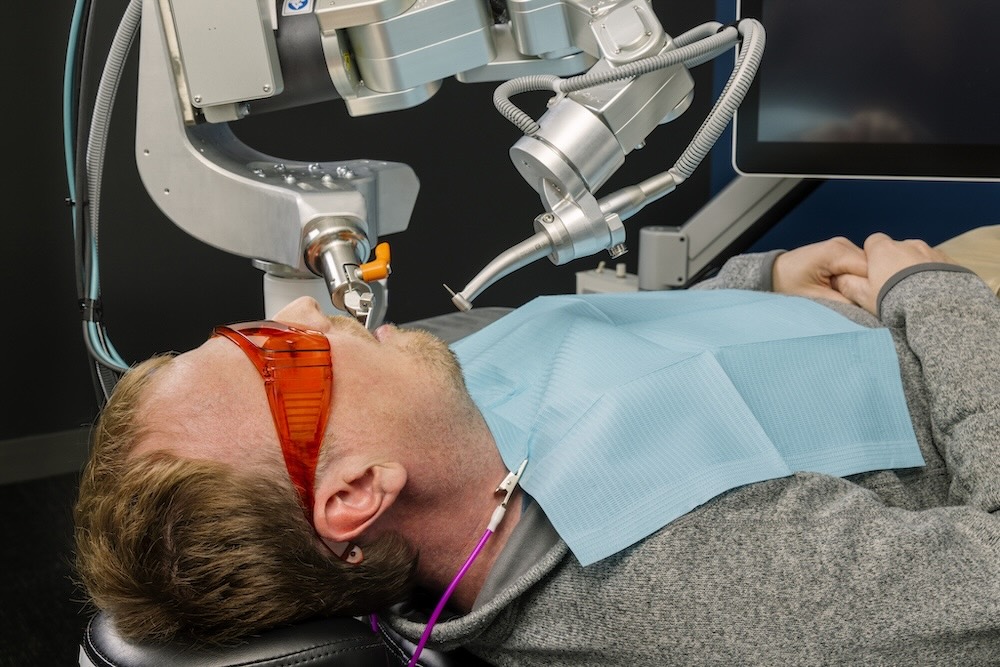

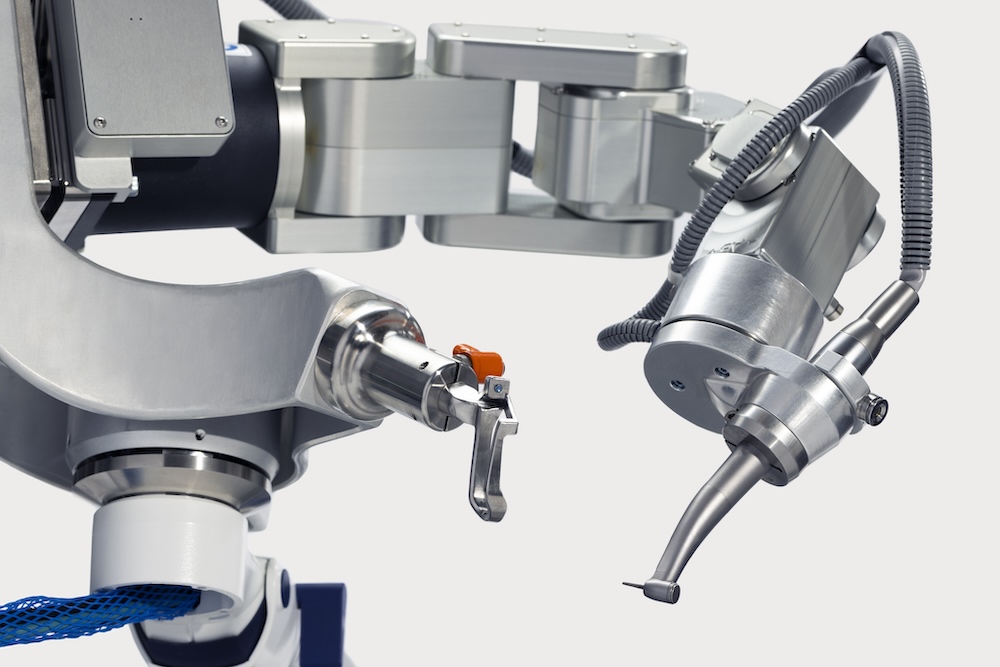
For the first time, a fully automated dental procedure has been performed on a human using a robot. This used a robotic system consisting of a combination of a robotic arm and AI-driven imaging software.
The robot was developed by Perceptive, which specialises in dental robotic systems. With the robot, the US company aims to perform fully automated dental procedures such as placing a crown or placing fillings.
Time saved
Among other things, this should save considerable time; Perceptive reports that placing a crown operation is possible in just 15 minutes with its robot. By comparison, placing a crown in the traditional way typically requires two appointments of about an hour each.
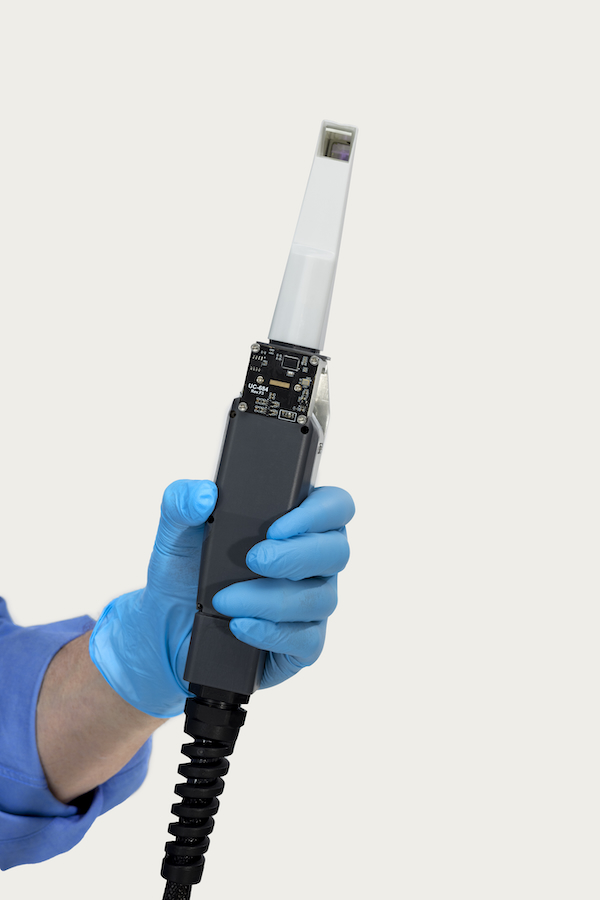
The robotic system uses volumetric 3D data for diagnostics and treatment planning. The procedure starts with optical coherence tomography (OCT), a scan that can visualise the internal structure of teeth, among others, with microscopic resolution. A feature of this is that the patient is not exposed to radiation.
Perceptive developed a special scanner for this purpose, which dentists operate by hand. The tool takes 3D images below the edge of the gums and under the teeth. This makes it possible to visualise the state of the teeth.
AI algorithms
In addition, the system uses AI algorithms to analyse the 3D data collected by the OCT scan. It also uses AI algorithms to plan the procedure on the patient. Automation is key here; by automating such procedures, dentists spend less time per patient and can treat more patients. In addition, the method also shortens the procedure for the patient, which can improve the patient experience.
By reducing the number of human operations, Perceptive additionally aims to reduce the risk of human error in diagnosing dental problems.
Not yet for sale
The test conducted by Perceptive was carried out in-house. The system has not yet been approved by the US Federal Drugs Administration (FDA) and is therefore not yet for sale.
To develop the robot, Perceptive raised some $30 million in funding from investors. Among others, PDS Health, Dr Ed Zuckerberg, Innospark Ventures, KdT Ventures, Primavera Capital, Plaisance Capital and Y Combinator put money into the robot.
Author: Wouter Hoeffnagel
Image: Perceptive