Wolf crab and salty vegetables straight from the farm in Wieringermeer. It is possible: at a farm right behind the IJsselmeer dyke in the head of North Holland, there are fish ponds in which the Chinese species of crab and also carps are bred. Tubs floating on the water grow lettuce and there are tests of growing crops in salty water.
It is a set-up in a sustainable closed system that unites fresh and salt water.In this Achteroever Wieringermeer project, Rijkswaterstaat, fish company Meromar Seafoods, research institutes Deltares and Zilt Proefbedrijf and Sportvisserij Nederland are exploring the possibilities in the field of water management, aquaculture and horticulture.
Sustainable from crab and fish to lettuce
The system at the farm on the dike is completely sustainable. The Chinese woolly crab enters fishermen's nets as a small animal from the fresh IJsselmeer water and goes into one of the farm's four freshwater basins for further growth. The crab came to Europe in the ballast water of ships in the last century and now, as a farmed crustacean for aquaculture company Meromar Seafoods, one of the project partners, is a popular export product for Asian cuisine.
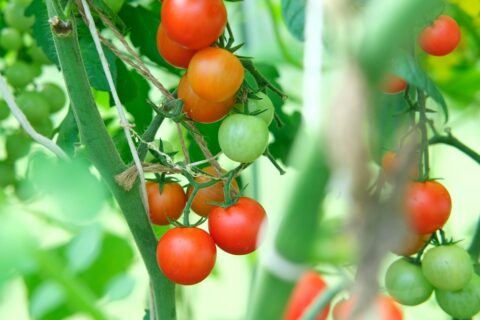
Wolf crabs and carp are fed larvae of Black Soldier Flies. These fly larvae are grown under LED light using waste from the cultivated lettuce and from GFT which they also partly turn into compost. The faeces of the crabs and carp again serve as manure for the lettuce cultivation on the farm. The carp in the fish ponds promote the cultivation of lettuce in the floating tanks. The fish provide soil action in the ponds. They stir in the soil, bringing out good nutrients for the lettuce.
Testing with salty and sweet
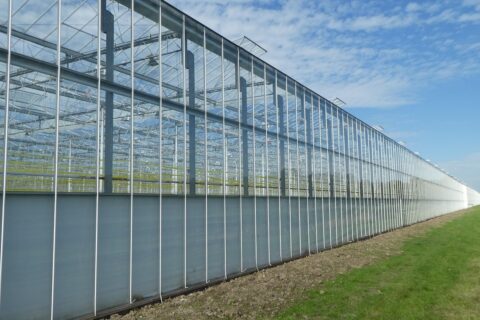
On the farm, tests with cultivation in fresh and saline water are carried out on 20 hectares. The Wieringermeer polder, which was created from the former salty Zuiderzee in 1930, still experiences seepage water today. This is mild saline water that rises to the surface from the polder floor. This is because the polder lies metres below the water level of the IJsselmeer. The brackish saline water may be suitable for growing saline vegetables, according to research carried out by Silt Trial Farm. However, farmers in the important agricultural polder that is Wieringermeer can only grow crops there when enough fresh water washes through the ditches. This combination of brackish and fresh water is ideal for investigating whether a closed system also offers opportunities for profitable crop cultivation in saline areas elsewhere in the Netherlands and in the world.
Leeks for food worldwide
Rear banks, locations for freshwater storage within the dike, are not only an answer to climate change, rising sea levels and the need for more flexible water levels. Besides freshwater storage, the concept is also suitable for sustainable food production in our country and worldwide.
Indeed, demand for clean fresh water and food is increasing all over the world while availability is under increasing pressure due to population growth and climate change.
The research partners want to develop Achteroever Wieringermeer into a natural production system that makes maximum use of water and all raw materials. If the processes for saline and fresh water prove feasible and profitable, the project will offer new options for water management and for scaling up in the IJsselmeer region and other regions affected by salinisation.
The Achteroever project in the Wieringermeer will therefore further develop new products and gather knowledge on sustainable water-controlled and combined production processes for food.
The network of public and private parties is collaborating on opportunities for upscaling. Hoogheemraadschap Hollands Noorderkwartier, Stichting AKWA, the province of North Holland and the municipality of Hollands Kroon are also involved.
The pilot of around 2.8 million set up partly with funding from the European Regional Development Fund (ERDF) and the province of North Holland will be completed in March 2019.
Source: Ria Besseling