
Concrete contributes quite a bit to global CO2 emissions, and concrete masonry is a significant part of it. Skidmore, Owings & Merrill (SOM), in collaboration with Prometheus Materials, is working on alternative blocks based on algae. These are much better for the environment.
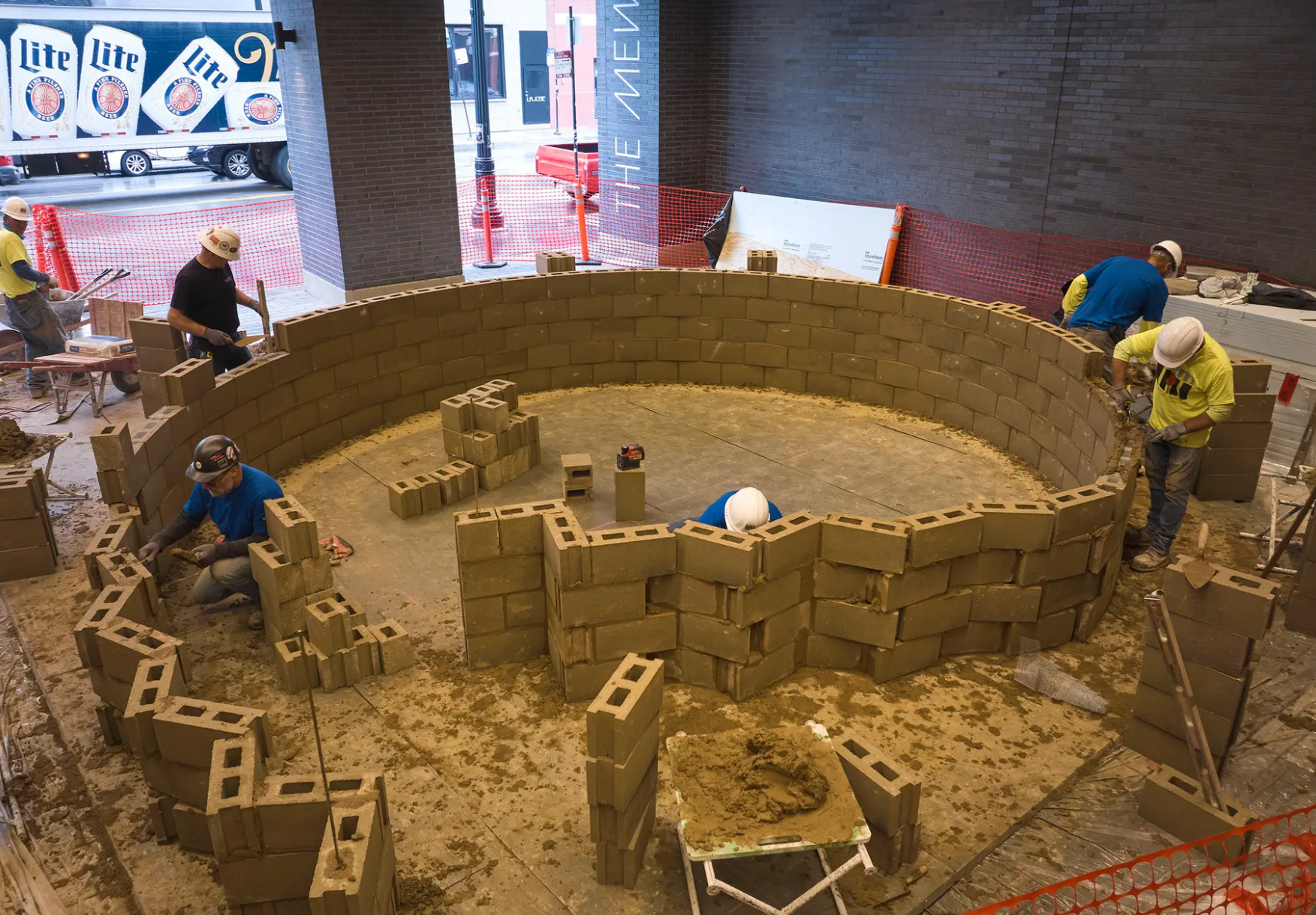
SOM's prototype building was shown at the 2023 Chicago Architecture Biennale and is called the Spiral. It has a simple structure built from Bio-Blocks, developed by Prometheus Materials, a start-up company born out of a research programme at the University of Colorado.
Sustainable Bio-Blocks
The blocks are made with natural algae that sequester carbon. The microalgae are combined with water, sunlight and CO2 to make a material similar to the calcium carbonate produced in coral reefs. Mixed with an aggregate, this forms a carbon-free building material that has the same - or in some cases better - physical and thermal properties as standard Portland cement-based concrete.
Bio-Block offer a sustainable alternative to concrete and, if widely used, could reduce our global CO2 emissions by up to 8%. By using Bio-Blocks instead of concrete blocks, Spiral reduces carbon emissions by one tonne.
While it is still early days, if all tests go well, Bio-Blocks could eventually be used in real buildings. The CO2 produced by the construction industry is currently a major concern and, in addition to the Bio-Blocks, there are efforts to promote the use of sustainable timber and mould-based bricks.