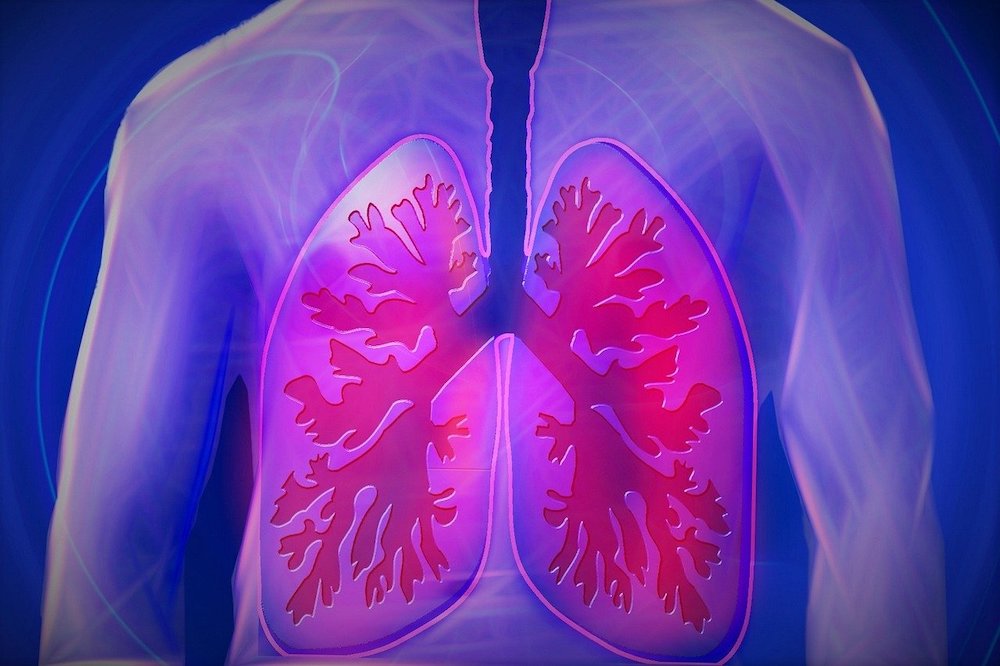

Cardiothoracic surgeon in training and researcher Dr Amir Sadeghi of Erasmus MC is awarded a grant for a study on the use of virtual reality (VR) and dynamic simulations for lung surgery. Dynamic 3D models of lungs should better prepare surgeons for operations.
The grant comes from Kansen voor West, the programme management for West Netherlands. Kansen voor West implements European programmes for the four Randstad provinces (North and South Holland, Utrecht and Flevoland) and the four largest cities (Amsterdam, The Hague, Rotterdam and Utrecht). This is an economic stimulation programme for the West Netherlands. Opportunities for West is co-financed by the European Union.
Various applications possible
Sadeghi foresees several applications of VR and dynamic simulations within lung surgery. "We can create virtual simulations of exactly the lungs a specific patient for training purposes. The surgeon (-to-be) can then virtually assess the patient's anatomy and virtually perform the steps of the operation in it, without already operating in real life," Sadeghi explains on the Erasmus MC website.
Dynamic lungs can also be used for augmented reality (AR) applications. These are applications that put a virtual layer on top of the real world. Within lung surgery, AR can guide operations through dynamic anatomy images. "We could already view CT images of the lungs in virtual reality, but now we can also hold and distort them virtually, just like during lung surgery," Sadeghi explains.
Practising resuscitation after heart surgery
Sadeghi has long focused on the use of VR within healthcare. This not only involves lung surgery, but also other topics. Consider resuscitation after cardiac surgery, which is a rare and very acute situation. Physician assistants and thoracic surgeons in training at Erasmus MC have been practising this procedure using VR since the end of 2021.
Training in VR should better prepare doctors for resuscitation after cardiac surgery. Sadeghi, who obtained his PhD on the subject in September 2021, is also closely involved in this. He developed software for practising CPR in VR after open-heart surgery.
Very acute and rare situation
For example, a key challenge in resuscitation after cardiac surgery is the need to reopen the sternum. This is necessary to find and fix the cause. "This is a very acute situation that is difficult to train. In the moment, action has to be taken quickly, leaving little time for training," Sadeghi explains. Such a situation is rare, by the way; it is estimated that CPR takes place in 1 to 2 per cent of cardiac operations in the Netherlands.
Physician assistants and surgeons in training traditionally train for this by reading protcols and practising physically in groups on a doll. Training in VR lowers the threshold. It allows participants to repeat the training several times at a time that is convenient for them.
Going through all the steps of the protocol virtually
In VR training, a surgeon puts on VR glasses, after which he ends up in a three-dimensional simulation with the patient lying in front of him. Together with a team, the surgeon goes through all the steps of the protocol for resuscitation after cardiac surgery during the simulation. Since October 2021, the VR training has been a standard part of the induction period for assistant thoracic surgeons at Erasmus MC.
Author: Wouter Hoeffnagel
Photo: kalhh via Pixabay










