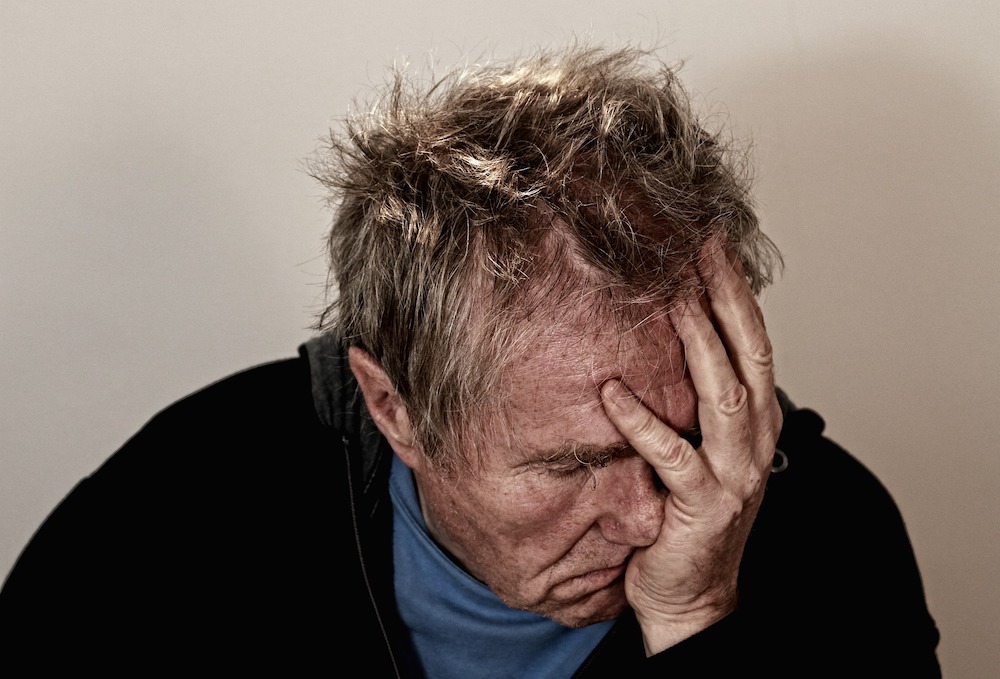

The new Vanta neurostimulator was placed for the first time in a patient with chronic cluster headache last month. The implantation was performed by neurosurgeon Erkan Kurt of CWZ Nijmegen. The Vanta battery offers more comfort for the patient, has more features and offers a longer lifespan.
Patients with cluster headaches experience attacks of very intense headaches. The pain is often on one side of the head around the eye. The pain is sharp, burning or pinching. Attacks occur in periods of weeks to months. Neurostimulators have been available for some time, which are implanted in patients. These deliver stimulation, interrupting the pain signals.
Greater comfort and longer life
The Vanta is a new type of neurostimulator. It is more comfortable for the patient, offers more options and has a longer lifespan. Neurosurgeon Kurt implanted the neurostimulator in 48-year-old Natascha Peters. Peter explains, "I have had attacks of cluster headaches at night for 12 years. Pain stings, flashes, an iron band around my head. You want to put your head through the wall and just think: this must stop! When the attack is over, it starts again after 10 minutes. In the morning, I am completely exhausted, but you have to keep going for your family. Other treatments didn't help me, which is why I'm very happy that I qualified for this. I don't feel the battery in my buttock when I am sitting and it is nice that I can operate the device myself. I already notice an effect. When I turn up the stimulator a little, I have fewer headaches and the attacks last night were shorter than before. Maybe I will be lucky and they will stay away completely in the future. It's a relief!"
Some 50 patients receive treatment for cluster headache at CWZ's head and face pain expertise centre. About 10 to 15 patients are added every year. Two nursing specialists, Suzanne Geerts and Mieke Heitkamp, are pivotal in the care CWZ provides to these patients.
"Chronic cluster headache is a fairly rare condition with several extreme pain attacks per day. It has a big impact on the patient's quality of life. First, we prescribe people medication. If none of the three types of medication help, neurostimulation is the last resort. But this treatment is not just any old thing. After surgery, there are strict living rules for several months to prevent the electrodes from shifting. And after that, some sports and activities are no longer allowed. The advantages often outweigh the disadvantages anyway," says Geerts.
Reducing pain conduction in the brain
Stimulation of the occipital nerve can reduce pain conduction in the brain. This dramatically reduces the number and severity of headache attacks. In some cases, stimulation can even lead to patients being symptom-free. Heitkamp: "We also see this at CWZ. We always hope that complaints decrease by half. The majority of patients notice results right away, but how much varies from person to person. There are patients who used to have eight attacks a day and now no longer have one. In others, unfortunately, there is less effect."
The Vanta neurostimulator has been fitted with a new battery. During the procedure, the neurosurgeon implants two electrodes under the skin of the back of the head. These are connected to the battery via an extension cable. This battery is placed subcutaneously in the buttock in patients. The Vanta neurostimulator is more comfortable and durable than alternative neurostimulators. Heitkamp: "The new Vanta battery is more compact than its predecessor and has rounded corners. As a result, it sits more comfortably in the body. It is a non-rechargeable battery that runs out at some point and then has to be replaced. It lasts about 15% longer than its predecessor despite its scaled-down design. A lot more durable, in other words."
Height of stimulation varies by patient
Setting the neurostimulator plays an important role in the results the device delivers for patients. "The level of stimulation varies from patient to patient. Sometimes we get the right setting right away, with others we need a bit more time. The great thing about the new battery is that we can also adjust the setting for each position, for example when lying down a slightly lower amplitude than when sitting down. We give patients a remote control with which they can influence the amplitude themselves". Good guidance is very important, according to Heitkamp. "In the beginning, they come to the outpatient clinic a bit more often after the implantation to tell us how things are going, but later one check-up a year is enough," says Heitkamp.
"Treatment with neurostimulation is really a breakthrough for people with this severe form of headache," says Geerts. "Thanks to the treatment, they pick up their activities again. They really are more in life when you see them back at the outpatient clinic."
Author: Wouter Hoeffnagel
Image: Gerd Altmann via Pixabay










