Globally, about a third of all food is wasted. Growers, wholesalers, supermarkets and government are working individually or collectively on the issue of reducing this waste. Despite the fact that these discarded volumes within the production process are small by percentage, the number of kilos is worth finding solutions to strive for 100% utilisation of the product. 3D food printing can play a role in this. Cooperative DOOR and Oceanz are exploring 100% product utilisation by capitalising on future food trends, including 3D printing.
Mix between two growth markets
Based on the issue of 'food waste' and responding to 'future food trends', Coöperatie DOOR (independent growers' cooperative of fruit vegetables) started talks with Oceanz 3D printing to jointly explore the possibilities of 3D printing vegetables. Both parties see good opportunities in this. Recently, an official start was made to investigate these possibilities and impossibilities. This creates a nice mix between two different growth markets. The first results will be announced soon.
100% use of product
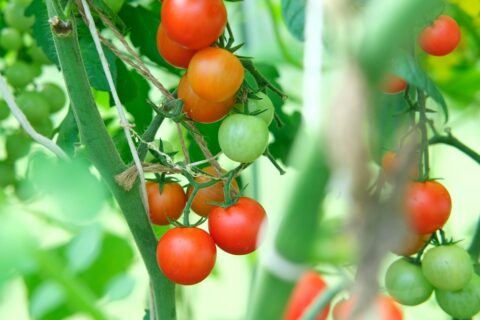
"To optimise volumes and work towards 100% utilisation, Co-operative DOOR has set out several projects to reduce food waste from primary production as much as possible. Think of dried tomato segments for use in restaurants & catering or the production of tomato as the basis for tapenade. Going a step further is exploring the possibilities and solutions of 3D food printing in this issue. Coöperatie DOOR wants to use 3D printing to realise the future goal of '100% use of the product'," said Martijn Kesteloo, Business Developer at Coöperatie DOOR.
Professional 3D printing of food
The technological potential of 3D food printing is the subject of much research. Currently, it is possible to print with materials based on, for example, a sugar mixture, chocolate or a puree of different ingredients. "Many 3D food printing projects currently still have a certain 'fun element', but eventually we are heading towards a professional market of 3D food printing," said Erik van der Garde, CEO of Oceanz 3D printing. "What is certain is that in the future we will all have to deal with 3D printed food."
Valuable food concepts
Besides creating complex, unique shapes, 3D printing offers the possibility of producing valuable food concepts. For instance, it is possible to develop personalised food, which can be tailored to, for instance, DNA profile, physical condition, life stage or taste preference. 3D printing of meat alternatives based on sustainable raw materials is also a possibility. Besides being able to print in all kinds of shapes, a product will also be able to take on other character properties. From complex structures and textures to products with a unique taste experience.
Source: Oceanz.