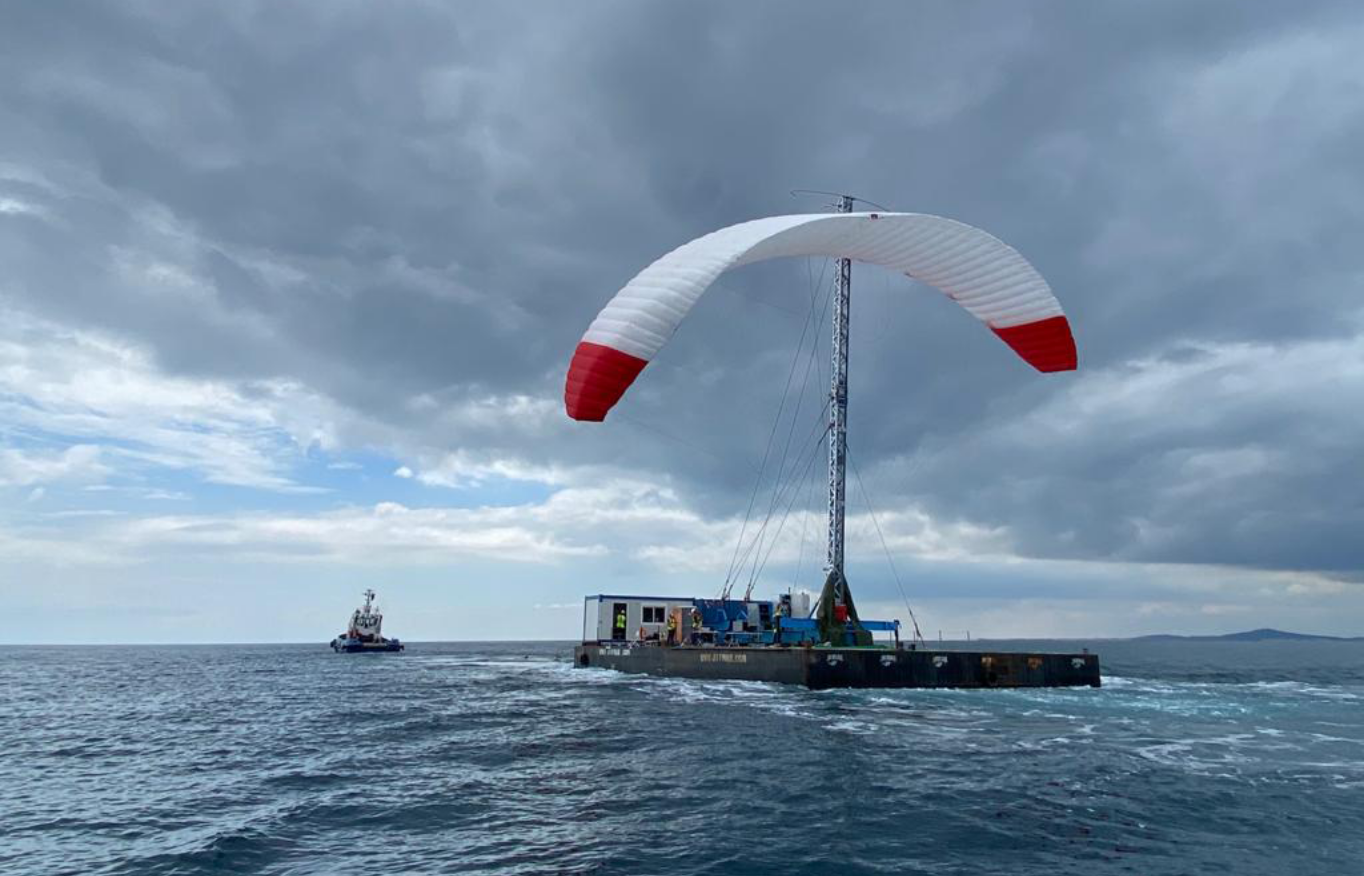

France's Airseas has attached its first automated Seawing kite on a freighter chartered by Airbus. The kite will start this year with a six-month trial period. Fully unfolded, the kite is estimated to save up to 20 per cent fuel consumption and emissions.
The Ville de Bordeaux, as the freighter is called, is owned and operated by Louis Dreyfus. It is currently on long-term charter to Airbus, which uses the Ville de Bordeaux to transport large aircraft parts from various factories in Europe to its assembly plant in Toulouse.
Controlled kite flying
The ship is now equipped with a 500-square-metre parafoil kite, plus all the deck and bridge equipment needed to run the Seawing system. The Seawing unfolds automatically; first it emerges from storage on a trolley, then it is hoisted up on deck on a mast to catch the wind, and then it is released on a long cable to be caught by the constant, powerful wind about 200 m above sea level.
The kite then embarks on an eight-shaped trajectory at a speed of more than 100 km/h. In the process, it is controlled and piloted by an automated system. This system is programmed so that the kite provides maximum traction. The Seawing computers also work with the ship's navigation systems, monitoring the forward wind and steering the ship to follow the most efficient trajectory without wasting time.
Reduce emissions
The kite currently being tested is half the size of the full 1,000-square-metre kite that will eventually be used for commercial purposes. Airseas estimates that the full-size system will reduce both diesel consumption and shipping emissions by 20%. Germany's Skysails Group has tested similar devices up to a size of 400 square metres and concluded that they can replace up to 2 MW of main engine power in favourable wind conditions.
Interestingly, it seems that an even greater reduction in fuel consumption is possible simply by slowing down a few knots. A 2009 study found that an 8,000-TEU container ship burns about 225 tonnes of fuel per day at 24 knots (44.4 km/h), but that this can be reduced by 33% by sailing a little slower at 21 knots (38.9 km/h). When wind-powered propulsion is then also combined with the use of hydrogen or ammonia, a cleaner and more sustainable shipping industry soon comes within reach.
Airseas says the Seawing system can be retrofitted to almost all ship types. The conversion would take only about two days.