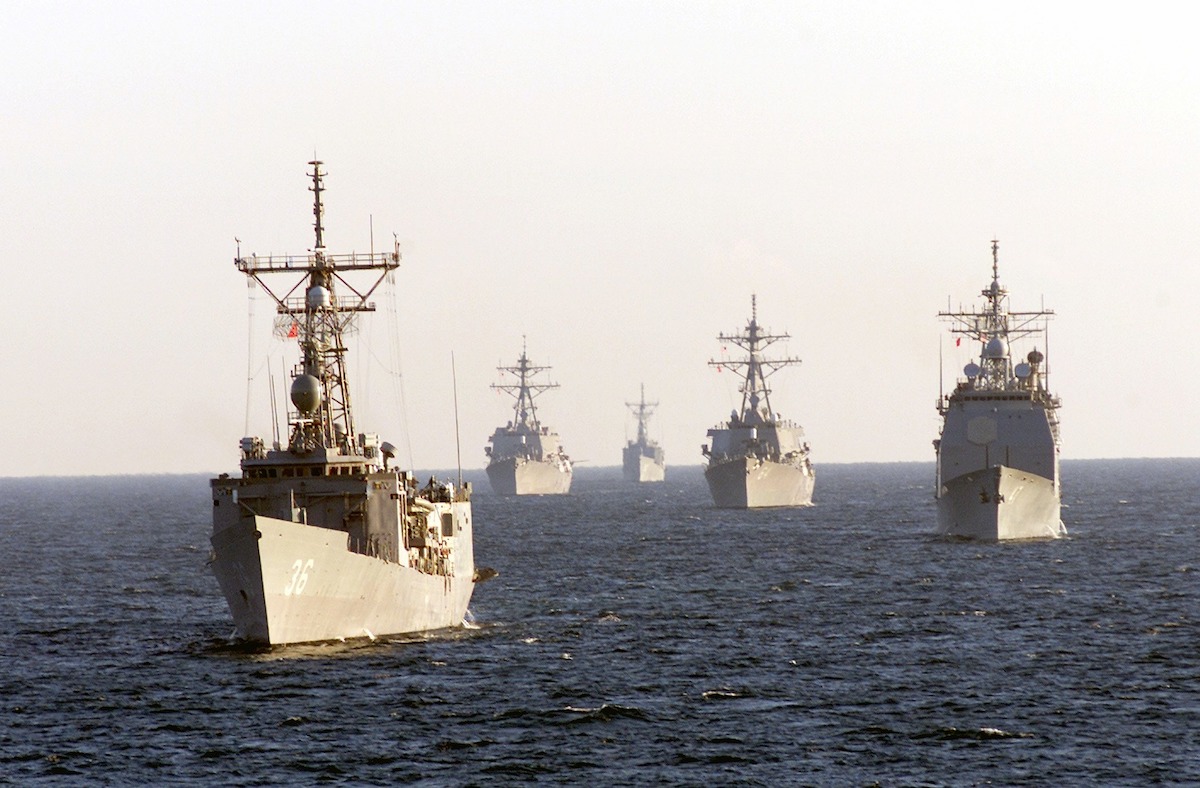

University of Twente and the Netherlands Defence Academy are expanding their joint research on smart maintenance. This smart form of maintenance based on predictions enables a drastic reduction in research costs and reliable systems.
Predicting ship maintenance is complex
Ships consist of a large number of different parts and subsystems, all of which can break down. This makes making good predictions around ship maintenance complex. If maintenance forecasts have to be made for an entire fleet, this is even more complex. In practice, maintenance choices are therefore currently made mainly based on experience or on fixed intervals.
This does not align well with smart maintenance, which minimises maintenance using a smart approach and predictions regarding maintenance needs. The parties want to capture variable usage, changing situations and degradation of systems in mathematical models. These models combine the University of Twente and the Netherlands Defence Academy with artificial intelligence and IT systems for collecting and sharing data. In this way, the models will give more control over the maintenance of ships and fleets.
Five projects
The parties have been conducting research on smart maintenance for some time and are expanding their activities in this field. Five research projects are planned:
- European Digital Naval Foundation (EDINAF): aimed at creating a joint operational cloud for the navy.
- digital ship sTructural Health mOnitoRing (dTHOR): aimed at developing the next generation of predictive systems based on advanced sensors, a digital framework with recognised open standards for data exchange and data-driven models.
- AmmoniaDrive: aimed at developing an energy-efficient, clean, affordable and safe drive based on ammonia.
- Ship Life Cycle Management (SILICA): focusing on ship life cycle management.
- DTP Data-Driven Smart Maintenance: focusing on data-based smart maintenance.
Corrosion
The projects focus on various factors involved in smart maintenance. One of these is corrosion, which is seen as one of the biggest cost-determining factors. The parties want to use electrochemical measurements to monitor and, over time, predict the extent of corrosion damage to the ship's hull. A key challenge here is the use of different coatings, each of which ages at a different rate. As a result, making accurate predictions is complex.
In addition, ships in many cases see innovative installations, whose maintenance cycles are still little known. One example is AmmoniaDrive, in which ammonia serves as an energy source and is converted into electricity via fuel cells. University of Twente and the Netherlands Defence Academy are studying how long it lasts and in what ways the system can break down. This will make it possible to tailor system maintenance accordingly.
Aimed at both naval and civilian shipping
Prof Tiedo Tinga, professor of Dynamics Based Maintenance at the Mechanics of Solids, Surfaces & Systems department at the University of Twente and professor of Life Cycle Management at the Netherlands Defence Academy. explains: "We have been doing research on this topic for some time, with applications in wind turbines, railways and manufacturing industry. The focus in the new projects is particularly on the maritime sector, both on maintenance in the navy, and also in civil shipping."
Author: Wouter Hoeffnagel
Photo: Defence-Imagery via Pixabay











