During the Provincial Council elections, two themes are dominant: climate and housing. Both have a huge impact on the construction sector and call for an increase in productivity. I address the second theme here.
The ING study: "ConTech: Technology in construction" shows that the construction industry has been rapidly digitising in recent years, which has allowed productivity to rise considerably. But there is still room for improvement, by making better use of industrialisation in construction.
Construction industry needs to get to work
The construction industry in the Netherlands faces the enormous challenge of producing 75,000 new homes a year until 2030 to meet the ambition as stated in the National Housing Agenda. In 2018, this almost succeeded: 66,000 new-build homes were completed. And about 8,000 homes could be added by transforming office buildings into homes. But a recently published report by Capital Value shows that there is still a backlog of 263,000 homes to make up and that the number of households will continue to rise in the coming years. They argue that the annual need is much greater than 75,000 units. In addition, less and less can be transformed. The 'low-hanging fruit' has now been picked.
We are not catching up in the traditional way
The growing need for housing is wide-ranging. Starters, the elderly, people with care needs, middle-category renters, students, the growing group of singles, etc. are struggling to meet their housing needs. In addition, the construction cost of a new home is rising sharply. By over 9% in 2018 and as much as 27% since 2015. This development puts further pressure on housing affordability for lower and middle incomes. Incomes are rising but not at this rate. Thus, current construction does not provide enough affordable production to meet current and changing demand.
Three reactions from the market to this:
- More high-rise buildings
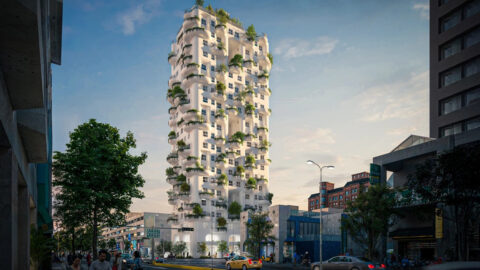
Achieving volume by building more in height. There are now over 200 tall buildings and over 70 more to come.
- More standardisation
One example is the factory or concept home that offers consumers enough choice to personalise. But is standardised in terms of design and dimensions in such a way that, to a large extent, it can be produced under conditioned conditions.
- More 'prefab'
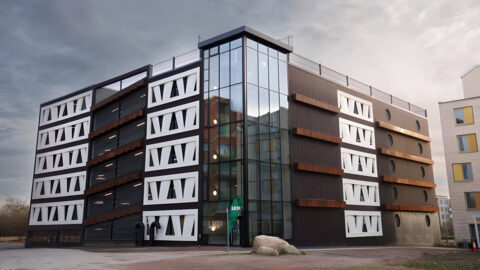
In an industrial environment, building materials are made into complete building elements that are then assembled on the construction site.
This market situation creates opportunities for companies that can produce more - while controlling costs - and deliver an attractive product. And, as far as I am concerned, this is eminently possible with building in an industrial and conceptual way.
But there are also challenges. Industrial and conceptual building still happens too little. This is because of the industry's need for flexibility and the lowest possible fixed cost structure. Low returns mean little investment in R&D and innovation. But industrialisation also requires scale. The construction landscape in the Netherlands is very fragmented, making that scale difficult for individual parties to achieve. In the Netherlands, the market leader comes close to no. 2 to around 1,000 concept homes.
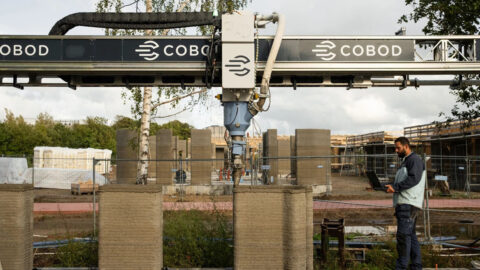
Scale for industrialised and conceptual building can only be achieved through far-reaching cooperation and/or consolidation. And through deployment of smart technology and digital support of the design and production process. This is going to have consequences for the division of roles in the chain, though. As a result, 'producers' may become more dominant than contractors. But because the distance to the housing consumer is still great, there is also a chance that a digital platform will connect the consumer with the producer. The builder then still fulfils the function of executing, assembling party. In an efficient cooperation with chain parties and focus on excellent execution, this provides sufficient basis for a good return. Continuing to operate alone, on the other hand, is becoming increasingly risky.
Jan van der Doelen
ING Sector Banker Building & Construction, Real Estate