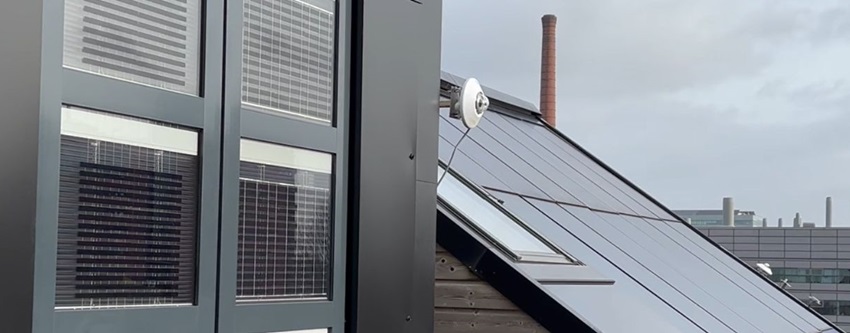

A new type of window that generates electricity while controlling heat and light has been developed and tested. This was done by researchers from the ZIEZO project, led by TNO. This solar window, the first of its kind, has special double-sided solar cells and built-in blinds that reflect sunlight. As a result, more light goes to the back of the cells. This increases energy yield and prevents overheating.
To be climate neutral by 2050, buildings in the Netherlands must become much more sustainable. Stricter energy performance standards for buildings stimulate the market for building-integrated solar technologies (BIPV). TNO's innovative solar window can play a role in this. Solar energy expert at TNO Roland Valckenborg: "By making effective use of sunlight and solar heat, this window can have a major impact on the energy efficiency of buildings. For an average office building, these windows can reduce that building's carbon footprint by at least 20%. It is also commercially interesting because, as far as we know, this concept is not yet available on the market."
Three modes
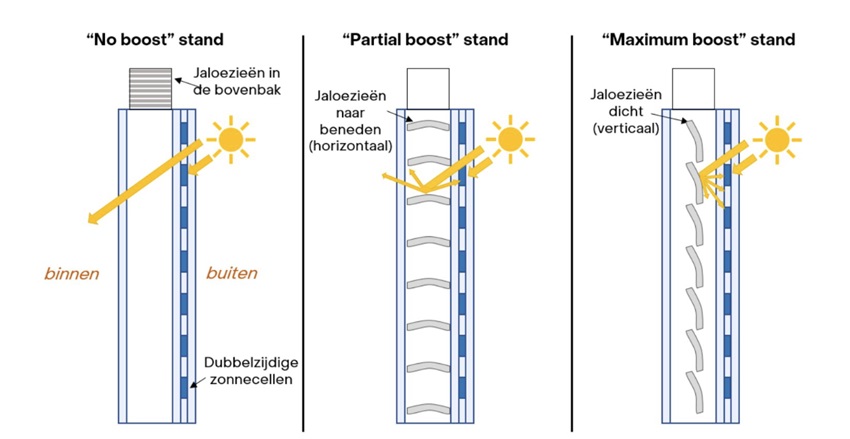
The new solar window, called ZIEZO (Zonwering Including Electricity Generating Solar Window), consists of double-sided crystalline silicon solar cells and built-in blinds. When the blinds are down, they reflect sunlight to the back of the solar cells. This generates more energy. There are three modes: (1) The blinds are stored in the top box (no boost). (2) The blinds are down and horizontal (partial boost). (3) The blinds are down but vertical so that all sunlight is blocked (max boost).
Users can automatically adjust the blinds to generate more energy or control the temperature and light in the room.
Operation
Test phase
In addition to TNO, the research group comprises TU/e, glass manufacturer Pilkington Nederland and W/E consultants. Over the past year, they have tested 12 small-scale versions of this window at the SolarBEAT outdoor research facility in Eindhoven. In addition, six full-size windows have been installed at Pilkington’s Experience Centre in Enschede.
25% energy increase
On sunny days, the solar window increases energy yield by up to 25% with the most reflective blinds, compared to a window with only single-sided solar cells without blinds. On average over the whole year, the energy gain is about 13%. The results of the system were recently published in an article for the solar energy journal Solar RRL.
Next steps
In the near future, the group will further investigate the impact of the shading system on visibility and indoor temperature in the building. The project partners are also considering a follow-up project in a European context. They are also developing a new tool to improve building designs. This involves optimising solar energy generation, indoor climate and CO₂ savings by reducing heating and cooling requirements. This is challenging due to changing sun positions and varying patterns in office occupancy (weekdays versus weekends), along with individual preferences for light and temperature behind the ZIEZO window. Pilkington is also taking steps to market the product.
Source: TNO