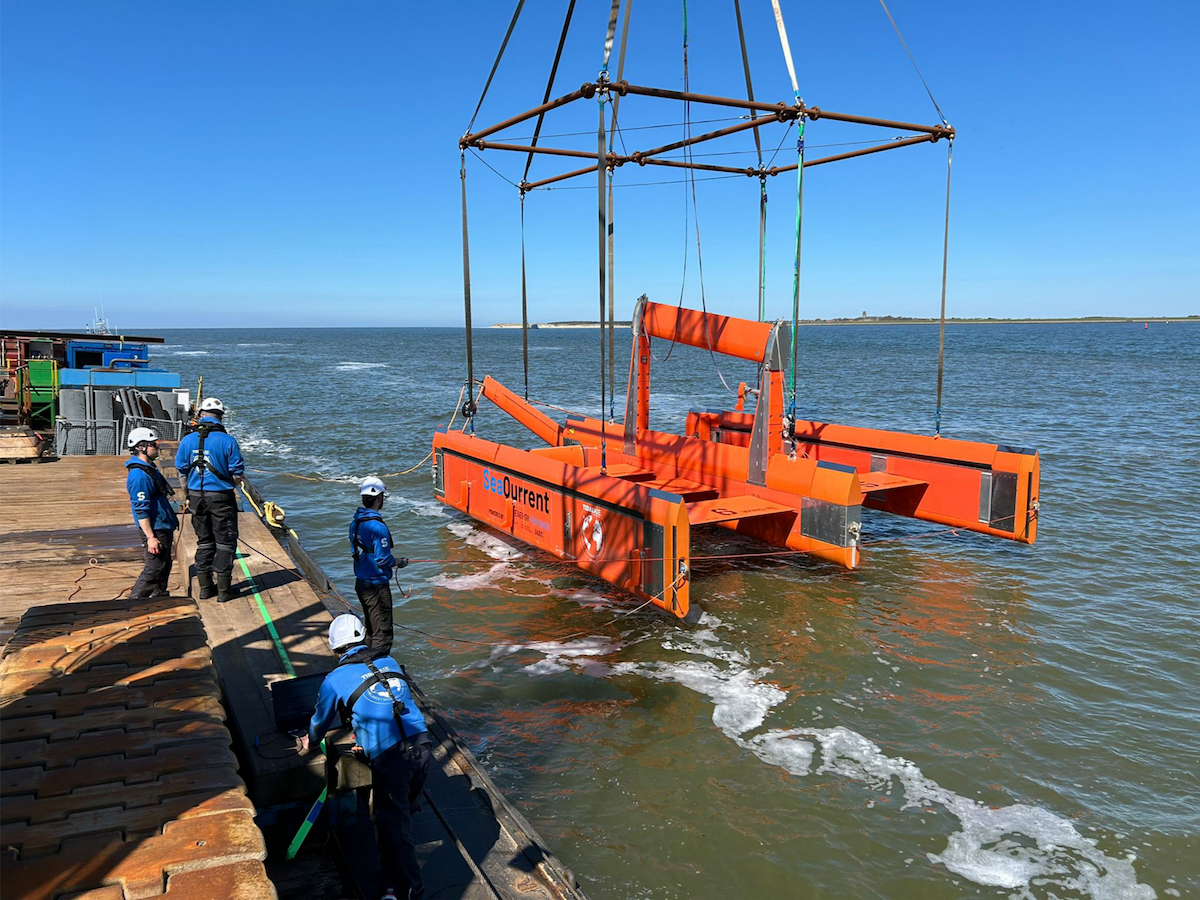

The PROSIT project for sustainable energy on the Wadden Islands receives a contribution of 650,000 euros from the province of Friesland. The project was set up to make the Wadden Islands self-sufficient in their energy needs. It is an extension of the ongoing TidalKite demonstration project, with which trials have been carried out near Ameland.
TidalKite is a system that converts tidal energy into clean and affordable electricity. A key advantage here is the ability to generate renewable energy throughout the year.
Generating energy with tidal and sea currents
The system is located just off the coast in the water and generates sustainable energy here. In doing so, the kites are anchored to a hydraulic energy converter. They generate energy using tidal and sea currents. The system moves in a mainly determined and stable figure-of-eight pattern. It is controlled through an autonomous monitoring and management system, which oversees the process.
The kite features a frame with several wings, which are placed in tandem. The current in the water causes the kite to accelerate, creating a strong buoyancy.
This pressure is transmitted to a power take-off system. This system consists of a hydraulic cylinder and a combination of a hydraulic motor and a generator. The hydraulic cylinder is pulled out by the force applied by the kite. This causes pressurised fluid to be propelled to the hydromotor generator. The generator then converts the pressure into renewable energy, which is brought to land via a submarine cable.
Local energy production
The TidalKite can contribute to local energy supply on the Wadden Islands. The islands have long wanted to produce their own energy, something to which the TidalKite fits well. About half of the energy needs on the Wadden Islands are expected to be met using the TidalKite.
The system has been tested by initiator SeaQurrent in the Borndiep near Ameland in recent years. The results have been promising. By optimising the system, the initiators expect not only to increase the yield of the TidalKite, but also to further reduce its ecological impact.
Underwater kite park near Ameland planned
There are currently plans to create an underwater kite park near Ameland, using several TidalKites. If this project is successful, the initiators want to expand to other locations. Consider Texel, Vlieland and the Eemshaven.
In the long term, the initiators expect that the TidalKite system can make an important contribution to the production of sustainable energy in the Netherlands. For instance, they want to use underwater fly farms to produce a total of about 40 MegaWatts of energy by 2026.
Export opportunities
Promoters also see opportunities for exporting the technology; the technology is also suitable for other delta and coastal areas in both Europe and the rest of the world.
More information on the TidalKite system is available here.
Image: SeaQurrent











