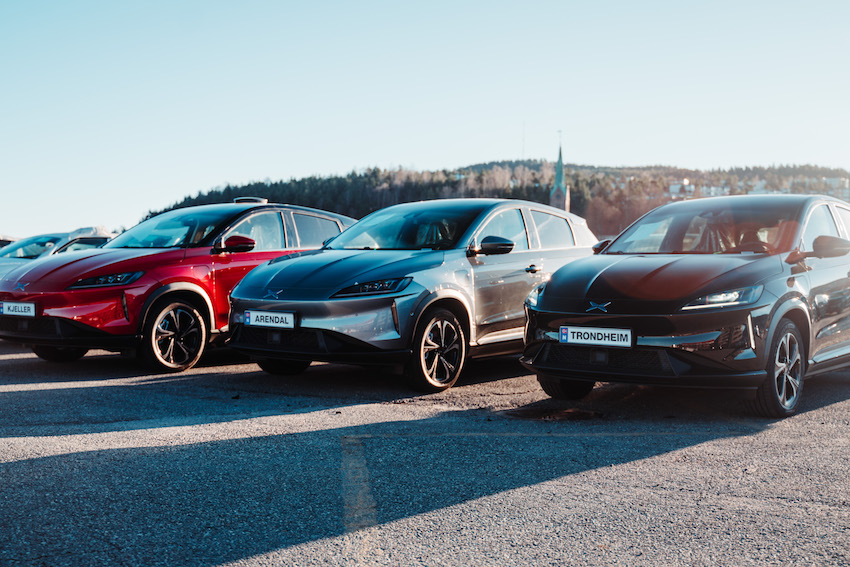

The first hundred units of the Xpeng G3 were delivered to customers in Norway earlier this month. It is the Chinese electric car manufacturer's first foray into the European market. The company plans to enter other European countries as well.
Xpeng is a Chinese car manufacturer headquartered in Guangzhou, China. The company also has branches in Beijing, Shanghai and the US Silicon Valley. Xpeng focuses specifically on developing vehicles integrated with the internet, artificial intelligence and autonomous driving systems.
What is the Xpeng G3?
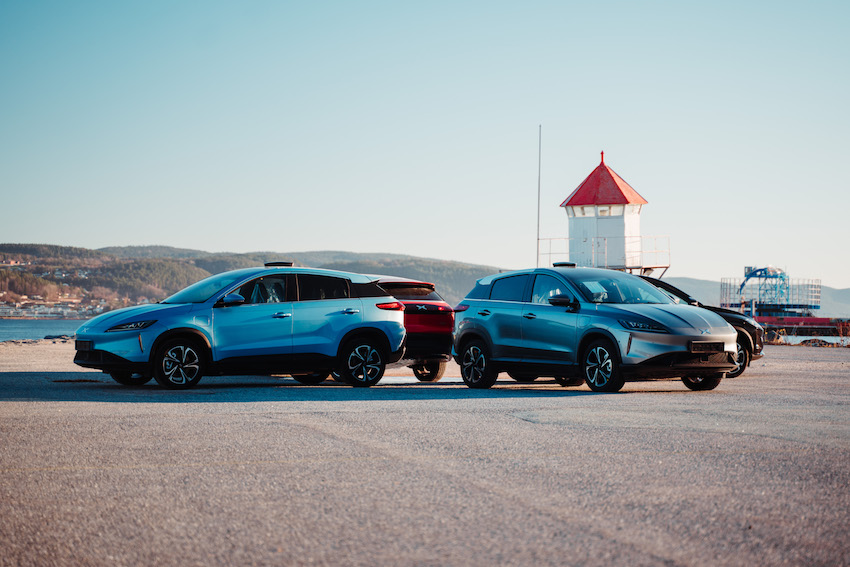
The Xpeng G3 is an electric SUV available in Norway for 358,000 Norwegian kroner, or around 33,700 euros. The vehicle offers a range of 520km NEDC or 451km WLTP. The 66kW battery can be charged from 30% to 80% in 43 minutes using an AC charger.
The G3 delivers a power output of 145kW and torque of 300Nm. With this, the vehicle reaches a top speed of 170 km/h and the G3 accelerates to 100 km/h in 8.6 seconds. The vehicle has an unladen weight of 1,609kg and offers 380 litres of boot space, or 760 litres if the rear seats are folded down. The G3 can carry five passengers.
Smart and Premium
In Norway, the vehicle comes with an English-language interface. The G3 is available in two versions: Smart and Premium. The Premium version is 78mm higher than the Smart version, which is due to the presence of a 360-degree camera on the roof. This camera allows communication with the vehicle via hand gestures.
Smart version does not have this camera. This allows the variant to be fitted with roof racks, something not possible with the Premium version. Other differences include foldable and heatable mirrors, which come with a memory function on the Premium version. Also, the G3 Premium features a nappa leather interior, while the G3 Smart has faux leather upholstery. In addition, the Smart has to make do without the Premium's ventilated driver's seat.
Driving assistance system XPILOT
The G3 is equipped with the driving assistance system XPILOT, capable of recognising, among other things, roads, vehicles, pedestrians and obstacles on the road. Among other things, the system can automatically adjust speed according to both traffic conditions and traffic rules, automatically reduces a vehicle's speed when approaching a curve, provides information on road conditions and can centre the vehicle on a lane based on road markings.
The system also allows the G3 to park independently; Xpeng reports that the vehicle can handle about 70% of all parking situations. These include marked and unmarked parking spots, and traffic jam parking.
European market
China is by far the most important market for Xpeng. However, the company plans to target other markets as well, including the European market. The company reports "actively exploring opportunities in other mature EV markets with supportive government policies, advanced EV infrastructure and high EV awareness as top priority markets". Xpeng also plans to launch its second production model - the P7 electric sports sedan - in the European market within 12 months.
He Xiaopeng, CEO and chairman of Xpeng: "This week's customer deliveries in Norway mark an important milestone in Xpeng's ambition to become a truly international smart EV brand. Our launch in Europe comes at exactly the time when consumers are switching to more sustainable personal transport in increasing numbers, and at a tipping point where governments around the world are stepping up their zero emissions efforts. We look forward to being a key driver in accelerating that transition."
Author: Wouter Hoeffnagel








