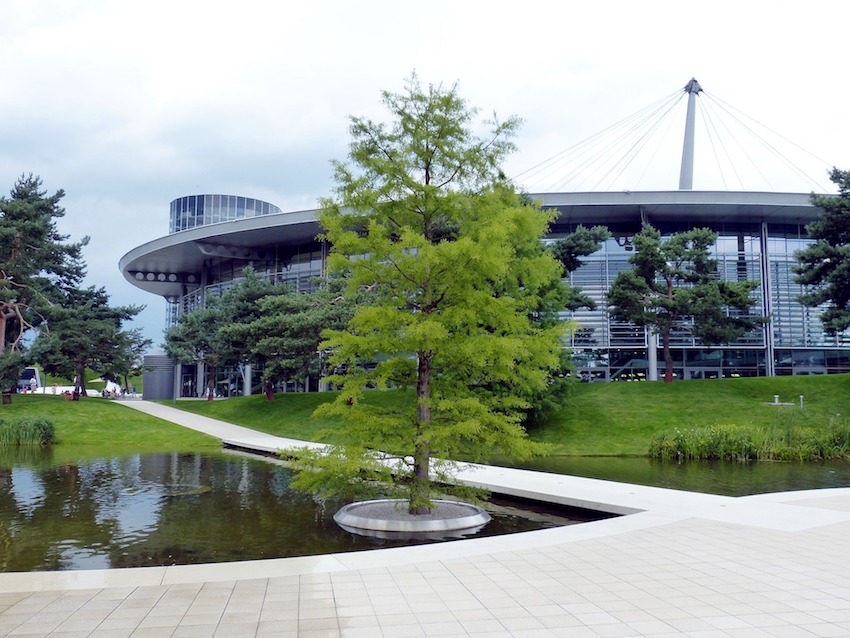

Volkswagen is to revamp its factory in Wolfsburg, Germany. Among other things, the factory will be equipped with the latest technology for electric vehicles and should counterbalance the large factory Tesla is building near Berlin.
This was announced by Volkswagen’s Chief Executive Officer (CEO) Herbert Diess during an internal video conference with senior managers, Bloomberg reports, citing anonymous sources. The Wolfsburg plant is currently the world’s largest car factory, with an annual production of over 800,000 vehicles.
Tesla Gigafactory Berlin-Brandenburg
Tesla announced the arrival of a new factory near Berlin in late 2019. The factory is currently being realised; construction work started in June. Production at the Tesla Gigafactory Berlin-Brandenburg, also known as Gigafactory 4, is expected to start in late 2021.
The factory will include production of battery, battery packs and powertrains for use in Tesla vehicles. Tesla also plans to assemble the Tesla Model Y at the German factory. The Model Y is an all-electric mid-size SUV that can accommodate seven people. The vehicle features a Dual Motor and all-wheel-drive (AWD). Tesla reports a range of 505 kilometres based on a WLTP estimate. Using a Tesla Supercharger, the batteries can be recharged in 15 minutes to a range of 270 kilometres. The vehicle was announced in March 2019. First deliveries in the Netherlands are scheduled for early 2021.
Cut production time to 10 hours
Tesla chief Elon Musk is reportedly aiming to reduce the production time per vehicle to 10 hours. Bloomberg reports that this is estimated to be half the time it takes Volkswagen to produce a Golf or Tiguan. A key goal for the revamped Wolfsburg plant is therefore to also reduce the production time per vehicle to ten hours.
In addition, Dies stressed during the conference call that Volkswagen must cut costs sharply to remain competitive, reports Bloomberg. In the aftermath of the COVID-19 pandemic, other carmakers would prove more efficient than the German carmaker. Sales figures from other manufacturers would also be more resilient. Volkswagen plans to cut fixed costs by 5% by 2023.
Volkswagen was asked by Bloomberg to comment on the reporting. However, a spokesperson for the company would not comment.
Higher investment in future mobility
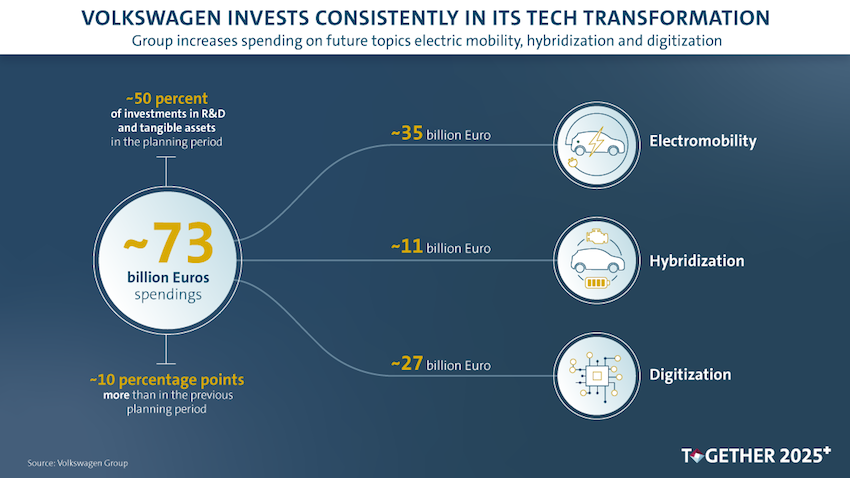
The German carmaker announced last month that it was increasing its investment in future mobility. The Volkswagen Group will invest around 73 billion euros in electrification, hybrid powertrains and digital technology over the next five years. Investment in development costs and R&D for future technologies will be increased from 40 to 50 per cent of the Group's total investment of around 150 billion euros.
Digitalisation investment doubles to €27bn over next five years 35 billion euros has been earmarked for the development of battery electric vehicles, while 11 billion euros will be invested in electrifying existing models.
Author: Wouter Hoeffnagel
Source photo: Pixabay / falco








