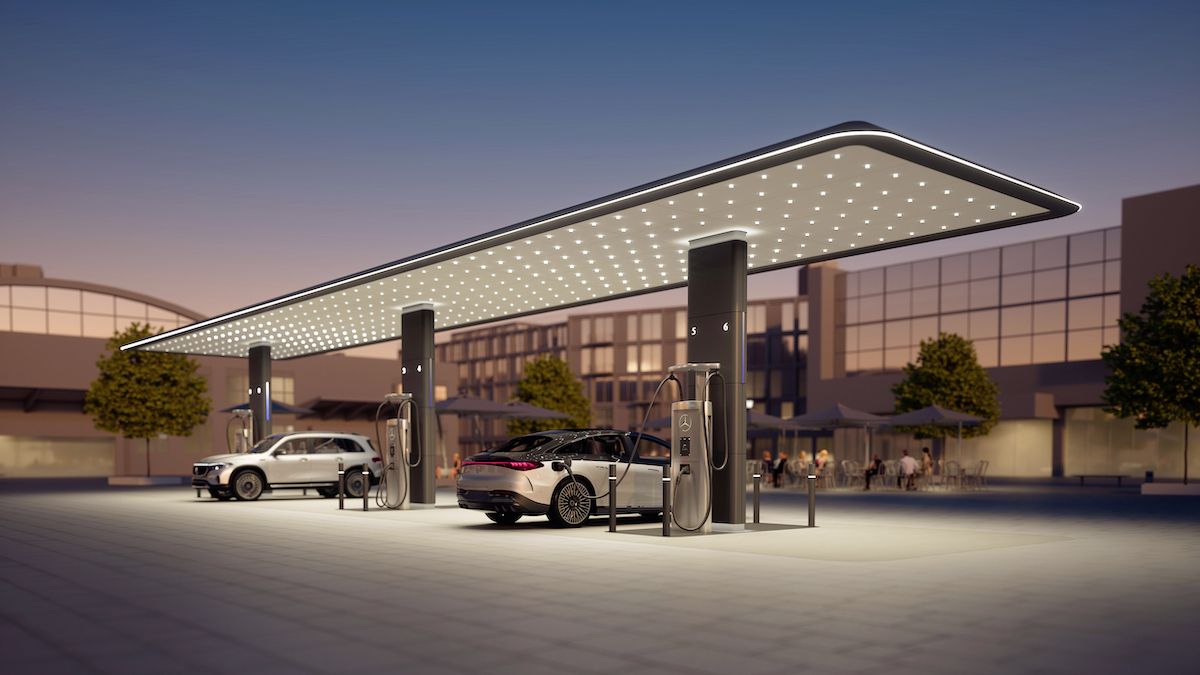

Mercedes-Benz is to realise a global charging network for electric vehicles. The network should include more than 10,000 fast chargers by the end of this decade. These will be accessible to all electric vehicles.
This was announced by the German carmaker at CES 2023, which recently took place in Las Vegas, USA. The rollout of the charging network will start in North America. At a later stage, the carmaker will also start building the network in Europe, China and other key markets. The North American network should be completed by 2027. This network should then have more than 400 hubs with a total of more than 2,500 fast chargers.
More than 10,000 fast chargers
The global network should eventually consist of more than 10,000 fast chargers. When construction will start in Europe is not known. It is also unclear how many of the 10,000 fast chargers will be located in Europe.
Depending on the region and location, Mercedes-Benz is realising hubs with four to 12 fast chargers. Over time, the company plans to expand this number to 30 chargers. These are so-called high-power chargers (HPC), which have a charging capacity of 350 kW.
Minimise waiting times
Mercedes-Benz reports that the deployment of intelligent technology will ensure that vehicles charge as quickly as possible, with which the company aims to minimise waiting time at charging stations. The carmaker is opening up the charging network to vehicles of all makes. Mercedes-Benz customers will receive special benefits, including the possibility of reserving a charging station.
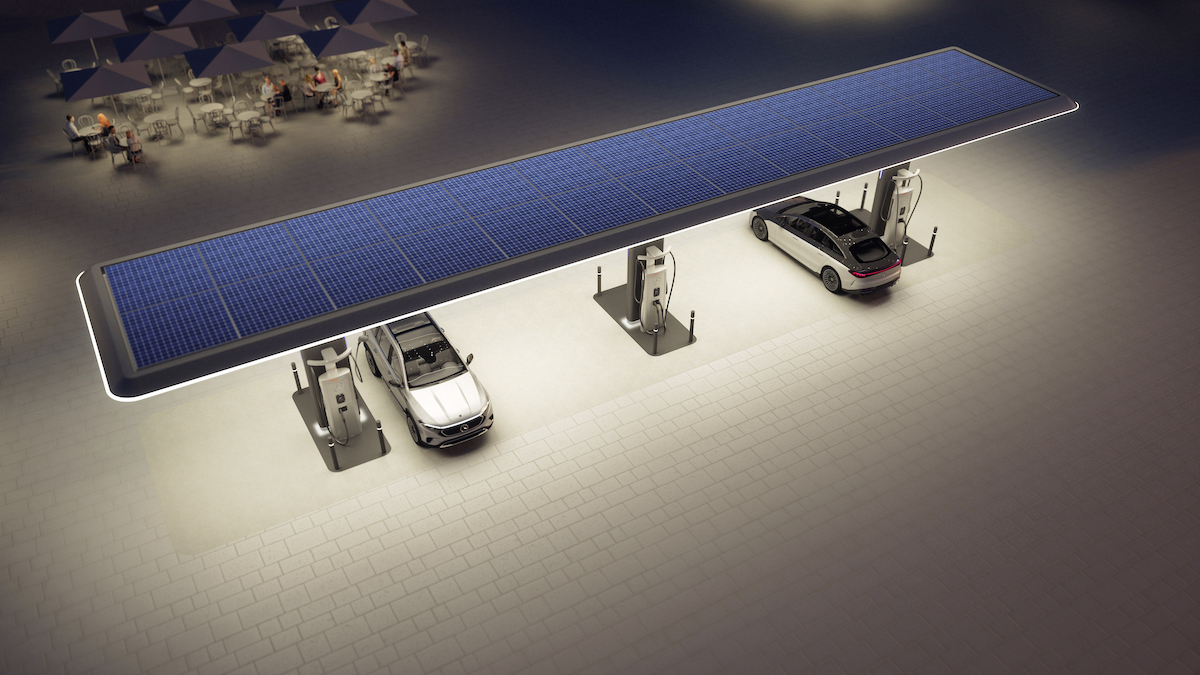
The car manufacturer wants to offer users of the hubs the option of charging with green electricity. The company intends to guarantee this preferably through green electricity supply contracts, and otherwise by using renewable energy certificates from approved suppliers. Mercedes-Benz also equips a number of charging stations with solar panels that provide electricity for lighting and video surveillance at the hubs, among other things.
MN8 Energy and ChargePoint as partners
The project will thus start in North America. Mercedes-Benz is working with partners MN8 Energy and ChargePoint on this. MN8 Energy is a major solar and battery storage operator in the US. Through its cooperation with this company, Mercedes-Benz aims to offer customers in the US as much access as possible to charging via green electricity. ChargePoint is operator of a comprehensive electric vehicle charging network in both the US and Europe. This partner has long acted as backend provider Mercedes me Charge in the US, providing access to charging stations.
"At Mercedes-Benz, we are fully committed to making electric vehicle charging easier and more accessible. By selecting MN8 Energy and ChargePoint as our partners in North America - two of the leaders in their fields - we can continue to drive the transformation to an electric future, which is one of the key pillars of our holistic, sustainable business strategy," said Markus Schäfer, member of Mercedes-Benz Group AG's Executive Board, Chief Technology Officer, Development & Procurement.
The German carmaker also reports that the charging stations will also meet "broader customer needs". These include nearby eateries and toilets. In addition, the charging sites will be equipped with surveillance cameras and other facilities with security in mind. Some of the charging stations will have a canopy.
Author: Wouter Hoeffnagel
Photo: Mercedes-Benz








